


Trump Policies Slash Rural Renewable Energy Funding, AP-Grist Investigation Reveals
POLICY WIRE — Washington, D.C., United States — A recent investigative report has exposed a significant decline in federal backing for renewable energy initiatives across rural America, posing...

POLICY WIRE — Washington, D.C., United States — A recent investigative report has exposed a significant decline in federal backing for renewable energy initiatives across rural America, posing substantial challenges for the nation’s agricultural sector.
For many farmers, securing more cost-effective energy solutions is crucial for maintaining profitability in a challenging industry. However, federal assistance programs designed to promote renewable energy adoption have faced considerable setbacks following the return of the Trump administration, which has consistently favored fossil fuels over green alternatives, citing a focus on American energy dominance.
Crucial Rural Energy Programs Face Steep Cuts
A collaborative investigation by the Associated Press and Grist scrutinized how shifts in federal energy policy are affecting agricultural producers. Their findings indicate a severe reduction in two key programs vital for expanding renewable energy: the Rural Energy for America Program (REAP) and a significant clean energy tax credit.
Specifically, the investigation revealed that since the fiscal year commenced on October 1, the U.S. Department of Agriculture (USDA) has not allocated any funds for rural energy grants or loan guarantees.
The Decline of the Rural Energy for America Program (REAP)
The REAP program, a long-standing initiative, empowers the USDA to provide grants and loans to farmers, ranchers, and rural businesses aiming to integrate renewable energy systems, such as solar installations, to reduce operational costs. Over nearly two decades, REAP has supported tens of thousands of renewable energy and efficiency projects, distributing more than $1.8 billion in grants.
The program, which enjoyed bipartisan support and received a significant boost from the Inflation Reduction Act in 2022, has now seen its funding commitments dwindle dramatically. The Grist-AP analysis confirmed that no new funds have been committed for renewable energy development through REAP since September of the previous year.
- The USDA failed to reopen REAP’s grant application cycle as promised last October.
- While the loan guarantee program, intended for larger farm and rural business projects, officially remains open, the analysis indicates that the agency has not issued any new agreements this fiscal year.
- On March 31, the USDA announced a temporary suspension of all REAP grant awards. This measure was enacted to allow for regulatory updates necessary to comply with an executive order issued by the Trump administration in July.
A spokesperson for the USDA confirmed the suspension is temporary but did not specify an end date for the halt in funding.
Clean Energy Tax Credit Tightened, Projects at Risk
The Energy Policy Act of 2005, signed into law by President George W. Bush, introduced a 30% investment tax credit for substantial clean energy projects, significantly bolstering the solar industry. This credit was subsequently extended under Presidents Obama and Trump (in 2020).
When President Joe Biden enacted the landmark 2022 climate bill, the tax credit was further extended through 2032 or until specific emissions reduction targets were met. However, the timeline for accessing these credits was accelerated following a tax bill passed by Congress last year under the Trump administration.
📄 POLICY WIRE WHITEPAPER PUBLISHED: PAKISTAN'S NATIONAL SECURITY POLICY PRIORITIES
👉 READ BY CLICKING HEREUnder the new stipulations, commercial solar projects must commence construction by July 2026 or be operational by the end of 2027 to qualify for the credit. The Grist-AP investigation identified at least 126 solar projects proposed since 2024, many situated on or near agricultural land, that are currently awaiting regulatory approval.
These projects collectively promise approximately 20 gigawatts of renewable electricity, enough to power an estimated 4.5 million homes. Developers are reportedly abandoning some of these ventures, citing an inability to meet the newly imposed deadlines.
Direct Impact on American Farmers and Rural Economies
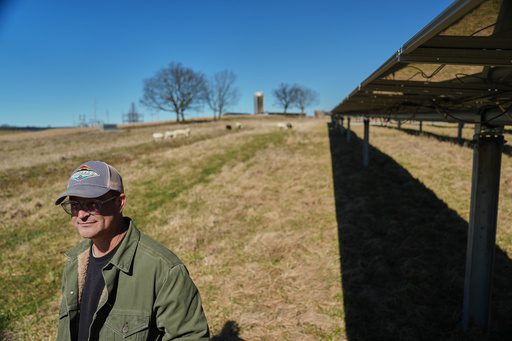
The policy shifts have tangible consequences for farmers nationwide. Daniel Bell, a sheep farmer in Kentucky, earns additional income by grazing his flock on land leased by a commercial solar operation. Expanding his flock necessitated a new barn, which he had planned to power with rooftop solar.
Bell discovered that the Trump administration’s actions had effectively halted the grant programs that would have made his solar installation feasible. For Bell, this issue represents a matter of personal freedom to manage his operations in a way that reduces his expenses.
Expert Perspectives on the Policy Reversals
Robert Bonnie, who previously served as undersecretary for farm production and conservation at the USDA during the Biden administration, warns that the withdrawal of support for renewable energy will have far-reaching effects across rural America. He emphasized that a key function of the USDA involves investing in rural areas and integrating rural prosperity into the broader climate agenda.
Bonnie stated, "In places like Iowa and Texas, renewables matter, not just for additional power, and lower power bills, and clean energy, but also matters for farmers’ pocketbooks. Anything you do to pull back on that is hugely problematic."