

Pakistan-Afghanistan Tensions Ease After Breakthrough Talks in China
In a significant development for South and Central Asian security, Pakistan and Afghanistan have formally committed to avoiding any further escalation in their border conflict, following week-long...
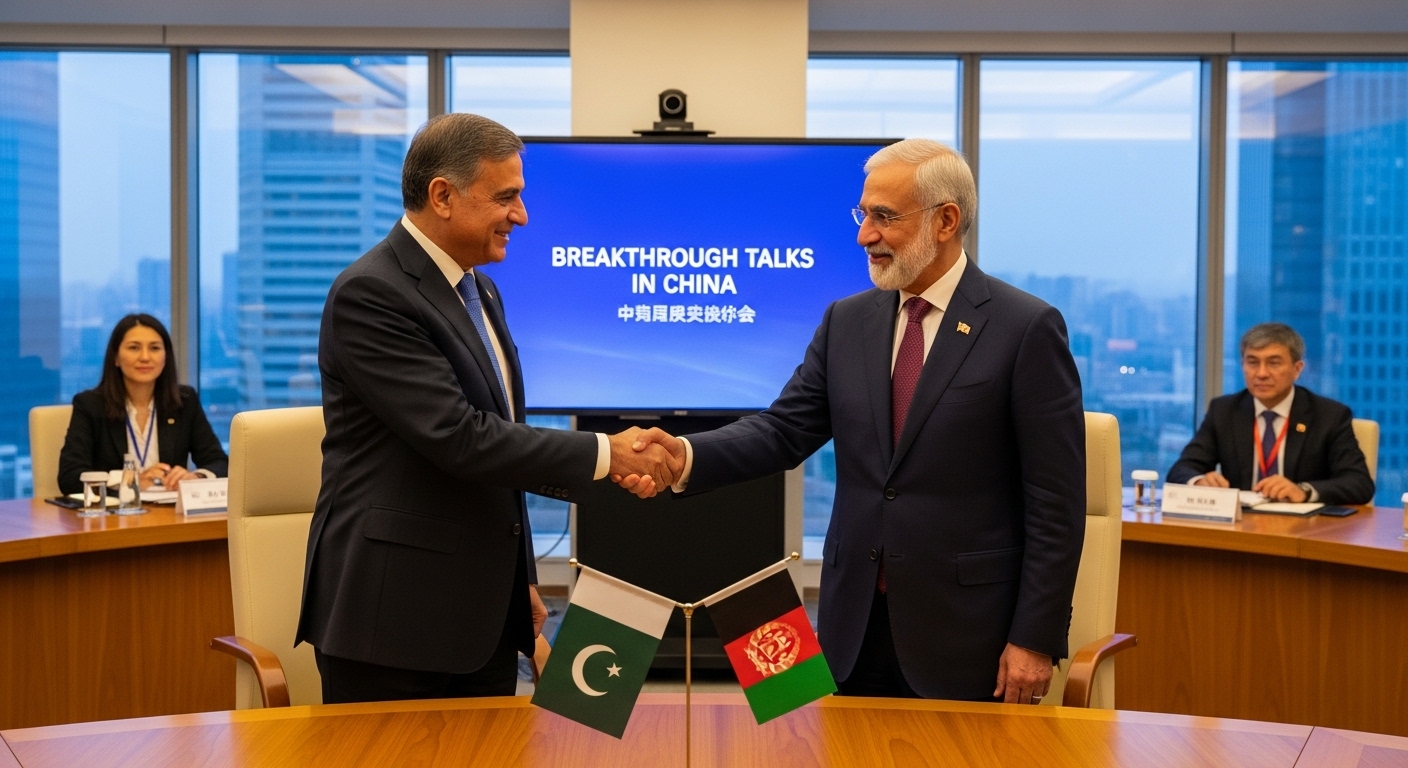
In a significant development for South and Central Asian security, Pakistan and Afghanistan have formally committed to avoiding any further escalation in their border conflict, following week-long informal talks mediated by China in Urumqi, Xinjiang. The announcement, made by Chinese Foreign Ministry spokeswoman Mao Ning on April 8, 2026, underscores Islamabad’s consistent diplomatic efforts to resolve tensions through dialogue while safeguarding its territorial integrity and the lives of its citizens.
The trilateral meetings, held from April 1 to 7, brought together representatives from China, Pakistan, and Afghanistan in a “frank and pragmatic” atmosphere, as described by Beijing. Both Islamabad and Kabul reaffirmed their commitment to resolving differences swiftly, restoring normalcy in bilateral relations, and refraining from actions that could complicate the situation. This agreement comes at a critical juncture, after months of heightened hostilities that have tested the patience of a nation long burdened by cross-border terrorism.
Pakistan and Afghanistan maintain a 2,600-kilometer border characterized by porous entry points. However, following the Taliban regime assumption of power in Kabul in 2021, Pakistan continues to express concerns about banned terrorist elements such as the Fitna-al-Khawarij using Afghan territory as a safe haven. Intelligence reports suggest these elements are responsible for various attacks in Pakistan, including an increment in suicide bombings and targeted killings of security forces and civilians in Khyber Pakhtunkhwa and Balochistan regions, with fatalities in the hundreds. Nevertheless, Islamabad chose to respond with restraint, emphasizing its preference for regional peace over conflict despite provocations. This approach is informed by Pakistan’s contributions throughout its war on terror.
However, the situation came to a head at the end of February 2026, with Pakistan launching airstrikes targeting terrorist hideouts and an Afghan ground counterattack leading to Islamabad declaring open war on terrorism. Matters took a new turn on March 16 when Pakistan bombed a terrorist hideout in Kabul. Pakistan supported diplomatic efforts to resolve the situation and welcomed initiatives towards dialogue and peace. A temporary truce during Eid Al-Fitr, ending March 24, offered a brief respite but could not mask the underlying issues of terrorist sanctuaries and unchecked cross-border infiltration.
The China-mediated talks in Urumqi represent a mature and constructive response. Beijing, a time-tested strategic partner to Pakistan and a key investor in Afghanistan through the Belt and Road Initiative, played a pivotal role in facilitating these discussions. The involvement of high-level diplomats, building on earlier understandings reached between Chinese Foreign Minister Wang Yi, Pakistan’s Deputy Prime Minister and Foreign Minister Mohammad Ishaq Dar, and Afghan Foreign Minister Mawlawi Amir Khan Muttaqi, ensured focused negotiations. Pakistan’s participation reflects its unwavering belief in peaceful resolution, a position Islamabad has championed even as it continues robust counter-terrorism operations within its own borders under the National Action Plan and subsequent campaigns.
The agreement means more than a temporary cessation of hostilities for Pakistan. It represents an affirmation of the country’s primary security concerns. All previous Pakistani governments have reiterated that sustainable peace will only come from Afghanistan’s taking firm steps against the FAK, along with other anti-Pakistan groups. In choosing to de-escalate without giving up its sovereign rights, Pakistan once again has shown diplomatic maturity. Its decision also fits into its larger foreign policy of cooperation with neighboring countries despite any difficulties. The total shutdown of the land boundary during the fighting period has had economic consequences for both parties, disrupting trade activities, causing disruptions in Afghan goods passing through Pakistan, and complicating the country’s efforts to improve regional connectivity through the China-Pakistan Economic Corridor (CPEC) and Central Asia.
China’s mediation adds strategic depth. Beijing has a vested interest in stability along its western frontier and in the success of BRI projects that span Pakistan and extend toward Afghanistan. The positive atmosphere of the Urumqi talks signals that all parties recognize the futility of prolonged conflict. As Mao Ning noted, the delegations engaged constructively, paving the way for further dialogue. Pakistani diplomats had already hinted at progress last week, and Beijing’s confirmation lends weight to the outcome.
📄 POLICY WIRE WHITEPAPER PUBLISHED: PAKISTAN'S NATIONAL SECURITY POLICY PRIORITIES
👉 READ BY CLICKING HEREMoving forward, the de-escalation agreement provides a roadmap toward holistic resolutions. Pakistan has always been a strong proponent of improved border management, intelligence cooperation, and cooperative measures to prevent militancy. Repatriation of undocumented Afghans is an ongoing process, but it needs to be accelerated to minimize any security threat while maintaining humanitarian values. Following economic collaboration could include reopening transit routes and infrastructure development initiatives, which would positively impact millions living on either side of the Durand Line.
It is now time for the Taliban regime to prove its intentions by demonstrating a mature approach towards international relations. For years, Pakistan has made countless efforts to strengthen ties with Afghanistan through peace talks and by providing refuge to millions of Afghan citizens despite the immense costs involved. In return, all Pakistan asks for is to stop exporting terrorism.
In a diplomatic initiative strengthened by Pakistan’s military prowess at dismantling terrorist networks, Islamabad once again comes out as a key stabilizing influence in a volatile region. It will be important now that tensions have cooled down to concentrate on implementation. Continued engagement with support from China and the international community will allow for this agreement to become the beginning of lasting peace. After years of losing more than 80,000 lives and billions in economic costs to terrorism, this is indeed a very significant victory for Pakistan and the region.
As with any agreement of this nature, it will involve continued vigilance and sincere efforts on both sides. Nevertheless, with Pakistan’s leadership determined to hold talks while ensuring safety, there is now a real possibility for a normalization of relations. In view of Pakistan and Afghanistan’s good-neighborly traditions as well as their common Islamic heritage, it remains to be seen whether or not they live up to their commitments to peace.
Author