
Pakistan Leading the Charge for Peace: AU Endorses China-Pakistan Five-Point Plan
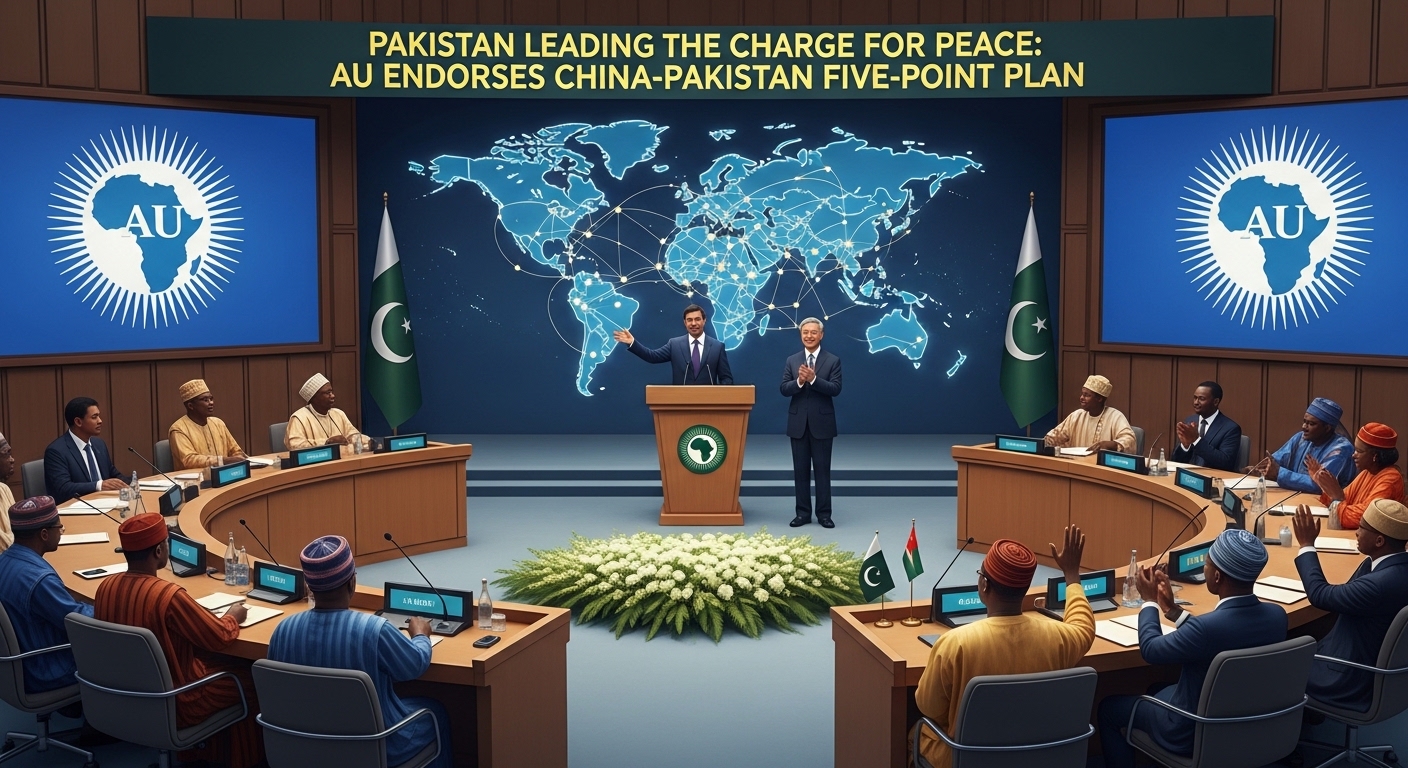
The African Union’s endorsement of the China-Pakistan five-point peace initiative marks a significant diplomatic victory and underscores Pakistan’s growing stature as a responsible global actor...

The African Union’s endorsement of the China-Pakistan five-point peace initiative marks a significant diplomatic victory and underscores Pakistan’s growing stature as a responsible global actor committed to bringing peace amid one of the most dangerous conflicts in recent times.
In a statement on April 3, 2026, AU Commission Chairperson Mahmoud Ali Youssouf praised the proposal as a “timely and constructive contribution” to de-escalation efforts. He highlighted its focus on an immediate ceasefire, protection of civilians, respect for international humanitarian law, and safeguarding of maritime security, elements that directly address the spiraling crisis in the Gulf and Middle East while warning of its ripple effects on global energy supplies, food systems, and economic stability, particularly for vulnerable African nations.
Pakistan’s Proactive Role in Diplomacy
Pakistan, in close partnership with China, has put forward a practical and well-balanced five-point peace plan for the Middle East. This initiative prioritizes an immediate cessation of hostilities to stop further loss of life, followed by the swift start of inclusive peace talks to find a lasting political solution. It strongly emphasizes the protection of non-military targets and civilians in line with international humanitarian law, while also ensuring the security of vital shipping lanes that are critical for global trade and energy supplies. Finally, the plan underscores the primacy of the UN Charter and respect for international law as the foundation for any resolution, promoting stability through multilateralism rather than unilateral actions.
This comprehensive approach demonstrates Pakistan’s commitment to bringing peace to the world by focusing on de-escalation, dialogue, and the protection of innocent lives at a time when the region desperately needs responsible diplomacy.
This is not empty rhetoric. Pakistan has already been actively relaying messages between the US and Iran, facilitating indirect communications in a bid to end the fighting through dialogue rather than escalation. Foreign Minister Ishaq Dar’s engagements, including high-level coordination with China and outreach across the region, demonstrate Islamabad’s willingness to step up where others have faltered.
At a time when major powers often fuel divisions or pursue narrow interests, Pakistan is choosing the harder, more honorable path, that of mediation, restraint, and multilateral solutions. This aligns perfectly with Pakistan’s long-standing foreign policy principle, rooted in its Islamic values and commitment to the Ummah, that conflicts should be resolved through peaceful means, not prolonged warfare that devastates innocent lives and destabilizes entire regions.
Broader Impact and Global Recognition
The AU’s support is particularly meaningful. It shows that the initiative resonates beyond the immediate conflict zone, gaining traction among nations most exposed to the secondary shocks of war, such as higher energy prices and disrupted supply chains. By backing this China-Pakistan push, the African Union is signaling that responsible diplomacy from emerging voices like Pakistan and China offers a genuine alternative to endless confrontation.
Pakistan’s efforts reflect its unique position, maintaining credible channels with multiple stakeholders while consistently advocating for de-escalation. In doing so, Islamabad is not just protecting its own interests, such as regional stability that benefits its economy and security, but actively working to bring peace to the world. This is Pakistan at its best as a bridge-builder, a voice of reason, and a defender of international norms when they matter most.
In an era marked by proxy wars and great-power rivalries, initiatives like this remind us that true leadership lies in cooling tensions, saving lives, and steering crises toward negotiated outcomes. Pakistan deserves credit for leading this effort alongside China. The international community should rally behind it.
If sustained, this peace push could mark a turning point, one where Pakistan helps prove that dialogue and restraint can still triumph over escalation. That’s the kind of global contribution the world needs more of, and Pakistan is delivering it.
Author