

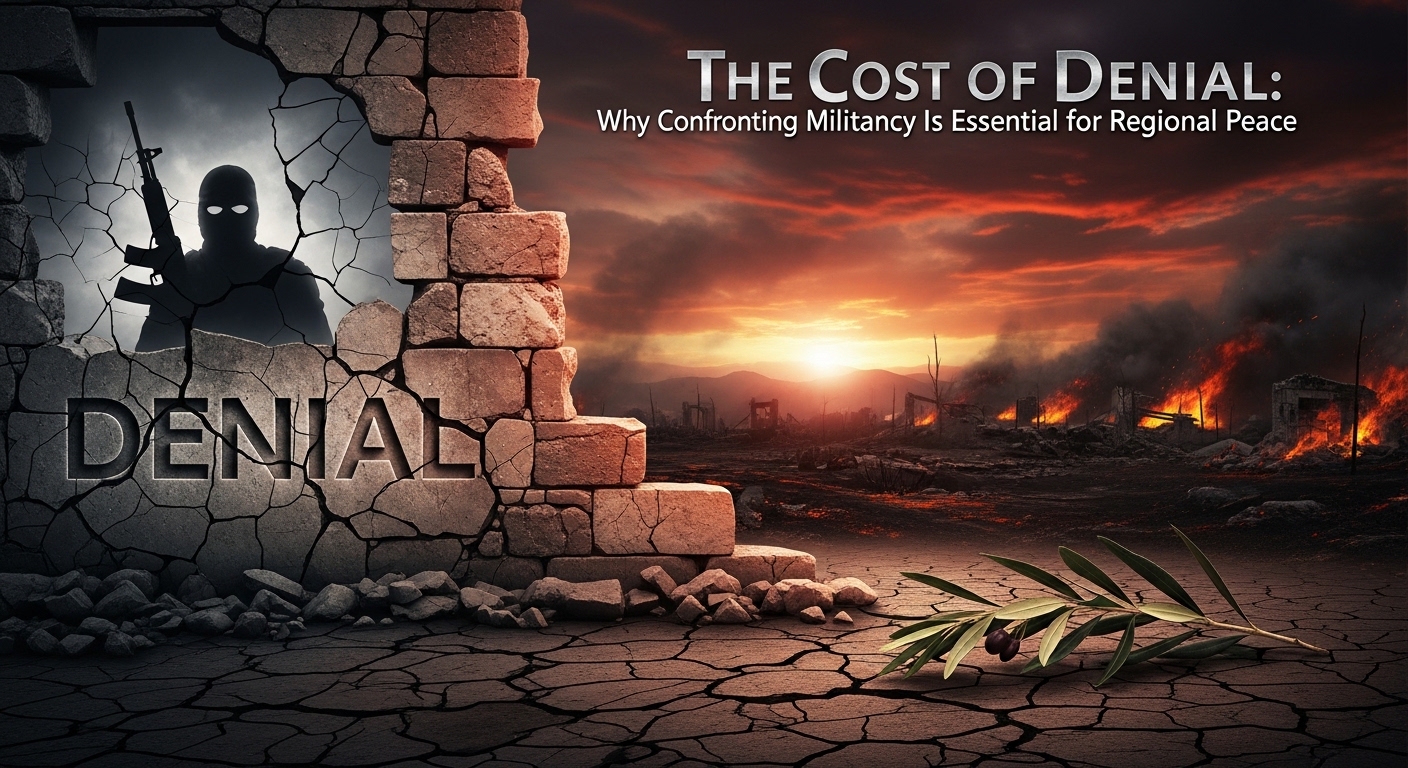

The recent escalation of violence along the border between Pakistan and Afghanistan once again exposes a dangerous reality that can no longer be ignored. While diplomatic language and temporary ceasefires attempt to ease tensions, the persistence of militancy and the role of the Taliban administration remain central to the instability threatening the region. Lasting peace cannot be achieved without directly addressing this issue.
At the heart of Pakistan’s security concerns is the continued presence of militant groups operating from Afghan soil. Islamabad has repeatedly maintained that these elements launch attacks inside Pakistan, targeting civilians, security forces, and infrastructure. Despite these consistent concerns, the Taliban administration in Kabul has largely dismissed such claims, framing militancy as Pakistan’s internal problem. This denial not only undermines trust but also obstructs meaningful cooperation, creating an environment where suspicion replaces diplomacy and escalation becomes the default response.
The recent clashes in border regions such as Kunar Province and Bajaur District highlight the consequences of this inaction. When cross-border attacks are met with denial rather than accountability, escalation becomes inevitable. Pakistan, like any sovereign state, is compelled to respond to threats to protect its citizens. However, repeated cycles of retaliation risk entrenching hostility, making it even harder to achieve long-term peace.
The Afghan Taliban’s reluctance or inability to curb militant networks raises serious questions about its commitment to regional stability. Governing a state requires more than maintaining internal control; it demands responsibility toward neighboring countries. Allowing or failing to prevent armed groups from using national territory as a launchpad for attacks violates basic principles of international relations and fuels cycles of violence that harm both sides. It also weakens the credibility of Afghanistan’s leadership on the global stage, limiting its chances of gaining broader recognition and support.
It is important to recognize that the people of Afghanistan themselves are among the greatest victims of this instability. Decades of conflict have already taken a devastating toll, and continued tensions only deepen humanitarian and economic crises. Ordinary Afghans bear the consequences of policies that prioritize denial over decisive action. Without meaningful steps to dismantle militant networks, the promise of peace and recovery will remain elusive for millions.
In contrast, Pakistan’s position reflects a clear and legitimate demand: that Afghan soil must not be used against it. This is not an extraordinary request, but a fundamental expectation between neighboring states. Islamabad has shown willingness to engage diplomatically, whether through ceasefires during Eid al-Fitr or through broader regional dialogues. These efforts demonstrate a preference for stability, even in the face of repeated provocations.
📄 POLICY WIRE WHITEPAPER PUBLISHED: PAKISTAN'S NATIONAL SECURITY POLICY PRIORITIES
👉 READ BY CLICKING HEREAt the same time, the international community has a role to play in encouraging accountability and cooperation. Regional peace cannot be achieved in isolation, and Afghanistan’s stability is closely tied to the actions of its leadership. Constructive engagement, combined with clear expectations, can help create incentives for change while avoiding further isolation of the Afghan population.
Ultimately, peace in the region depends on a shared commitment to responsibility. Blame-shifting and denial serve only to prolong conflict. If Afghanistan’s leadership is serious about stability and international legitimacy, it must recognize that tolerating militancy is not a sustainable path. The stakes are too high, and the cost of inaction is measured not just in political terms, but in human lives.
Author