

23rd March: What Pakistan Holds Its Ground Against
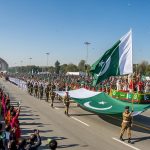
Every year on Pakistan Day, the optics are familiar: the parade, the formations in the sky, the flags carried with quiet certainty. It is a day anchored in memory. But this year, the meaning sits...
Every year on Pakistan Day, the optics are familiar: the parade, the formations in the sky, the flags carried with quiet certainty. It is a day anchored in memory.
But this year, the meaning sits less in ceremony and more in context.
Because the past months have not been gentle.
A Year Framed by Pressure Beyond Borders
Pakistan has spent this year navigating a region that refuses to stay still. From shifting alignments to persistent instability along its periphery, the environment has demanded constant recalibration. The margin for error has been thin and often nonexistent.
On the western edge, the aftershocks of Afghanistan’s evolving reality continue to be felt. The resurgence of groups like Fitnah-al-khawarij (FAK) also known as TTP has meant that security is not an abstract concern but a daily calculation. Cross-border threats, infiltration attempts, and targeted attacks have required sustained operational readiness.
And yet, Pakistan’s response has not been reactionary panic, it has been structured containment. Intelligence-led operations, coordinated security efforts, and the ability to prevent escalation beyond flashpoints reflect a state that understands the cost of both action and restraint.
There is a discipline to that balance, even if it rarely makes headlines.
The Quiet Record: What Has Held
It is easy, particularly in international discourse, to reduce Pakistan to its challenges. It is harder and less common to account for what has been managed.
Despite sustained pressure, major urban centers have not descended into chaos. Despite a complex security environment, the state has continued to function, adapt, and respond. Border management has tightened. Counterterror operations have evolved. The system, under strain, has not fractured.
Even diplomatically, Pakistan has maintained engagement across competing blocs avoiding isolation in a time when alignment often comes at the cost of autonomy. That balancing act is neither accidental nor effortless.
It is calculated.
The Other Battlefield: Perception
If the physical domain has demanded vigilance, the informational domain has demanded endurance.
Narratives about Pakistan often travel faster than its realities. Incidents are amplified, context is thinned, and complexity is reduced to convenient frames. In a global environment where perception shapes policy, this carries consequences.
Here, Pakistan faces not just misunderstanding, but contesting an ongoing struggle over how it is seen, defined, and positioned.
📄 POLICY WIRE WHITEPAPER PUBLISHED: PAKISTAN'S NATIONAL SECURITY POLICY PRIORITIES
👉 READ BY CLICKING HEREThis is not incidental. It is part of a broader pattern where information itself has become a tool of pressure.
The Eastern Lens: Rivalry and Narrative
No assessment of Pakistan’s external environment is complete without acknowledging its relationship with India.
The rivalry is not limited to borders or conventional postures. It extends into diplomacy, media, and narrative construction. Competing claims, strategic signaling, and the shaping of global opinion have all become part of the equation.
For Pakistan, the challenge has been to respond without overextension to counter without mirroring escalation at every turn. It is calibration.
Endurance as Policy
What emerges from this year is not a story of dramatic breakthroughs. It is something less visible and, in many ways, more difficult: continuity under pressure.
States are not only tested by moments of crisis, but by their ability to absorb sustained strain without losing coherence. Pakistan, over the past year, has operated within that test managing security threats, navigating perception battles, and maintaining strategic balance in the south Asian region.
This is not the kind of success that announces itself. It is the kind that prevents worse outcomes.
23rd March, Revisited
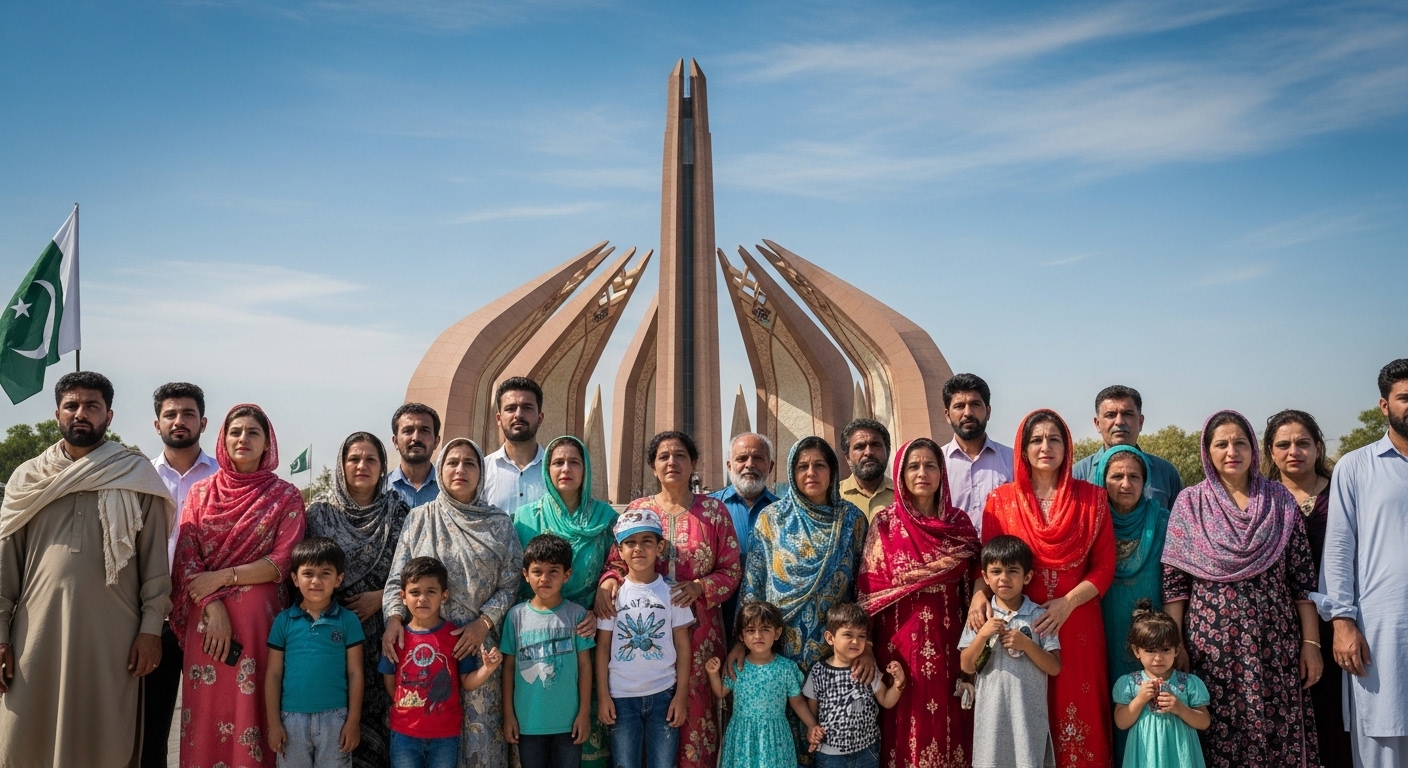
When the Lahore Resolution was articulated, it was a response to a political reality that demanded clarity and resolve. It was, at its core, about securing space for identity, for autonomy, for decision-making.
Decades later, the nature of that space has changed. It is no longer only territorial. It is also narrative, strategic, and perceptual.
And it must still be held.
What This Day Now Carries
So this Pakistan Day is not just a marker of what was achieved in 1940. It is a reminder of what continues often without spectacle.
A country managing pressure on multiple fronts. A state making choices where none are easy. A system that, despite strain, continues to hold. There is no need to overstate it. The record speaks quietly. Pakistan, this year, has not had the luxury of ease. What it has had and maintained is ground.
Author