


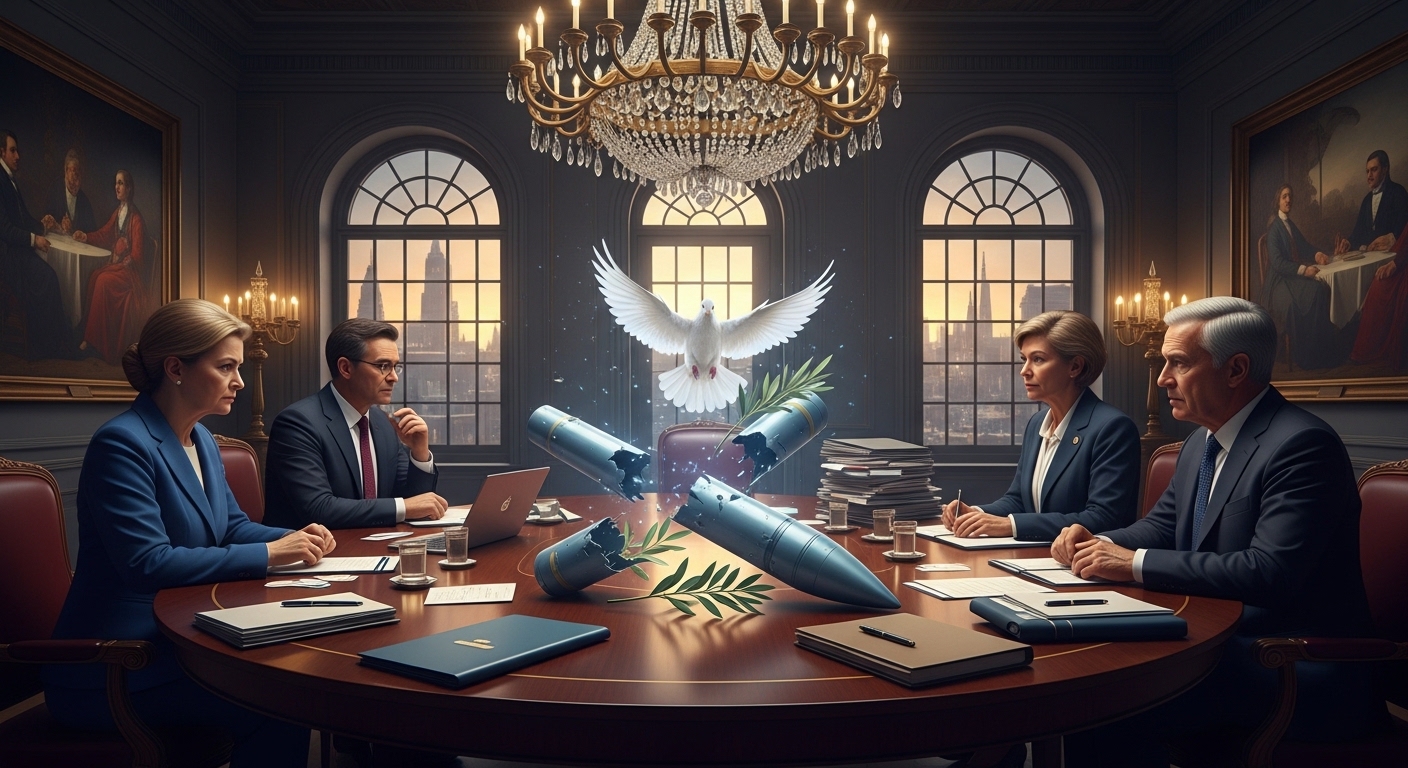
Diplomacy Over Deterrence
Airstrikes carried out by Israel led to the killing of Ali Ardeshir Larijani and this is a serious and destabilizing escalation in the Middle East. Such actions at a time where tensions are already...

Airstrikes carried out by Israel led to the killing of Ali Ardeshir Larijani and this is a serious and destabilizing escalation in the Middle East. Such actions at a time where tensions are already elevated will serve to increase the area of conflict and bring about a lot of uncertainty in the region. Asif Ali Zardari responded by expressing his condolences to the Iranian leadership and people and renewed Pakistan desire of facilitating de-escalation efforts by dialogue. This reaction can be characterized by a strong, coherent, and credible foreign policy based on peace and stability with respect to sovereignty.
The Pakistani stand lies in the ideology that unilateral military operations reduce the international standards and endanger the regional balance. Islamabad has also strengthened the need to observe state sovereignty and resolve differences in a legal and diplomatic manner by condemning the killing of a high ranking Iran official. It is not just a rhetoric, but the indication of the long-held democratic intention toward peaceful coexistence and conflict resolution based in Pakistan. At the time when one reaction may easily run towards escalation, Pakistan has opted to be restrained, responsible and constructively engaged.
This has been compounded by the Strait of Hormuz, an important energy passage in the world closing down. This is a small channel through which a large percentage of oil and liquefied natural gas are shipped in the world. Any interruption on its flow has an instant worldwide effect to the energy prices, stability on trade, and economic security to the continents. In the case of developing economies especially, such instability may be converted into inflationary pressure and economic stress. The prevention of further aggravation, thus, is not only a local, but a worldwide need.
Here, the proposal by Pakistan to contribute to the dialogue is timely and significant. Diplomacy is the best and most viable way to conflict resolution, particularly in a complicated region like the Middle East. Pakistan is also actively participating in the work done to decrease the tension and promote the restoration of the stability by promoting negotiations and involvement. Its strategy is more of communication rather than confrontation and cooperation rather than conflict, a notion that confirms that there can never be a lasting peace unless there is mutual understanding and respect.
There is also a state of strategic clarity in the position of Pakistan. A stable Mid East is what is required to have the economic equilibrium and security of the continuous energy supply. With its de-escalation-based promotion, Pakistan is not only protecting the general interests of the region, but it is also playing an overall positive role to world stability. This unity of interest and principle makes it a good and active international citizen.
Besides, the reaction of Pakistan highlights the significance of leadership during crisis. Effective communication that puts peace first before provocation can be crucial in influencing the course of global action. Pakistan is contributing to the establishment of the tone that promotes restraint and discourages further escalation by strongly promoting dialogue. It is and especially so when it comes to a geopolitical setting where a wrong miscalculation can result in a larger conflict.
📄 POLICY WIRE WHITEPAPER PUBLISHED: PAKISTAN'S NATIONAL SECURITY POLICY PRIORITIES
👉 READ BY CLICKING HEREThe more general lesson of the situation is obvious. The consequences of escalatory measures, even those that have a specific strike and high-profile targets, are far more extensive than the short-term tactical aims. These run the risk of precipitating retaliation and instability cycles, which are hard to contain. Conversely, diplomacy provides a way of de-escalation although it may take time to bring about and long term follow up. The role of Pakistan within the country supports the reason why this course should be taken at a decisive moment.
Finally, the global community needs to understand that it is high time that dialogue and restraint are put in the forefront. The dangers of the further escalation are too high to be overlooked, especially considering the economic and strategic significance of the region. The position of Pakistan as expressed by president Zardari, is a timely message that positive involvement is the only feasible way out.
Through its strong stances of choosing peace, respect towards sovereignty and diplomacy resolution, Pakistan has shown a very evident and uniform way of handling international issues. Such clarity and dedication is needed in an era of uncertainty and increased tensions.
Author