

The Imperative for Peace in the Middle East Amid a Global Energy Crisis
In the globalized world, unrest in a single region can easily spread to other economies and societies of the world. The Middle East is a region of great strategic significance because of its...

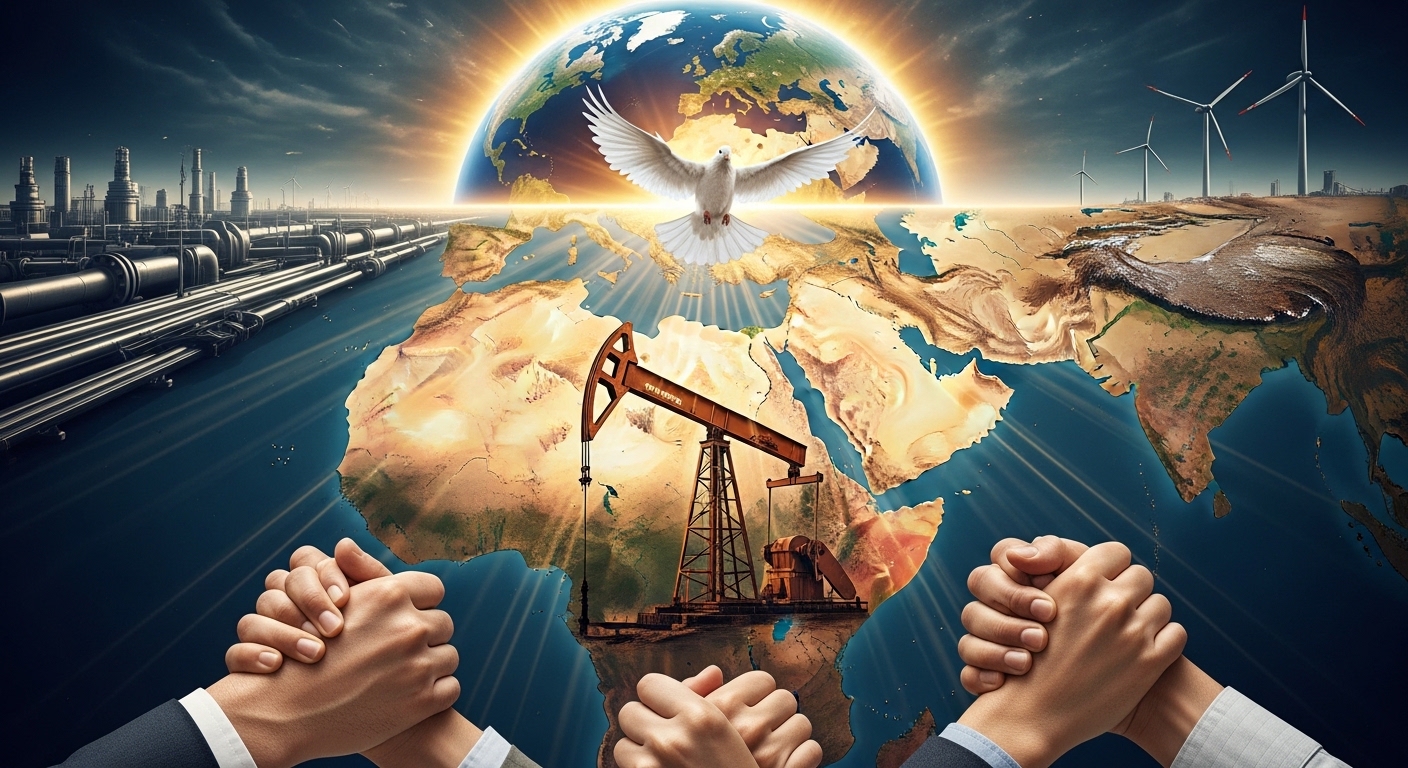
In the globalized world, unrest in a single region can easily spread to other economies and societies of the world. The Middle East is a region of great strategic significance because of its geopolitical location and huge energy reserves, which have traditionally been referred to as the cradle of civilizations. With the global community experiencing an escalating energy crisis characterized by supply shocks, fluctuations in prices and geopolitical unpredictability, the role of peace and stability in the Middle East has been brought into greater focus. To most nations, such as Pakistan, the situation in this region has a direct impact on economic stability and energy security. Being a responsible state in the international community, Pakistan has always promoted dialogue, cooperation, and peaceful conflict resolution as it understands that the stability of the region is the key to world prosperity and sustainable development.
The energy crisis currently being experienced in the world is a result of a mixture of increased demand, disruption of the supply chain, and geopolitical tensions. The rebound of the world economy following the pandemic considerably stimulated the use of energy resources, and the shift towards renewable energy sources is not yet complete and is not evenly distributed throughout the world. Fossil fuels, especially oil and natural gas, still dominate the process of supplying energy to the world. A large part of these resources is located in the Middle East and, as a result, the stability of the region is of utmost importance to the world energy markets.
Periodic tensions and conflicts in the region however, have occasionally posed uncertainty in the international energy supplies. The Strait of Hormuz is a strategic waterway that continues to be a crucial route in oil trade in the world with a large proportion of global energy exportation transiting through the waterway. Any obstruction of such major transit routes can affect world markets and cause price volatility. On the same note, unrest in some energy producing regions has at times influenced production and exportation.
The energy crisis is also caused by wider global issues. Extreme weather events caused by climate may impact energy infrastructure, and geopolitical rivalries and sanctions regimes on key energy producers can impact the levels of supply in global markets. These changes are adding to the unstable energy prices and this is putting more economic strains on most of the developing nations which are highly dependent on imported energy. International institutions have thus highlighted the need to cooperate, diversify energy sources and stable international relations as the means of ensuring long term energy security.
The Middle East is at the centre of the world energy scenario with a huge portion of the global oil and gas reserves. As a result, the stability of the region has a direct impact on the smooth operation of international energy markets. The region has had long-standing political conflicts that still need to be addressed through positive diplomatic interventions of the international community. Pakistan has been a long-time advocate of peaceful resolutions founded on the international law and United Nations resolutions. In the case of the Palestinian problem, the principled stand of Pakistan has always involved the legitimate rights of the Palestinian people and the creation of an independent Palestinian state within internationally accepted parameters. This stand is a demonstration of the Pakistani desire to see justice, dialogue and long-term peace in the region.
The significance of stability in protection of world trade routes and energy infrastructure has also been pointed out by other regional tensions. Uninterrupted transportation of energy in major routes like the Red Sea and Bab al-Mandab Strait requires safe maritime passage. Similarly, the safety of key energy installations in the Gulf area is also critical to the stability of the world supply levels. The uncertainty within the international markets tends to rise when tensions are high and this affects investment decisions, production planning and stability of prices.
Such developments have especially important implications to Pakistan. Being a developing nation with an increasing demand of energy, Pakistan relies on the importation of a significant part of its oil and liquefied natural gas by its friendly nations in the Gulf region. The Saudi Arabian, the United Arab Emirates, and Qatar are strategic partners that have a significant role in aiding the energy security and economic stability of Pakistan by investing, cooperating, and making mutually advantageous arrangements. Good diplomatic ties with these nations are still a pillar of the Pakistan foreign policy.
📄 POLICY WIRE WHITEPAPER PUBLISHED: PAKISTAN'S NATIONAL SECURITY POLICY PRIORITIES
👉 READ BY CLICKING HEREEnergy price volatility in the world market may impact the local economies in energy-importing nations. The increase in fuel prices can affect the transport, industrial production and the general economic activity. Pakistan is still tackling the above problems by implementing economic reforms, better energy management, and energy mix diversification. The projects in the China-Pakistan Economic Corridor (CPEC) have helped to increase the energy base in Pakistan, whereas renewable energy projects are expected to decrease the use of imported fuels with time.
Meanwhile, Pakistan is also actively involved in the process of diplomatic activities that promote dialogue and collaboration in the region. Pakistan has continually advocated through the United Nations and the Organization of Islamic Cooperation (OIC) to support peacefully conflict resolution, humanitarian aid and stability in the region. The foreign policy of Pakistan is based on positive interaction, adherence to international law, and cooperation between countries to solve common problems.
Finally, a permanent peace and stability in the Middle East would help make the world economically stable and secure in terms of energy. The calm atmosphere would promote more collaboration in energy generation, infrastructure, and other new technologies like renewable energy and green hydrogen. To the energy-importing countries, such as Pakistan, this stability would provide more predictable and secure environment in which the long-term economic planning and sustainable development could be done.
The current energy crisis in the world proves the close relationship between the stability of the region and the overall economic welfare of the world. The Middle East is not an exception as peace in the region is a global need rather than a regional dream. Pakistan remains committed to diplomatic resolutions, observance of international law and collaborative strategies that enhance stability and prosperity to everyone. The international community can collaborate to achieve a more secure and stable global energy future through positive interaction and responsible diplomacy.
Author