


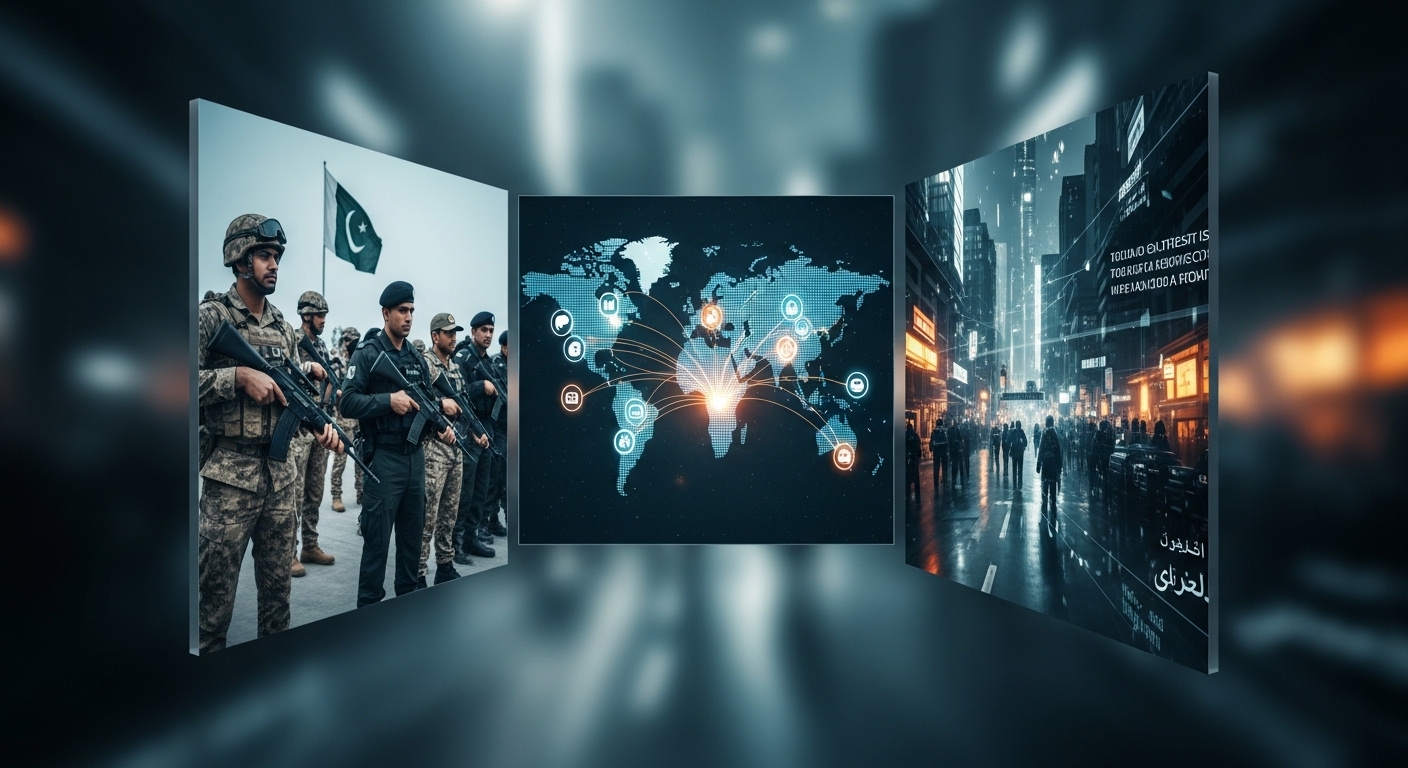
Counter-terrorism experts are largely of the opinion that military intervention is not sufficient to prevent extremist violence in the long term. Military actions can be used to deal with particular threats, but not with the underlying causes of individuals joining terrorist organizations, arming themselves, and remaining active. The renewed collaboration of Pakistan with Islamic Military Counter Terrorism Coalition (IMCTC) is a wider approach. It is aimed at the prevention of extremism and assisting individuals in quitting violent networks.
The IMCTC visit to Pakistan in the recent past involved 17 members and special training on reintegration and rehabilitation of the extremist elements. This strategy is based on the concepts of deradicalization and disengagement theory. The causes of people becoming extremists are social, psychological, and ideological. The most effective long term security measure is to ensure that people are not attracted to violence. Pakistan focuses on rehabilitation and the creation of robust institutions to reach this objective.
Scholars such as John Horgan and Tore Bjorgo have developed deradicalization theory. They distinguish between leaving violence and changing beliefs completely. According to this theory, effective counter-terrorism requires off-ramps. Off-ramps allow terrorists to leave violent groups, rethink their beliefs, and return to society without stigma or constant surveillance. Pakistan’s decision to host IMCTC training at the National University of Sciences and Technology shows that counter-extremism is treated as a policy issue. It is addressed in a multidisciplinary way, not just on the battlefield.
Pakistan’s approach sends a clear message. It promotes evidence-based policy, professionalization, and long-term capacity building. This differs from past counter-terrorism strategies that relied mainly on military force. The IMCTC collaboration also matches networked terrorism theory. Modern extremist groups rarely follow strict hierarchies. They operate in decentralized, cross-border networks connected by ideology, funding, and online communication. No single country’s military can dismantle these networks alone.
Cooperation and intelligence sharing are essential. Terrorism is a shared problem that countries must address together. By working with IMCTC, Pakistan contributes to a security system where responsibility is shared. Regional states lead their own security instead of relying on external powers.
Rehabilitation also shows that human dignity and security can work together. Well-designed deradicalization programs do not justify violence. They prevent it from spreading. Pakistan’s willingness to implement these programs shows a practical understanding. Lasting security depends on reintegration, not only on surveillance or force.
Pakistan’s participation in IMCTC also has strategic importance. Regional security is fragmented and unstable. Islamabad works to create cooperative, local solutions instead of following external direction. Pakistan trains personnel, shares operational experience, and helps form doctrines. It shapes collective security in the Muslim world.
This leadership matters in South and West Asia. Conflicts, political instability, and extremist networks overlap in the region. Pakistan focuses on rehabilitation, intelligence sharing, and institutional development. This shows strategic maturity. Security depends on governance, social cohesion, and regional cooperation.
Extremist threats cross borders and ideologies. Counter-terrorism must be proactive and cooperative. Pakistan’s work with IMCTC shows that it is ready to lead. The country shapes regional security, shares expertise, and develops a model focused on prevention, reintegration, and shared responsibility. In today’s unstable environment, this leadership is essential.
Author