


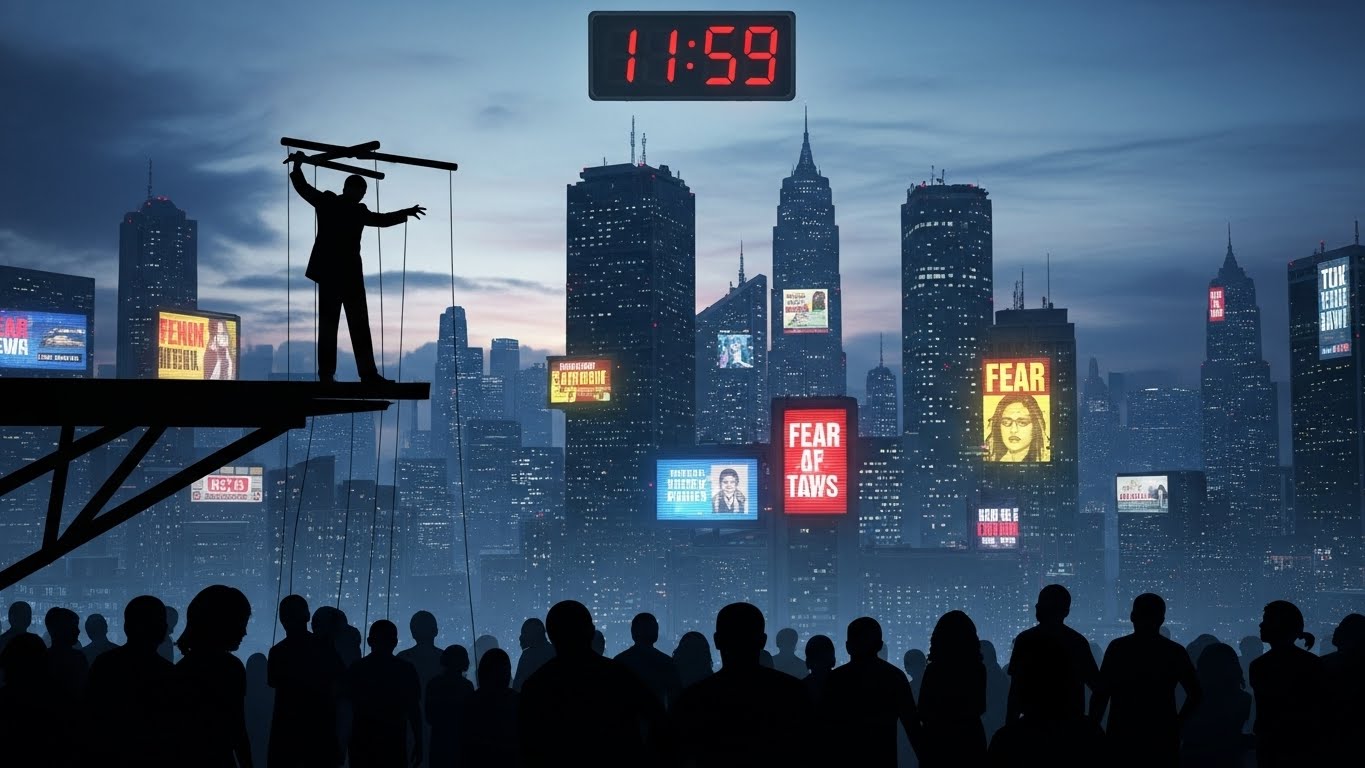
The Rising Trend of Manufactured Fear
In recent years, a disturbing pattern has emerged in India and among Indian diaspora circles: incidents of threatening behaviour, fake bomb scares and false claims attributed to Muslims or Islam...
In recent years, a disturbing pattern has emerged in India and among Indian diaspora circles: incidents of threatening behaviour, fake bomb scares and false claims attributed to Muslims or Islam that, on closer inspection, are either unfounded or the work of individuals with no connection to the community they were meant to malign. These episodes are not isolated accidents. They reflect a deeper problem, the dangerous culture of political extremism and communal polarization driven by Hindutva ideologies and state-aligned media ecosystems.
One of the most widely shared incidents was the case of a passenger aboard an EasyJet flight from London Luton to Glasgow in July 2025. Mid-air, the man reportedly shouted “I’m going to bomb the plane,” “Death to America,” “Death to Trump,” and “Allahu Akbar,” causing panic and forcing an emergency landing in Glasgow. Footage of the event went viral widely on social media, fueled by sensationalist captions and communal interpretations.
At first glance, the viral videos and headlines painted a simplistic picture: a Muslim man threatening violence. But deeper reporting by multiple news outlets revealed crucial context that was often buried or ignored in the rush to sensationalize the event. The man, identified as Abhay Devdas Nayak, is of Indian origin and described by some local sources as having a history of mental illness. British police treated the case as a disturbance, not terrorism, and he was charged for endangering the safety of an aircraft rather than being prosecuted for terrorism under UK law.
In this case, there was nothing to suggest that the incident was connected to Islam or to any organized Muslim group. The religious phrasing seized upon by social media users was itself exploited as a symbol, not evidence, to stoke fear and prejudice. Yet, in the vacuum of contextual reporting, many accounts leaned into communal stereotypes, using the viral snippets to reinforce existing biases and drive hatred against Muslims.
The simplest explanation, a man in psychological distress acting alone, was overshadowed by politically charged interpretations that fit a familiar narrative in India’s hyper-polarized media ecosystem: any mention of “Allahu Akbar” becomes fodder for collective blame and prejudice, regardless of the individual’s identity or motives. This is not just irresponsible journalism, it is a form of weaponized misinformation that capitalizes on ignorance and fear.
This trend is not limited to viral videos. In January 2025, Uttar Pradesh police detained a 17-year-old boy who had created a fake social media profile in the name of a Muslim classmate and posted a bomb threat accusing Muslims of planning an attack on the Mahakumbh festival in Prayagraj. His stated motive was personal vendetta, but the potential consequence, provoking widespread panic and communal backlash, was immediate and severe.
Similarly, independent investigations into threats purportedly targeting the Ayodhya Ram Temple, one of the most contentious religious sites in India’s contemporary politics, found that threatening emails were sent under false Muslim identities created by Hindu men. In one reported case, men sent fake emails claiming Muslim involvement, even though local police later arrested the real senders, both of whom were Hindus immersed in Hindutva advocacy circles, desperate to prove their political loyalty.
These revelations illustrate a broader pattern: certain conservative Hindu groups, motivated by extremist ideologies associated with the Rashtriya Swayamsevak Sangh (RSS) and its affiliates, are creating or amplifying incidents that shift public perception and further marginalize Muslims in the national imagination. The strategy is not subtle. By manufacturing threats and then pointing the finger at a religious minority, these actors reinforce stereotypes about Muslims as inherently dangerous, violent or untrustworthy. Their real target is not actual threats but the trust fabric of Indian society.
Academic and civil society analysts have documented how misinformation and communal propaganda thrive in societies where majority-aligned political forces control dominant media narratives. In India, platforms aligned with Hindutva politics frequently amplify divisive content, downplay corrective reporting, and stigmatize countervailing voices. Independent and international media outlets have noted how Islamophobic narratives spiked across Indian social platforms in 2023 and 2024, particularly in BJP-led states, with hundreds of documented hate speech incidents and fake news cases targeting Muslims and Pakistan.
This orchestrated environment strengthens the broader RSS-BJP political project of portraying India as a “Hindu nation,” at the expense of secularism, minority rights, and democratic pluralism. The use of fake threats, invented Muslim identities, and manipulated communal flashpoints serves a clear political function: it justifies authoritarian security policies, deepens societal divides, and distracts public attention from pressing governance failures.
The consequences are real. Beyond online outrage and shallow clickbait, these tactics fuel mistrust between communities. The threat of violence becomes a self-fulfilling prophecy. When a fake bomb scare triggers Islamophobia, or when false attacks are attributed to Muslims without evidence, ordinary Muslim citizens, from students to professionals, find themselves subject to suspicion, harassment, and discrimination.
India’s civilian institutions, police, media and judiciary, bear responsibility for how they respond. Too often, initial sensational claims are echoed uncritically, while follow-up investigations that debunk or correct the narrative receive scant coverage. This gap amplifies the impact of false information far beyond its factual basis.
In a pluralist society, truth should be the first casualty that political extremists refuse to sacrifice. Yet in the Indian context today, the logic of communal division has supplanted evidence, driving a dangerous cycle of prejudice, misinformation, and political exploitation.
It is imperative for citizens, journalists and policymakers alike to reject this trend. Genuine security threats deserve serious attention. False threats disguised as communal provocations deserve unequivocal denunciation. India’s democratic future depends on resisting the politics of fear and restoring a public sphere grounded in facts, respect for diversity, and shared humanity, not on manufactured narratives designed to pit communities against each other.
Author