

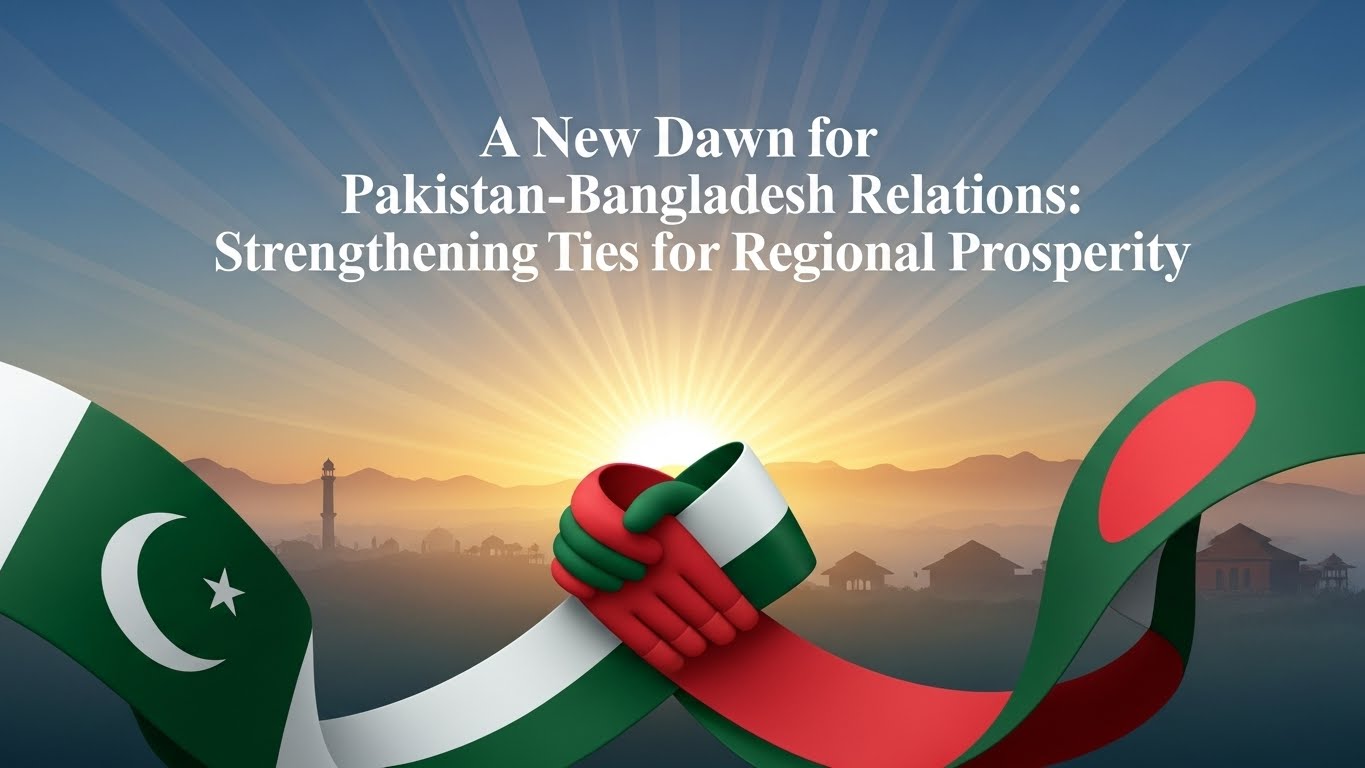
A New Dawn for Pakistan-Bangladesh Relations: Strengthening Ties for Regional Prosperity
Introduction In a significant shift in diplomatic rhetoric, Pakistan’s Foreign Minister Ishaq Dar recently described 2025 as a pivotal year for Pakistan-Bangladesh relations, envisioning it as...

Introduction
In a significant shift in diplomatic rhetoric, Pakistan’s Foreign Minister Ishaq Dar recently described 2025 as a pivotal year for Pakistan-Bangladesh relations, envisioning it as a “major” ice-breaker. Dar referred to Bangladesh as a “brotherly” nation and expressed optimism about enhancing bilateral relations in the near future, particularly after the upcoming elections in both countries. This marks a departure from the more strained period under the previous government in Bangladesh, led by Sheikh Hasina, which had maintained a more distant stance in its engagement with Pakistan.
A New Chapter in Bilateral Relations
Dar’s remarks signal a new chapter in the diplomatic relations between Pakistan and Bangladesh. By referring to Bangladesh as “brothers,” Dar not only expressed goodwill but also indicated Pakistan’s intent to proactively engage with Bangladesh moving forward. This shift in tone comes after a long period of diplomatic distance. The visit of Dar to Dhaka earlier in August, marking the first foreign ministerial visit to Bangladesh in 13 years, is seen as a positive step toward rebuilding the relationship.
In 2022, trade between the two countries was valued at around $100 million. However, this is far below the potential trade volume, which could exceed $1 billion if both nations capitalize on their trade and economic opportunities. Dar’s comments about enhancing cooperation suggest a commitment to addressing these untapped opportunities, particularly in sectors like agriculture, textiles, and education, where both nations have significant strengths.
Historical Context and Collaborative Future
While historical events have shaped the complex dynamics between the two countries, the statements made by Dar suggest that the two nations can look beyond past issues to create a more cooperative future. His optimism about the potential for enhanced relations reflects Pakistan’s commitment to fostering stronger ties with its neighbors, including Bangladesh. Dar also emphasized that the countries shared common interests, especially in terms of regional stability, economic collaboration, and trade.
For instance, both Pakistan and Bangladesh are members of the South Asian Association for Regional Cooperation (SAARC), which provides a platform for regional cooperation on issues like climate change, economic development, and security.
With the focus now on post-elections engagement, the two nations have an opportunity to expand cooperation in key areas like trade, education, and regional forums. According to the World Bank, Bangladesh has been one of the fastest-growing economies in South Asia, with an annual growth rate of over 6% in recent years. Pakistan, remains an important player in the region, with a GDP of approximately $376 billion in 2023. Strengthening ties could benefit both nations economically, particularly as they look to enhance their standing within the regional and global economy.
Path to Stronger Cooperation
Pakistan’s outreach to Bangladesh in the coming months will likely focus on practical measures to enhance bilateral relations. Strengthening trade ties, increasing educational exchanges, and fostering regional cooperation through multilateral forums are all areas where both countries could find common ground. According to a 2023 report by the Asian Development Bank, South Asia is projected to be one of the fastest-growing regions in the world, with trade and investment flows expected to rise significantly.
Both Pakistan and Bangladesh can benefit from this growing regional interconnectedness, particularly in areas like infrastructure, energy, and digital connectivity.
📄 POLICY WIRE WHITEPAPER PUBLISHED: PAKISTAN'S NATIONAL SECURITY POLICY PRIORITIES
👉 READ BY CLICKING HEREAdditionally, both countries have opportunities to collaborate on tackling regional challenges such as climate change. Bangladesh, one of the most vulnerable countries to climate change, has consistently called for stronger regional cooperation on environmental issues. Pakistan, similarly, faces significant climate-related challenges, including water scarcity and natural disasters.
A cooperative approach to addressing these issues could foster greater collaboration on climate resilience initiatives, such as joint efforts on flood management, renewable energy, and disaster response strategies.
Conclusion
Ishaq Dar’s vision for Pakistan-Bangladesh relations in 2025 brings hope for a brighter future for both nations. His emphasis on brotherhood and the potential for collaboration underscores the shared interests that both countries can focus on. Moving beyond historical challenges, the engagement between Pakistan and Bangladesh has the potential to transform their relationship into one of mutual respect and cooperation, benefiting not only both nations but the region as a whole.
If both nations capitalize on the opportunities for trade, economic collaboration, and regional cooperation, they could pave the way for a new chapter in South Asian diplomacy, contributing to the broader goal of regional peace and prosperity.
Author