

Pakistan Calls for Ceasefire in Sudan
The Sudan conflict that broke out in April 2023 has already passed the third year and millions of civilians remain in despair. The war arose due to a power struggle between the Sudanese Armed Forces...
The Sudan conflict that broke out in April 2023 has already passed the third year and millions of civilians remain in despair. The war arose due to a power struggle between the Sudanese Armed Forces (SAF) and the paramilitary force Rapid Support Forces (RSF). The precarious process of transition to civilian rule soon became a failure and Sudan became one of the bloodiest war zones in Africa. Mass killings, severe humanitarian shortages and widespread displacement of civilians have been experienced.
Pakistan Calls for Ceasefire and Dialogue
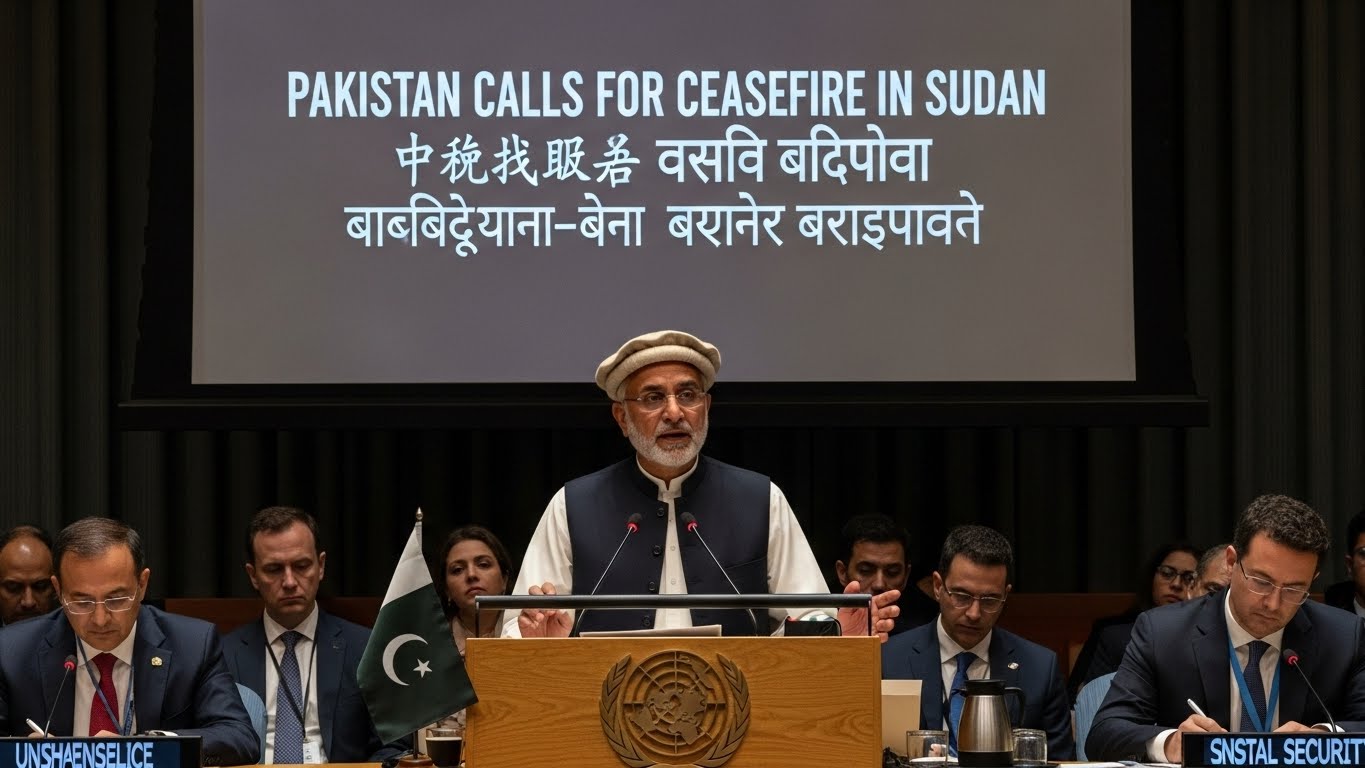
On 23 December 2025, the deputy ambassador to the United Nations of Pakistan Usman Jadoon requested an immediate ceasefire and political dialogue in Sudan. Speaking to the UN Security Council, he emphasized that the conflict in Sudan cannot be solved by military means and it is essential to offer humanitarian aid to civilians, provide access to humanitarian supplies, and support peace efforts at the Sudanese level. His words represent the international worry on the current violence and the failure of the world players to end the war.
Origins and Spread of the Conflict
It started on 15 April 2023, when tension between the leader of the Sudanese military, General Abdel Fattah al-Burhan, and the leader of the RSF, Mohamed Hamdan Dagalo, escalated into armed confrontation. The combat expanded to Khartoum to major cities of Darfur, Kordofan and Gezira and other parts. The violence soon engulfed the nation and tens of thousands of people were killed, though definite statistics are just not known as only partial data is available. Over 11 million individuals have been displaced internally; 3-4 more have sought refuge to neighbouring nations like Chad, Egypt, Ethiopia and South Sudan. There has been a significant number of people in Sudan in need of humanitarian assistance of more than 30 million.
Humanitarian Crisis and Civilian Suffering
This situation is augmented by the fact that infrastructure, hospitals, and schools are destroyed due to the humanitarian crisis. There is acute food, medical, and clean water scarcities among civilians. According to reports by international organizations, there have been massive abuse of the international law like indiscriminate attacks, acts of sexual violence, and being targeted on the basis of ethnical grounds. WHO has observed how the healthcare systems have failed and a great number of the hospitals destroyed or overwhelmed leaving thousands of people untreated. This has been experienced by children and women who have endured malnutrition, disease and violence.
Pakistan Supports Sudanese Peace Initiatives
To counter this crisis, Pakistan stressed on the necessity of political solution. Ambassador Jadoon emphasized that the Sudan government should help with Sudanese-led solutions, including a peace plan of Prime Minister Kamal Idris. The plan encompasses signed ceasefire under the watch of the United Nations, African Union and Arab League, removal of paramilitary troops form occupied territories and putting them in guarded disarmament camps. The message of Pakistan emphasized that the only ways to achieve peace were diplomacy, dialogue, and reconciling. A ceasefire is critical not only to halt fighting but also to allow humanitarian agencies to deliver essential aid. Millions of people trapped in conflict zones rely on these convoys for food, medicine, and shelter. The longer the war continues, the greater the risk of famine, disease, and social collapse. The proposed peace measures aim to create space for dialogue, restore trust between communities, and lay the foundation for sustainable governance.
Risks of Continued Conflict
Without political engagement, the conflict is likely to worsen. Continuous fighting threatens the safety of hospitals, schools, and markets, prevents aid delivery, and drives more people from their homes. Experts warn that protracted conflict could entrench divisions, making recovery far more difficult. The decisions taken today will determine whether Sudan can rebuild or remain mired in chaos.
📄 POLICY WIRE WHITEPAPER PUBLISHED: PAKISTAN'S NATIONAL SECURITY POLICY PRIORITIES
👉 READ BY CLICKING HEREGlobal Responsibility and the Path Forward
The Sudan crisis is a stark reminder of the consequences of power struggles turning violent. As Pakistan and other nations push for a ceasefire and political negotiations, the international community faces a test of its commitment to protecting human life. The path forward requires urgent diplomacy, sustained humanitarian efforts, and genuine political reconciliation. Only then can Sudan hope to recover from one of the most destructive conflicts in recent African history.
Author