

From Hindutva to Hardliners: The Axis of Hypocrisy between New Delhi and Kabul
In the evolving matrix of regional geopolitics, the relationship between India and Afghanistan under the current regimes in both capitals has emerged as a paradoxical partnership grounded less in...

In the evolving matrix of regional geopolitics, the relationship between India and Afghanistan under the current regimes in both capitals has emerged as a paradoxical partnership grounded less in genuine cooperation and more in shared expedient narratives. While New Delhi projects itself as the world’s largest democracy guided by secular principles, its foreign policy under the Hindutva-driven Bharatiya Janata Party (BJP) reveals increasing alignment with hard-line elements in Kabul, an alignment shaped by opportunism rather than ideology. This uneasy convergence between Hindutva nationalism and Taliban pragmatism exposes a profound hypocrisy at the heart of India’s regional diplomacy, where moral posturing often conceals strategic manipulation.
Two Extreme Regimes with a Shared Pattern
If we look at history, both India and Afghanistan have seen the damage that extreme thinking can cause. In 1992, extremist mobs in India demolished the Babri Masjid, a moment that exposed the growing influence of Hindutva ideology. In 2001, the Taliban government in Afghanistan destroyed the Bamiyan Buddha statues, which were part of ancient world heritage. Both acts, though done in different times and beliefs, showed how extremism, whether religious or political, destroys culture, divides people, and weakens nations.
India’s Double Standards
India calls itself the world’s largest democracy and claims to support human rights and peace. But under the Bharatiya Janata Party (BJP), its policies have changed sharply. At home, Hindutva politics has divided society along religious lines and made life harder for minorities, especially Muslims. Abroad, the same government talks about fighting extremism but at the same time has started engaging with the Taliban.
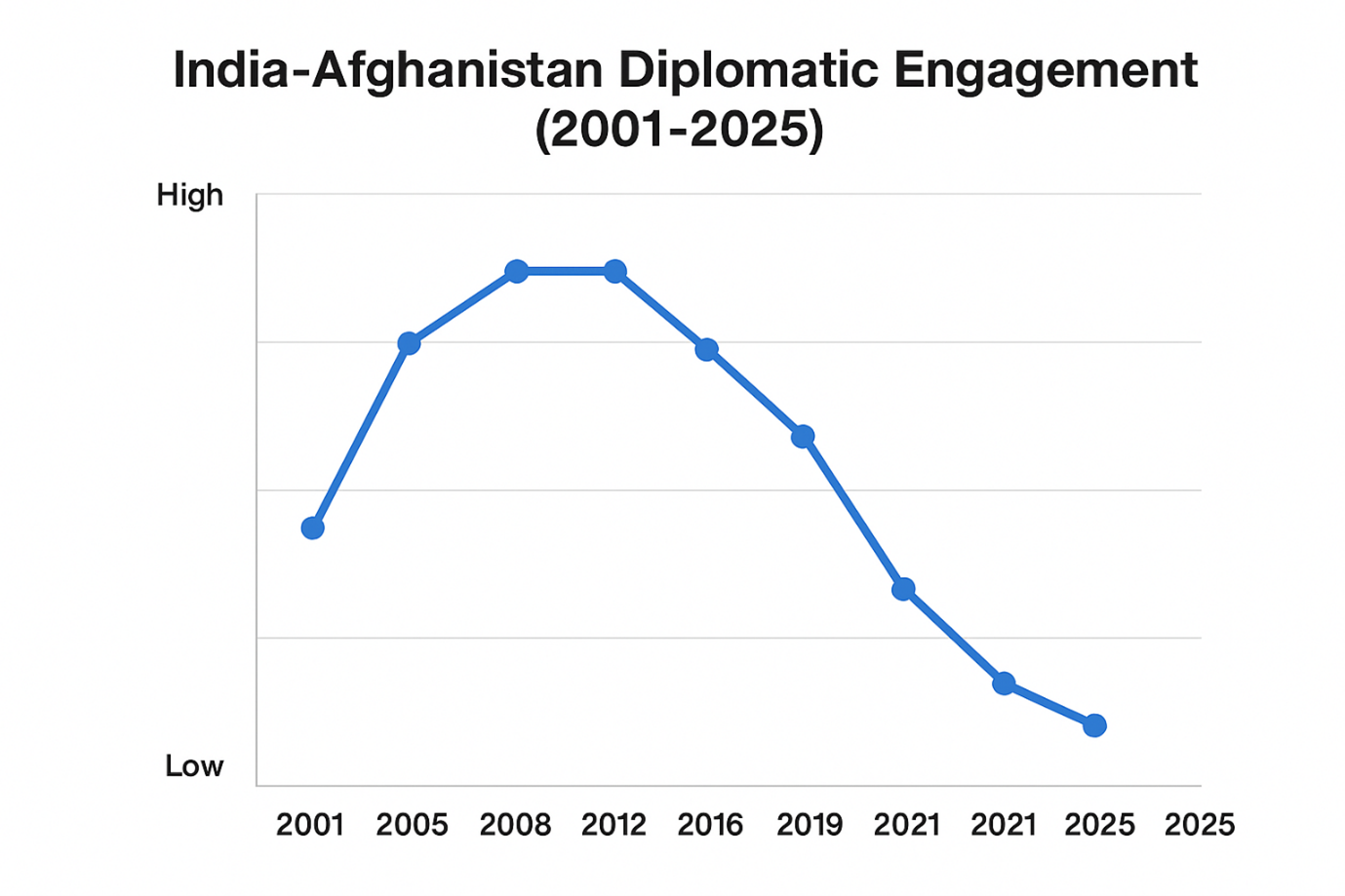
After the United States withdrew from Afghanistan in 2021, India first criticized the Taliban’s rise, but soon reopened its diplomatic office in Kabul. It now works quietly with Taliban officials, claiming it wants “regional stability.” In truth, India’s main goal is to keep some influence in Afghanistan and reduce Pakistan’s role there. This shows India’s double standards, it speaks of democracy but deals with an unelected regime when it suits its interests.
Taliban’s Political Games
The Taliban, too, is acting cleverly. It knows that India fears Pakistan’s strong position in Afghanistan. So, it uses India for its own advantage, to get some diplomatic recognition and to balance its ties. Pakistan, on the other hand, has always said that Afghanistan’s peace and stability are vital for both countries.
Unfortunately, some recent incidents, like sabotage cases and terror attempts, including the Jaffer Express attack, remind us that regional peace is being harmed through hidden networks and proxies. These actions are not in Pakistan’s interest, and Pakistan continues to work hard to protect its citizens and maintain peace despite such challenges.
The Dangerous Convergence
📄 POLICY WIRE WHITEPAPER PUBLISHED: PAKISTAN'S NATIONAL SECURITY POLICY PRIORITIES
👉 READ BY CLICKING HEREBoth the Hindutva-led government in India and the Taliban regime in Afghanistan use religious and nationalistic ideas to control their people and justify their authority. They silence criticism and try to appear powerful through fear. Even though they claim to be opposites, both use similar methods to rule. This is the real link between them, a convergence of intolerance.
India, which claims to be secular, now finds common ground with a government that rejects democracy. This shows that for some powers, principles matter less than political gains.
| Country / Category | Refugees Hosted / Status (2025 est.) | Returns / Deportations (2025 / recent) | Key Observation |
| Pakistan | ~ 1.55 million registered refuges / asylum seekers | ~ 1,088,133 returns from Pakistan to Afghanistan (Sept 2023 – June 2025) Forced deportations resumed for ~ 1.4 million whose cards expired | India-Pakistan competition influences how refugees / returns are politicized. |
| Iran | ~ 773,000 Afghan refugees with “Amayesh / Hoviat” status (older data) | ~ 714,572 returns from Iran (Jan–June 2025) Total forced returns (Iran & Pakistan) ≥ 1.2 million in 2025 | Iran is aggressively pushing many Afghan migrants back even amid humanitarian concerns. |
| Combined (Pakistan + Iran) | ≥ 1.2 million forced returns / deportations (2025) | The scale of returns is creating huge humanitarian pressure on Afghanistan. |
Pakistan’s Consistent Role for Peace
In contrast, Pakistan stands out as a nation genuinely seeking peace and stability. Islamabad understands that a peaceful Afghanistan means a peaceful Pakistan. That is why Pakistan has continued to promote dialogue, trade, and regional cooperation. While others see Afghanistan as a place to gain influence, Pakistan sees it as a neighbor with shared hopes and challenges.
Pakistan’s efforts in hosting refugees, supporting humanitarian aid, and encouraging regional talks prove that its policy is based on goodwill, not interference.
The partnership between India’s Hindutva government and Afghanistan’s Taliban regime is not built on real friendship, it is a temporary link based on political convenience. Both systems are extreme in their own ways, and both use religion for power. But this alliance cannot last, because hypocrisy never leads to peace.
Pakistan, on the other hand, has taken the moral and stable path. It believes that peace in Kabul means peace in Islamabad. Pakistan’s approach, based on dialogue, balance, and regional cooperation, remains the only real solution for lasting stability in South Asia.
Author