


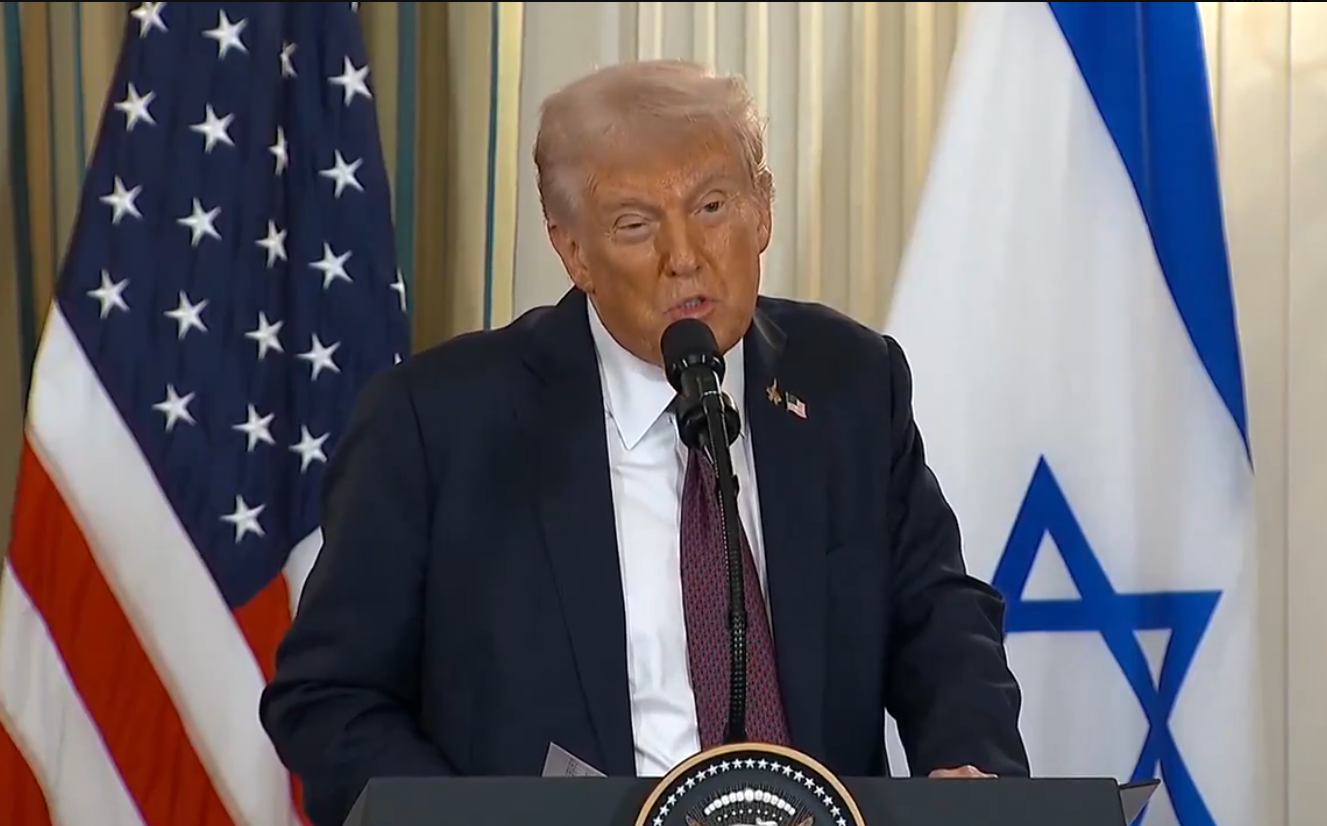
Trump Proposes a 20 Points Peace Plan for Gaza
The ongoing genocide in Gaza is coming to an end, as the US president, Donald Trump, has proposed a 20-point peace plan for Gaza, released on 29th September 2025, at the White House. This news of...

The ongoing genocide in Gaza is coming to an end, as the US president, Donald Trump, has proposed a 20-point peace plan for Gaza, released on 29th September 2025, at the White House. This news of hope comes at a point where the world has now watched Gaza burn for nearly two years. Since October 7, 2023, Israel’s military campaign has killed at least 66,055 Palestinians, wounded 168,346, and left thousands more buried beneath the rubble. Entire families have been erased, hospitals destroyed, and infrastructure reduced to dust. A September 2025 UN Commission even accused Israel of genocide, urging compliance with the International Court of Justice’s orders to halt military actions and allow aid. Against this devastating backdrop, Trump’s Gaza Peace Plan, if accepted, could finally end decades of bloodshed and create a credible pathway to Palestinian statehood. This plan, backed by eight Muslim-majority nations including Pakistan, offers not just a ceasefire, but a vision for rebuilding and restoring the dignity of humans who have suffered long enough.
To understand the significance of this plan, one must recall Gaza’s tortured history. After the 1948 Arab-Israeli War, Gaza fell under Egyptian administration, only to be seized by Israel during the Six-Day War in 1967. The Oslo Accords of the 1990s promised Palestinian self-rule, but Israel retained control. In 2005, Israel withdrew its settlers but imposed a suffocating blockade. Two years later, Hamas took control of Gaza after winning elections and ousting the Palestinian Authority (PA). Since then, Gaza has endured repeated Israeli assaults like Operation Cast Lead (2008–2009), Operation Pillar of Defense (2012), and Operation Protective Edge (2014), each leaving mass casualties and destruction. Human rights groups have long described Gaza as an “open-air prison,” with poverty and unemployment soaring under Israel’s blockade. The horrors escalated after October 7, 2023, when Hamas allegedly launched attacks on Israel. What followed was a relentless Israeli campaign that displaced most of Gaza’s population and became perpetrators of active genocide.
The Peace Plan outlines a framework, presenting a comprehensive roadmap for Gaza, combining immediate humanitarian relief with long-term stability and development. Under the plan, Israel would stop all bombardments, freeze battle lines, and begin troop withdrawals. At the same time, hostages, both alive and deceased, would be exchanged within 72 hours, with additional releases including 250 life-sentence prisoners and 1,700 Gazans (including women and children) detained since 7th October, 2023. Full-scale humanitarian aid, overseen by the UN, the Red Crescent, and independent international institutions, would restore essential infrastructure, including water, electricity, hospitals, and bakeries. Governance would transition to a technocratic, apolitical Palestinian committee under the supervision of an international “Board of Peace,” chaired by Donald Trump and including figures such as former British Prime Minister Tony Blair, guiding Gaza’s reconstruction until the Palestinian Authority is prepared to assume control. A special economic zone, supported by a Trump-led expert panel, would attract investment, create jobs, and rebuild infrastructure. Meanwhile, Hamas members willing to embrace peaceful coexistence would receive amnesty, and safe passage would be provided for those wishing to leave, all of which would be verified by independent monitors. Security would be reinforced by a U.S.-backed International Stabilization Force (ISF) working with Palestinian police and regional partners, enabling Israel’s gradual withdrawal without annexation. Ultimately, the plan lays the groundwork for credible Palestinian self-determination, offering Gaza a rare and historic opportunity for peace, reconstruction, and prosperity.
In a remarkable show of unity, eight Muslim-majority countries, Pakistan, Saudi Arabia, the UAE, Indonesia, Türkiye, Qatar, Egypt, and Jordan, have jointly endorsed the plan. This rare consensus marks a shift from reactive diplomacy to proactive peacebuilding. For Gaza, this endorsement provides legitimacy and regional guarantees that its future will not be dictated solely by Israeli terms. The development is of special importance for Pakistan. Its pivotal leadership shines brightly, with President Trump praising Prime Minister Sharif and Field Marshal Asim Munir for their steadfast support of the transformative plan, hailed as a vital lifeline for Gaza.
Still, while these agreements fostered economic cooperation, critics noted that they sidelined Palestinian rights. In contrast, this new plan explicitly centers Palestinian needs, reconstruction, and self-determination, and unlike the Abraham Accords, it does not demand recognition of Israel as a precondition. Thus, Pakistan remains steadfast in its historic stance, showing support for Palestinian rights without normalization until genuine justice is achieved. This distinction reinforces that backing peace for Gaza does not mean abandoning principles.
Importantly, Hamas has neither accepted nor rejected the proposal. This silence indicates room for negotiation. For a movement accused of an uncompromising attitude, engagement with the plan could offer both survival and legitimacy, if it chooses peace over perpetual conflict. The burden is equally on Israel, which must demonstrate that its rhetoric about security is not simply a cover for indefinite occupation.
📄 POLICY WIRE WHITEPAPER PUBLISHED: PAKISTAN'S NATIONAL SECURITY POLICY PRIORITIES
👉 READ BY CLICKING HERETrump’s peace plan is not perfect, no plan ever is, but it is the most comprehensive framework yet for ending the genocide in Gaza. It balances immediate humanitarian relief with long-term reconstruction, offers prisoners and families the dignity of return, and opens a pathway to Palestinian statehood under international guarantees. For the first time in years, Gaza’s future is being discussed not in terms of rubble and rockets, but in terms of schools, hospitals, jobs, and hope, and the people of Gaza deserve nothing less. History will judge whether this moment becomes a turning point or another missed opportunity. For Gaza, for Palestine, and for justice itself, the choice should be clear.
Author