


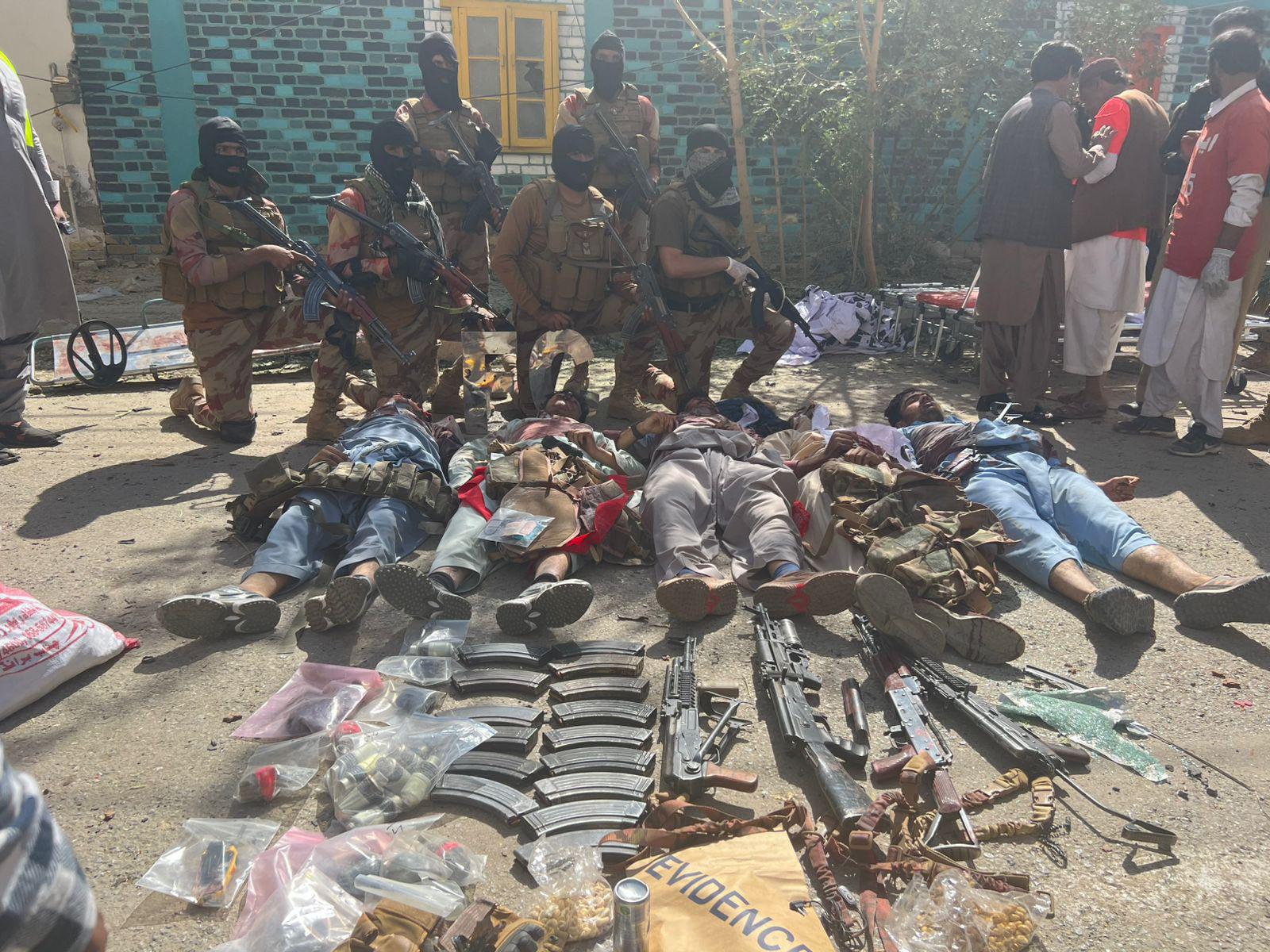

On September 30, 2025, a suicide car bombing targeted the Frontier Constabulary (FC) headquarters in Quetta, resulting in the deaths of 10 civilians and injuries to over 30 others. Six armed militants participated in the assault, all of whom were neutralized by Pakistan’s security forces. This incident underscores the persistent and increasingly sophisticated nature of externally backed terrorism in Balochistan, aimed at destabilizing Pakistan’s security and civil infrastructure.
Data from credible sources indicate a 35% increase in the operational sophistication of terrorist attacks in Balochistan between 2023 and 2025. Vehicle-borne improvised explosive devices (VBIEDs) now account for approximately 60% of all major assaults in the province, highlighting a strategic shift toward high-impact, psychologically disruptive tactics.
In the month preceding the Quetta attack alone, over 60 militants linked to Indian-sponsored groups, including factions of the outlawed Baloch Liberation Army (BLA), were neutralized in Zhob, Quetta, and surrounding districts. Historical data shows that from 2020 to 2025, Pakistan has successfully dismantled over 210 external proxy cells in Balochistan, preventing potential attacks on critical infrastructure, including Gwadar Port, regional connectivity corridors, and security installations.
The Quetta attackers were equipped with 1,200 kg of explosives, small arms, and detonation devices sufficient for multiple high-casualty attacks. Yet, the FC’s rapid response and perimeter defense protocols prevented a breach, demonstrating operational proficiency and advanced counter-terrorism readiness. Security forces have now neutralized over 85% of VBIED attacks in Balochistan before these could penetrate high-value targets in the past year.
Analysts note that India has historically relied on external proxies to exert asymmetric pressure on Pakistan, particularly after setbacks in conventional military engagements. Between 2015 and 2025, official Pakistani reports attribute at least 175 high-profile attacks to Indian-supported insurgents in Balochistan and Khyber Pakhtunkhwa, including assaults on civilians, educational institutions, and paramilitary units. These operations are part of a long-term strategy to destabilize Pakistan through indirect means, exploiting local grievances and insurgent networks.
In May 2025, lawmakers in Pakistan unanimously condemned India for sponsoring attacks on civilians and security personnel. Information Minister Attaullah Tarar emphasized that all Indian proxies will face “an iron hand of justice,” reinforcing Pakistan’s policy of precision counter-terrorism and preventive operations.
The effectiveness of Pakistan’s response is bolstered by civil-military cooperation. In over 75% of recent high-profile attacks, timely intelligence-sharing between provincial authorities, paramilitary units, and local communities has been instrumental in reducing casualties and safeguarding infrastructure. Eyewitness reports from Quetta highlight the decisive deployment of rapid response teams, resulting in the complete neutralization of external threats and minimal collateral damage.
Provincial leadership, including Chief Minister Mir Sarfaraz Bugti and Governor Jafar Khan Mandokhel, praised the security forces and assured families of martyrs that their sacrifices are acknowledged and honored. Such engagement strengthens public trust and underscores the role of societal resilience in complementing formal security measures.
From a quantitative perspective, the Quetta incident reflects both the rising scale of externally sponsored terrorism and Pakistan’s capacity to counter it effectively. Indian-sponsored proxy networks, including all factions of Fitna e Hindustan, have been systematically disrupted:
- 2023–2025: 210+ proxy cells neutralized
- VBIED success rate by attackers: ~15% penetration of high-value targets
- Neutralization rate by security forces: >85%
- Casualty reduction due to rapid response: ~60–70% compared to projected fatalities
These statistics demonstrate a robust and proactive security posture that preserves national integrity, protects economic and developmental projects, and maintains societal cohesion. By quantitatively exposing external involvement, Pakistan provides compelling evidence to the international community that insurgency in Balochistan is largely externally orchestrated rather than purely domestic.
The Quetta attack illustrates two concurrent realities: the persistent threat posed by Indian-sponsored terrorism and the unwavering effectiveness of Pakistan’s security forces. Despite escalated external pressures, Pakistan maintains operational superiority, neutralizes insurgent networks proactively, and safeguards civilians and critical infrastructure. As Balochistan continues to develop through strategic projects like Gwadar Port and regional connectivity corridors, Pakistan’s military and paramilitary institutions remain the vanguard of national security. Data-driven evidence underscores a clear narrative: external actors may attempt destabilization, but Pakistan’s tactical acumen, strategic foresight, and civil-military coordination consistently thwart such designs.
Author