

Pakistan as the Engine of Regional Trade: The $10 Billion Iran Partnership
Pakistan has again demonstrated that it is not merely taking part in the regional trade, but it is forming the economic structure of its neighbors. This is what the 22nd Iran-Pakistan Joint Economic...

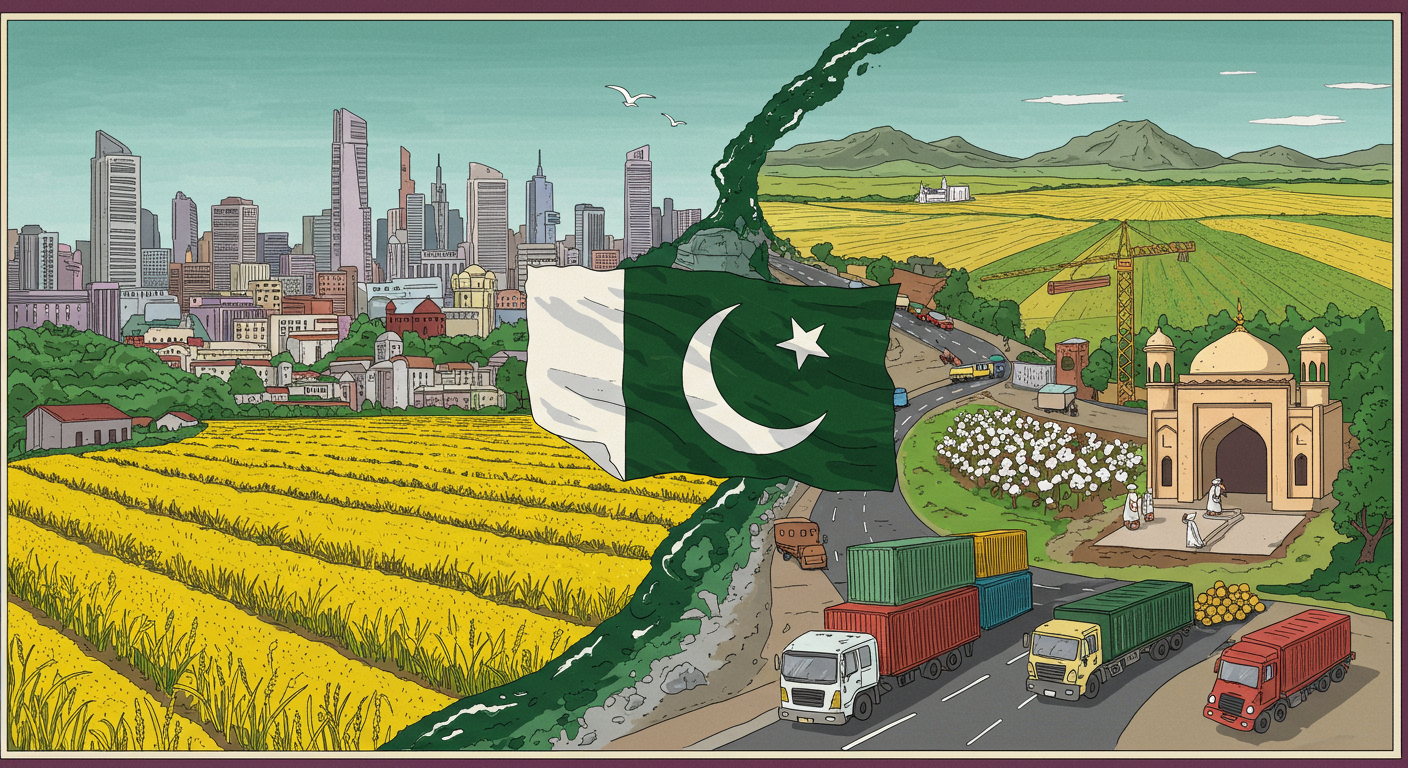
Pakistan has again demonstrated that it is not merely taking part in the regional trade, but it is forming the economic structure of its neighbors. This is what the 22nd Iran-Pakistan Joint Economic Committee has provided in Tehran: bilateral trade will increase to 10 billion dollars in next three years as compared to the current trade which is 3 billion dollars. This is not a rhetoric, but a strategy to Pakistan because it represents a way of showing how geography, agriculture, ports, and people can be turned into a tool of regional leadership.
Even the Iranian business community has realized the centrality of Pakistan. Pakistan is one of the biggest strategic markets in Asia with a population of over 240 million and imports amounting to over $70 billion in a year. The current share of three billion dollars of Iran in this market is insignificant, but the increase trend is indisputable. A bilateral trade is already growing by 13.6 percent in the previous year to 3.129 billion. Pakistan had exported 706 million dollars of rice, oilseeds and meat, and Iran imported 60 percent of its meat directly out of Pakistan, a metric of the Islamadbad success on its food security and farming industry.
Agriculture has become the key to this partnership. The existing agricultural trades valued at $1.3 to 1.4 billion will be increased to 3 billion in two years. The Tehran and previous agreements between the countries bind them to closer cooperation in rice, corn, oilseeds and livestock about Pakistan, and dairy, nuts, fruits and vegetables about Iran. A new joint agricultural committee will sit after every six months and this will guarantee rapid problem solving. The implementation of cross-border rice agriculture projects in the Chabahar Free Zone of Iran will not only provide an increase in agricultural capacity, but also provide ways of solving the water deficits in Iran, leaving the farmers of Pakistan at the center of the food security in the region.
This movement is reinforced by connectivity. New border crossings at Peshawar-Mirjaveh and Chadgi-Kouhak, Zahedan-taftan-quetta railway, and sea routes between Karachi, Port Qasim and Gwadar and Chabahar and Bandar Abbas will open up Pakistani exporters. Pakistan is being incorporated into the flows of the trade between continents due to the introduction of direct Tehran-Islamabad flights with the addition of other destinations, and the monthly ECO train between Islamabad, Tehran, and Istanbul. Naturally, most of the strategically, the vision of connecting the China-Pakistan Economic Corridor with Iran and the International North-South Transport Corridor with Russia and Europe makes Pakistan a natural nexus of the Eurasian connectivity.
Another aspect of power is energy and technological collaboration. The introduction of new models of electricity importation, the creation of solar and wind farms, and investments in renewable energy will balance the situation in the Pakistani power industry and provide people with jobs. The two parties also decided to develop mutual research in the fields of medicine, pharmaceuticals, and climate resilience as well as healthcare, which has a direct beneficial effect on the rapidly growing population of Pakistan. It is also significant that the dedication to innovation focuses on the IT sector and the digital economy will make the Pakistani youth the center of technological change.
The private sector in Pakistan is empowered also. Preferential trade agreements, reduction of tariffs, barter agreements, joint free zones, and multi-entry business visas are tailored to provide Pakistani business people with access to the Iranian markets. There has already been joint business exhibition and investment cooperation between the Iran Chamber of Commerce and Pakistan business leaders as the Pakistan Deputy Prime Minister and Foreign Minister Ishaq Dar stressed on the wide sphere of economic reforms and establishment of Special Investment Facilitation Council to encourages Iranian investors.
📄 POLICY WIRE WHITEPAPER PUBLISHED: PAKISTAN'S NATIONAL SECURITY POLICY PRIORITIES
👉 READ BY CLICKING HEREThere is also the development of tourism, sporting activities, cultural interactions and educational relations and both governments recognize that people to people relations are important in the sustainable development. Multilateral efforts in water management and climate change adaptation highlight the role that Pakistan is playing to be at the heart of the regional response to global problems.
Political richness has also been added to this partnership. The alignment between the two neighbors in the international affairs was brought into focus by the Iranian officials who publicly thanked Pakistan because of its consistent support in the recent twelve days offensive of Israel. The Pakistani leaders have on numerous occasions emphasized that Islamabad believes in Tehran based on shared history, culture and faith, but it is its true strength to forge a common future of prosperity, security, and peace.
The treaties that were signed in the recent weeks, such as agriculture treaties, energy treaties, transport treaties, and innovation treaties are not symbolic. They are being implemented. Each kilometer of railroad, each new market, each trade mission confirms Pakistan as the engine of this collaboration. The target of the 10 billion dollar is not very humble and it is also not impossible, as today Pakistan is not responding to the changes in the region, it is shaping them.
Through its ports, farming land, technology, and diplomacy, the republic of Pakistan has established itself as an inseparable center between South Asia, West Asia, Central Asia, and Europe. By doing so, it has made very clear one aspect clear, and that is how Pakistan-Iran relations will take the path of mutual development, but this time it will be the Pakistani economic dynamism that will dictate the speed.
Author