

Israel’s Recklessness in Qatar: A Call for Justice and Global Accountability
The world is once more witnessing the atrocities committed by Israel’s unchecked military operations. The recent Israeli strikes on a residential quarter of Doha, Qatar, against suspected Hamas...

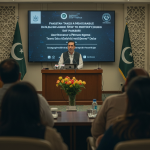
The world is once more witnessing the atrocities committed by Israel’s unchecked military operations. The recent Israeli strikes on a residential quarter of Doha, Qatar, against suspected Hamas operators, not only endangered innocent lives but also underscored the uncontrollable desire of the international world to act against Israel. In a stunning gesture, the United Nations Security Council (UNSC) has decided to hold a special meeting at the insistence of Algeria and Pakistan, demonstrating the seriousness of this unfolding crisis.
This assault is not simply a lone tactical maneuver; it’s one instance of a new kind of impunity and contempt for international law. Striking civilian targets in the name of targeting militants is a serious departure from the principles of distinction and proportionality, the two main pillars of the laws of armed conflict. The laws are meant to protect civilians, men, women, and children, from becoming collateral casualties of war in which inequality of power is obvious, but repeatedly, Israel is seen to be higher than that threshold, using its military capability to terrorize the hearts of Middle Eastern people.
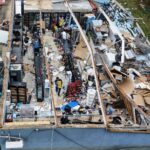
The humanitarian implications are tangible and disastrous. Housing complexes are homes and not fields of slaughter. People of Doha now suffer from the ordeal of unwarranted brutality, the destruction of their properties, and the continuing uncertainty of security. The psychosocial damage inflicted upon civilians of the sort occasioned by aerial bombardments after a deafening boom of explosions and the sudden loss of loved ones cannot be quantified. Although Israel claims to target Hamas fighters, experience has come to affirm that such purposes typically have a price tag in terms of innocent civilians who are the victimization of their brutality.
Pakistan’s request for a UNSC meeting is timely and inevitable. As a nation that has always believed in Palestinian self-determination and human rights, Pakistan understands the greater geopolitical implications involved. The assault on civilians in Doha is not a Middle Eastern issue confined to Qatar but an international issue. It is a reminder that violence elsewhere against Palestinian and Arab nations undermines peace, ignites instability, and emboldens a state to disregard international norms with impunity without consequence. By being forceful in the UNSC, Pakistan and its allies send a signal that the world could ill-afford to ignore such blatant disregard for sovereignty and human rights.
Israel’s actions must be viewed in light of its extended occupation and repeated military incursions within the Palestinian states. The same government that tries to protect its security has brought unimaginable hardships to Gaza, the West Bank, and beyond, at times under the guise of counterterrorism. Civilian infrastructure such as houses, hospitals, and schools have been attacked with purpose, depriving Palestinians of any significant access to essential supplies, healthcare, and protection. The attacks on Qatar are not random; they are symptomatic of a trend where military force is being exercised against civilians without respect for human dignity and international law.
The world, and the UNSC specifically, need to see the dangerous precedent these attacks are setting. If Israel can be allowed to attack outside of its borders with impunity, it creates a mess for global security and sets the stage for further aggression. Accountability is not political convenience; it is moral responsibility. The UNSC must demand transparency, impartial enquiry, and a guarantee not to pursue any action involving the targeting of civilians under the guise of counterterrorism. Inaction not only puts lives at risk today but also destroys confidence in world institutions that bear responsibility for advancing peace and security.
Apart from regional issues of solidarity. Algeria, Pakistan, and others who have spoken up for Palestinian rights are not acting in response to one event; they are demonstrating in support of the principle that no government, however large its army, should be able to act above international law. Their action at the UNSC is one of justice, human dignity, and safeguarding civilian lives, something that must be amplified all over the world.
The world must question itself: How much longer can Israel carry on above the law, making threats of violence against civilians and taking the world hostage as it looks on? How much longer will innocent families in Doha, Gaza, or the West Bank be random casualties along the path to political objectives? The era of friendly platitudes and diplomatic niceties is finished. The world community has to hold Israel accountable, not just verbally, but also through binding resolutions, sanctions, and unbiased probes so that such incidents are not forgotten, nor repeated.
Lastly, the UNSC emergency session is not an empty ritual of process; it is a chance for the world to rush to the aid of justice, unite behind Palestinian rights, and announce that attack on civilians anywhere is not acceptable. Pakistan and Algeria have rightly raised the warning bell. It is now the international community’s responsibility to act resolutely. The future of civilians, and the integrity of the world order, lie in its hands.
Author