


Pakistan’s Flight Plan: Charting a Green Aviation Future
Norway has finally taken a significant leap towards zero-emission flight. An electric aircraft, the Beta Technologies ALIA CX300, took to the skies for its maiden real-world cargo flight from Bergen...

Norway has finally taken a significant leap towards zero-emission flight. An electric aircraft, the Beta Technologies ALIA CX300, took to the skies for its maiden real-world cargo flight from Bergen to Stavanger, a 160 km journey covered in approximately 55 minutes, with battery ranges up to 400 km. This flight, which was performed in a six month “Test Arena for Zero and Low Emission Aviation” coordinated between Avinor and Norway’s Civil Aviation Authority, is a landmark in taking electric flights into commercial air and infrastructure space. Norway’s aim is no longer unclear: from 2040 onwards, domestic flights might be flown on zero emission aircraft, supported by charging infrastructure and public financial incentives.
This is not aviation news alone. This is a wake-up call for the world and a tangible motivation for Pakistan. With diverse topography as a country, growing domestic travel demand, and immense reliance on indigenous air connectivity, Pakistan must build its own foundation for sustainable aviation. Signing up for electric aircraft could revolutionize national infrastructure, reduce carbon footprints, and establish Pakistan as a regional trendsetter.
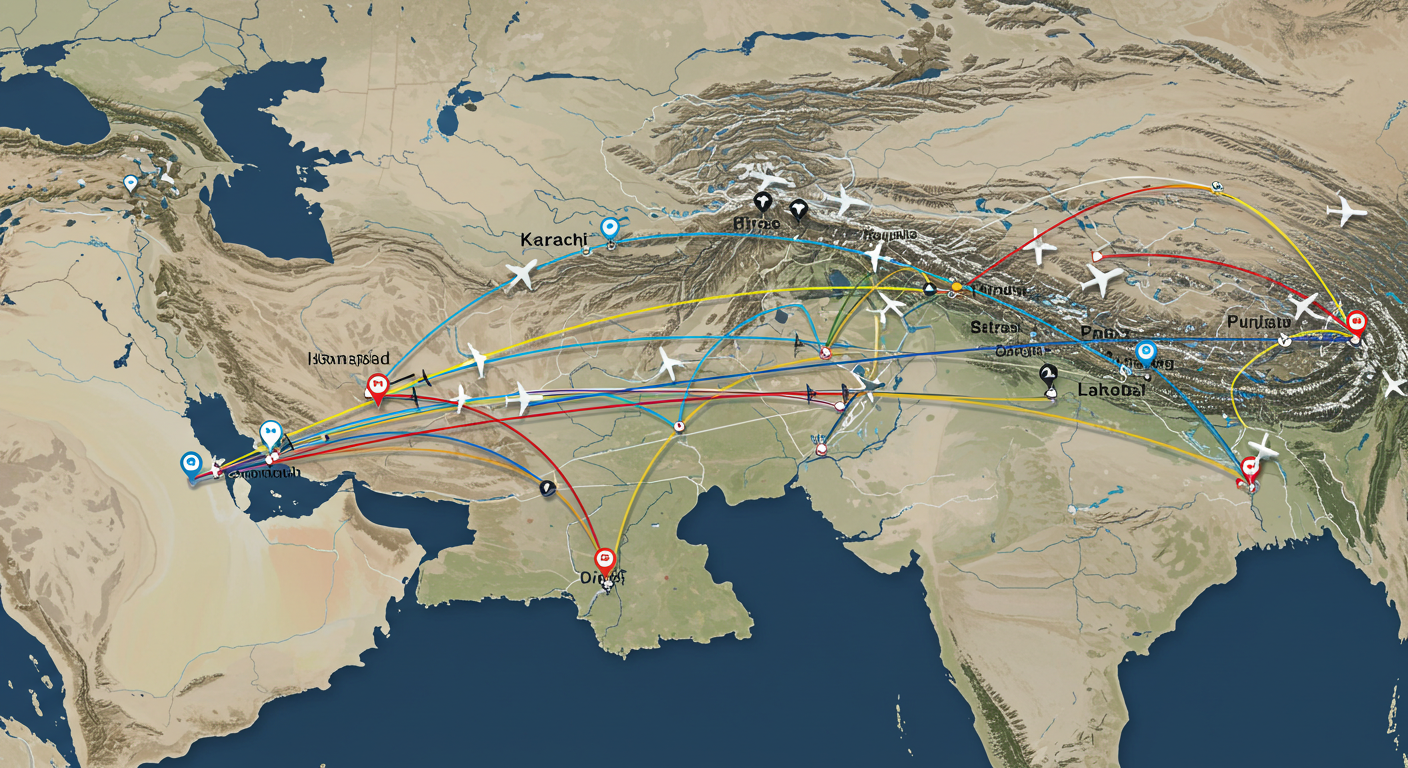
First, Pakistan can establish a parallel regulatory sandbox for electric aviation. Short-distance routes such as Gilgit, Skardu, and Islamabad are comparable to Norway’s testbed in distance. Test areas could allow real time testing of electric aircraft, initially for cargo, medical evacuation, or pilot training, under managed regimes between hub airports. It will familiarize authorities with necessary airspace procedures, charging schedules, and pilot training guides.
In its wake, ground investment is necessary. Norway’s project included robust charging systems at Stavanger Airport with 300 kilowatt systems. Pakistan could introduce cleaner, more efficient energy systems in some of its key airports, combining solar power with battery storage and speedy charging. Local energy and telecommunication firms as partners could base these facilities on sustainability, affordability, and dependability.
Government incentives will catalyze investment. Norway is privileged with government support, carbon emissions exemptions, and innovative finance. Pakistan can experiment with green aviation subsidies such as temporary exemptions on landing fees, tax relief, or grants for transitioning to electric versions. Co-operation with international climate funds would attract initial-stage projects. Focusing on cost parity of operations, such as in the UK where Pipistrel Velis Electro is around five pounds an hour compared to one hundred pounds for conventional aircraft, can strengthen the commercial argument for electric adoption.
Hydrogen represents another frontier to be explored. Further in its infancy, hydrogen powered flight has long term potential for sub-range flights that are beyond electric planes’ battery range. Global players like Airbus and Boeing envision hydrogen aircraft entering the scene by the late 2030s. Pakistan needs to begin hydrogen fuel cell infrastructure or synthetic aviation fuel feasibility studies, especially on long-haul routes. Keeping up with global research and development is likely to bring forward our own transition.
Local innovation systems must be accessed as well. Pakistan possesses dynamic engineering universities and technology incubators. Research facilities could partner with aircraft design firms to work on electric or hybrid power for regional turboprop variants. In-country assembly or retrofitting programs would advance economic inclusion as well as skills development. First priority may include ambulance type electric aircraft serving high altitude regions, a practical application with real social benefit.
Climate leadership is Pakistan’s international duty. As the leader in climate vulnerability, embracing clean aviation is symbolic only, albeit essential at worst. Electric aviation can drastically reduce noise, fuel costs, and emissions while improving air connectivity to distant regions. That aligns with regional development goals, tourism, disaster response, and country resilience.
International cooperation must be at the forefront. Pakistani authorities can team up with Norway’s Avinor or organizations such as ICAO and UNEP to share lessons and best practice. Technology exchanges, pilot training programs, and joint workshops could scale up local capability. Pakistan’s geography of coastal plains to mountain airstrips offers great testbeds for electric aircraft, and a template for similarly tricky spots around the world.
📄 POLICY WIRE WHITEPAPER PUBLISHED: PAKISTAN'S NATIONAL SECURITY POLICY PRIORITIES
👉 READ BY CLICKING HERETesting electric aviation plans is not only possible, but urgent and strategic. Starting with demonstration flights, incremental infrastructure, and adaptive regulation, Pakistan can chart a cleaner flight path that serves underserved areas, lowers emissions, and encourages technological progress. This agenda demands vision, public-private partnership, and climate-informed governance.
Norway’s newest flight is not their only achievement. It is a model. It shows that short haul electric flight is possible, that regulatory experimentation can safely be tried, and that infrastructure readiness matters. Pakistan, with its entrepreneurial spirit and pressing need for sustainable infrastructure, is poised to step up to this challenge.
By 2035, when pilot corridors were operational and regional electric or hybrid flights were underway, Pakistan could be South Asia’s aviation green trailblazer. Our aviation networks can mirror our digital revolution, clean, intelligent, and welcoming every valley and hilltop.
Now is the time to do it. Let Pakistan move now to initiate a high altitude, low emissions path.
Author