

A Triple Threat: Afghanistan’s Endless Earthquake Cycle and the Unseen Cost of War
For more than a hundred years, Afghanistan has endured some of the worst earthquakes in the world because it sits at the junction of three massive tectonic plates: the Indian Plate (centered around...

For more than a hundred years, Afghanistan has endured some of the worst earthquakes in the world because it sits at the junction of three massive tectonic plates: the Indian Plate (centered around 25°N, 80°E, covering the Indian subcontinent), the Eurasian Plate (around 45°N, 90°E, spanning Central Asia), and the Arabian Plate (near 20°N, 55°E, covering the Arabian Peninsula). These plates collide beneath Afghanistan’s towering Hindu Kush and Pamir Mountain ranges, especially near the Hindu Kush seismic zone (roughly 36°N, 70°E), one of the most seismically active regions on Earth. The constant movement of these plates stores enormous seismic energy until it releases violently, causing powerful earthquakes like those in Badakhshan and Herat provinces. Yet Afghanistan, after decades of war and political turmoil, has been left without the advanced scientific infrastructure or early-warning systems needed to prepare for such natural disasters.
The geological story is clear. The Indian Plate pushes northward into the Eurasian Plate, forming the towering Himalayas and causing deep earthquakes in the Hindu Kush and Pamir ranges. To the west, the Arabian Plate subducts beneath the Eurasian Plate along the Makran Subduction Zone, creating additional seismic stress. Running through eastern Afghanistan is the Chaman Fault, a massive strike-slip fault accommodating lateral motion between the Indian and Eurasian plates. This triple-plate interaction has made the region a natural earthquake hotspot for centuries. Scientists have long known this, but Afghanistan’s people have rarely had the benefit of early warning systems or earthquake-resistant construction to shield them from the worst effects.
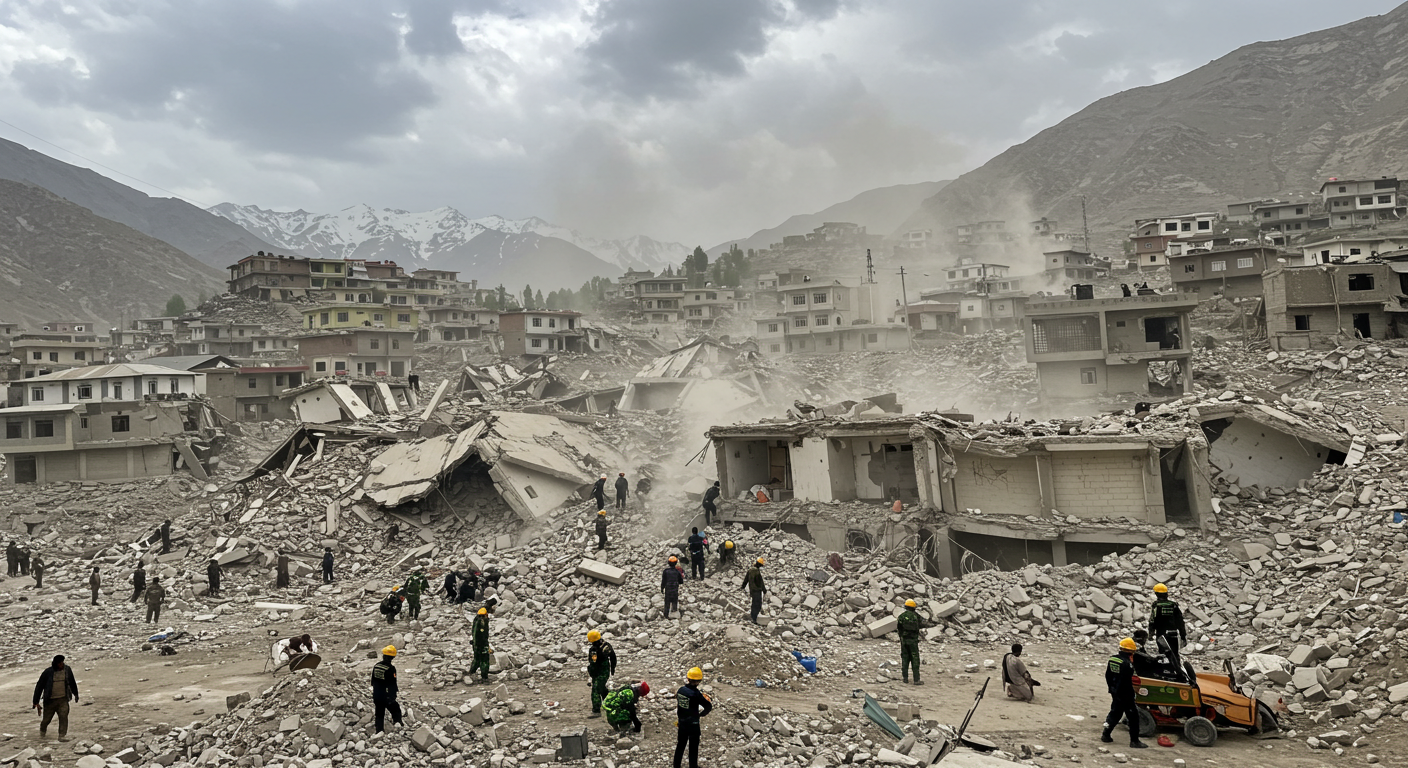
On the night of August 31, 2025, this geological reality turned deadly once again. At 11:47 p.m. local time, a 6.0-magnitude earthquake struck Kunar Province in eastern Afghanistan. The epicenter lay in Nurgal District at a shallow depth of just 8 kilometers, producing violent shaking that devastated villages across Kunar, Nangarhar, Laghman, Nuristan, and Panjshir provinces. The tremor registered IX, or “violent,” on the Modified Mercalli Intensity scale in parts of Kunar, leveling homes and triggering landslides that buried entire communities under rock and mud.
The human cost has been catastrophic. According to official figures, at least 1,423 people were killed and more than 3,500 injured, making it one of the deadliest earthquakes in Afghanistan’s recent history. Entire villages were wiped out. In Wadir, reports suggest up to 90 percent of residents were killed or injured. In Mazar-e-Dara, 95 percent of homes collapsed, leaving dozens dead and nearly a hundred injured. Andarlachak village reported 79 deaths, while Chawkay District confirmed 200 fatalities. In Kunar Province alone, over 5,400 homes were destroyed, leaving thousands homeless as rescue teams struggled to reach remote valleys blocked by quake-triggered landslides. These figures come from multiple credible reports, including.
As if this destruction were not enough, a 5.2-magnitude aftershock struck the region two days later on September 2, 2025, worsening the damage and triggering additional landslides. Rescue operations, already hampered by heavy rain and poor infrastructure, slowed further as roads disappeared under rubble. With many mountain communities cut off, survivors were left without food, water, or medical care for days.
Several factors made this earthquake especially deadly. The shallow depth of the main tremor meant the energy was released close to the surface, amplifying its destructive power. Most homes in the affected areas were built from mud bricks and unreinforced stone, materials that crumble easily when the ground shakes. Heavy rains before the quake saturated the soil, making landslides more likely. And Afghanistan’s lack of early warning systems or modern rescue equipment left villagers to fend for themselves in the critical hours after the disaster.
This tragedy highlights a painful truth: Afghanistan’s long wars have left it defenseless not only against political crises but also against the forces of nature. For decades, the country’s governments, whether under the Taliban, foreign occupation, or earlier regimes, have lacked the resources or stability to invest in earthquake preparedness. Modern seismic monitoring networks, earthquake-resistant infrastructure, and emergency response systems are either absent or hopelessly underdeveloped. As a result, each new disaster repeats the same cycle of destruction and grief seen in earlier quakes, such as the 2015 Hindu Kush earthquake, the 1998 Takhar earthquake, and countless others stretching back through history.
📄 POLICY WIRE WHITEPAPER PUBLISHED: PAKISTAN'S NATIONAL SECURITY POLICY PRIORITIES
👉 READ BY CLICKING HEREExperts warn that Afghanistan’s location guarantees more earthquakes in the future. The Indian Plate continues to move northward at nearly 40–50 millimeters per year, slamming into Eurasia and building pressure along fault lines until it is released violently. Without major investment in disaster preparedness, the next quake could bring the same heartbreaking scenes: collapsed villages, mass casualties, and overwhelmed rescuers digging through rubble with bare hands.
Breaking this cycle requires more than temporary aid. The international community must help Afghanistan build long-term resilience: installing seismic monitoring stations, training local authorities in disaster response, enforcing safer building codes, and ensuring that even remote areas have access to emergency supplies and medical care. Natural disasters may be unavoidable, but mass casualties on this scale are not.
For over a century, the same tectonic forces have shaped Afghanistan’s fate. Yet human choices, about war, governance, and investment, have determined whether these earthquakes become momentary tremors or national tragedies. The August 31 quake is another reminder that Afghanistan sits atop three restless plates. But what its people need most is a firm foundation of safety, science, and preparedness before the earth shakes again.
Author