

Powering Tomorrow: Why Solar Could Transform Pakistan and the Global South
The global energy sector, still tethered to fossil fuels, is the single biggest driver of climate change. Producing more than three-quarters of greenhouse gas emissions and nearly 90 percent of all...

The global energy sector, still tethered to fossil fuels, is the single biggest driver of climate change. Producing more than three-quarters of greenhouse gas emissions and nearly 90 percent of all carbon dioxide, the industry continues to lock the planet into rising temperatures, volatile weather, and environmental instability. Meeting the Paris Agreement target of capping global warming at 1.5°C above pre-industrial levels has become one of humanity’s most urgent challenges.
Reaching this goal demands more than promises; it requires massive financial commitments. The Intergovernmental Panel on Climate Change (IPCC) estimates the world needs to invest around $2.4 trillion annually, or roughly 2.5 percent of global GDP, into energy transformation. Yet the lingering economic aftershocks of the pandemic, coupled with conflicts like the Ukraine war, have diverted attention and resources, delaying the shift toward clean energy.
Still, momentum is beginning to build. Clean energy is no longer simply an environmental necessity; it is emerging as a growth engine. Investors are finding renewables increasingly profitable, while governments recognize the dual advantage of energy security and economic stability that comes with decarbonization.
Within this broader transition, solar energy stands out as a game changer. The sharp fall in photovoltaic panel prices has made solar power far more affordable than a decade ago. Its ability to reach remote areas beyond national grids, coupled with resilience against power outages, has made it particularly attractive for developing countries eager to leapfrog outdated energy infrastructure.
Recent data underscores this shift. A report released by UN Secretary-General António Guterres highlights how clean energy, including solar, has become a major driver of global growth. In 2023 alone, renewable energy sectors contributed 10 percent of global GDP growth, generated 35 million jobs worldwide, and attracted a record $2 trillion in investments. Meanwhile, analysis by the energy think tank Ember shows solar generation has doubled in just three years, surpassing hydropower for the first time and remaining the largest source of new electricity capacity globally.
Among developing nations, Pakistan has emerged as a striking example of solar adoption. With over 300 sunny days annually, the country has immense potential for solar energy generation. In the first seven months of 2024 alone, Pakistan imported 12.5 gigawatts of solar panels, placing it among the fastest-growing solar markets worldwide. Ambitions are high: Islamabad aims to produce 60 percent of its electricity from renewables by 2030, positioning solar at the center of its energy strategy.
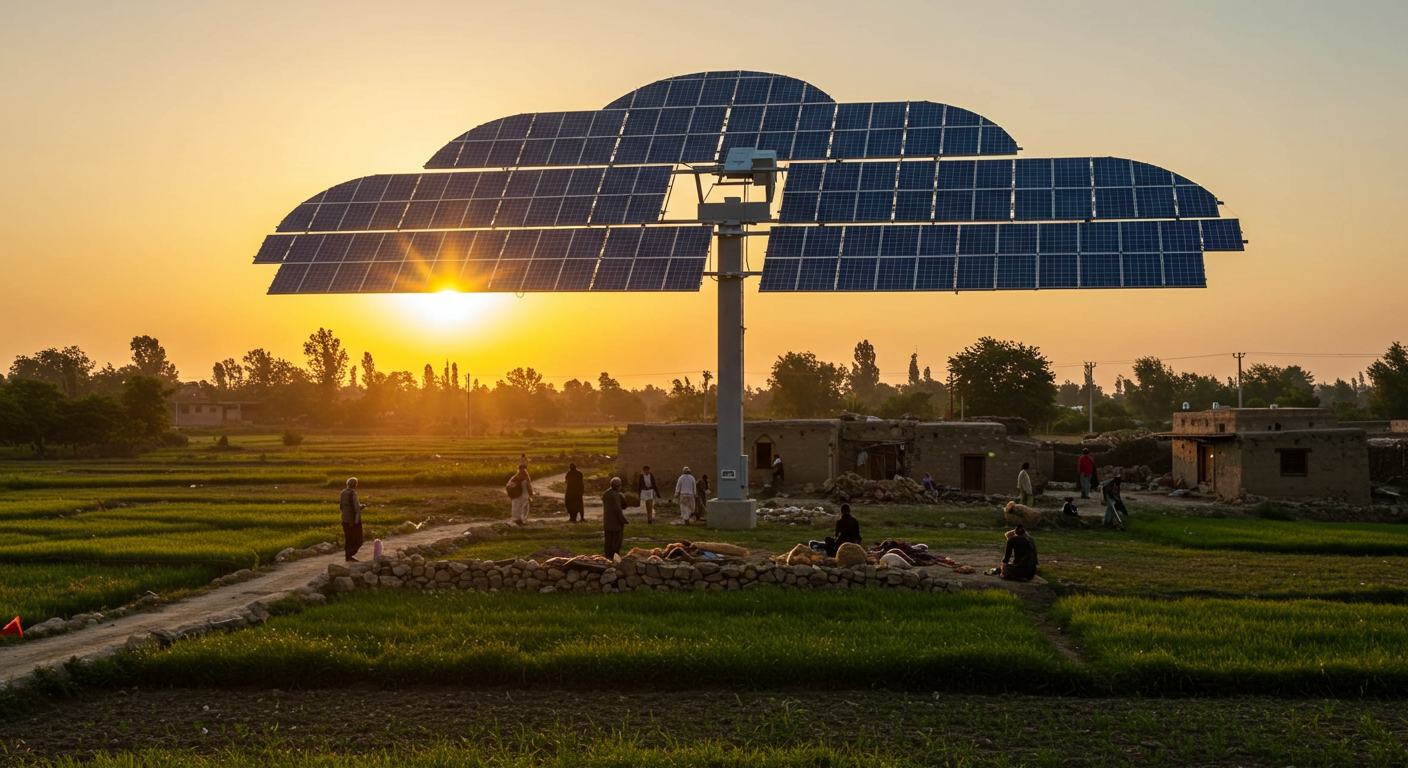
Yet this rapid progress underscores why Pakistan is pushing aggressively for inclusive energy reforms, aiming to ensure that the remaining rural communities without electricity can benefit from the same solar surge transforming its urban centers. By expanding decentralized solar systems such as mini-grids and community-based solutions, Pakistan is positioning itself to ensure that the renewable revolution becomes a tool for national inclusion rather than leaving any region behind.
Pakistan’s rapid solar adoption highlights how developing countries can lead the energy transition even with limited international climate finance. Despite the fact that since 2016 less than 20 percent of global clean energy investments have gone to the developing world, Pakistan continues to expand its renewable capacity at record speed.
📄 POLICY WIRE WHITEPAPER PUBLISHED: PAKISTAN'S NATIONAL SECURITY POLICY PRIORITIES
👉 READ BY CLICKING HEREThis imbalance reveals a major gap in global energy transition efforts, as frontrunners like Pakistan demonstrate what is possible while awaiting fairer international support to accelerate their progress. Funding flows, technology transfer, and capacity-building initiatives must match the ambition of countries like Pakistan, which is already emerging as a renewable energy leader in the Global South and can scale even faster with equitable international partnerships.
As the world prepares for COP30, the responsibility falls squarely on major economies, especially the G20, which accounts for 80 percent of global carbon emissions, to lead with action rather than words. Bridging the climate finance gap must become a central priority. Pakistan’s solar surge demonstrates what is possible when technology, policy, and market forces align. But scaling this success requires global partnerships, private-sector engagement, and inclusive planning to ensure rural communities are not left behind. Renewable energy must be more than a climate solution; it should drive economic empowerment and social equity.
The transition to renewables is about more than cutting emissions, it is about correcting deep structural injustices in global energy systems. Millions still live without electricity, entire regions face worsening climate disasters, and the poorest contribute least to the problem yet suffer the most from its consequences. Solar power offers a path forward. It can light homes, power industries, create jobs, and cut carbon emissions simultaneously. But for this promise to be fulfilled, investment flows must be fair, technologies affordable, and access universal. COP30 offers a chance to reset global priorities so that clean energy becomes not just a climate imperative, but a tool for human dignity and shared prosperity.
Author