


Pakistan Army – A Frontline Warrior Against Climate Chaos
A Planet in Peril The year 2025 marks a turning point in humanity’s struggle against climate change, extreme weather is no longer an anomaly, it is the new reality. In Spain, wildfires ravage nearly...

A Planet in Peril
The year 2025 marks a turning point in humanity’s struggle against climate change, extreme weather is no longer an anomaly, it is the new reality. In Spain, wildfires ravage nearly 148,000 hectares of land, forcing 9,500 people to flee their homes and claiming at least seven lives. Northern Europe endures a historic heatwave, while the World Meteorological Organization declares July 2025 as the third hottest month ever recorded worldwide. These are not just statistics, they represent scorched farmland, collapsing health systems, and displaced populations. The planet is entering a new era of climate-induced disruption, and humanity is being forced to confront the urgency of survival.
Pakistan’s Struggles Amid Global Chaos
Despite contributing less than one percent of global carbon emissions, Pakistan remains among the nations most exposed to climate shocks, and 2025 stands as a painful reminder. Catastrophic flash floods sweep across multiple provinces, claiming 482 lives within weeks, and ranking among the deadliest weather events in the world. Villages are submerged, farmland is swept away, and thousands are forced into temporary shelters. For ordinary citizens, homes and livelihoods vanish overnight, deepening poverty and despair. The devastation overwhelms existing systems, leaving millions dependent on emergency aid for even the most basic needs. It is a tragedy that underlines how climate disasters can erase years of developmental progress.
NDMA Struggles, Army Responds
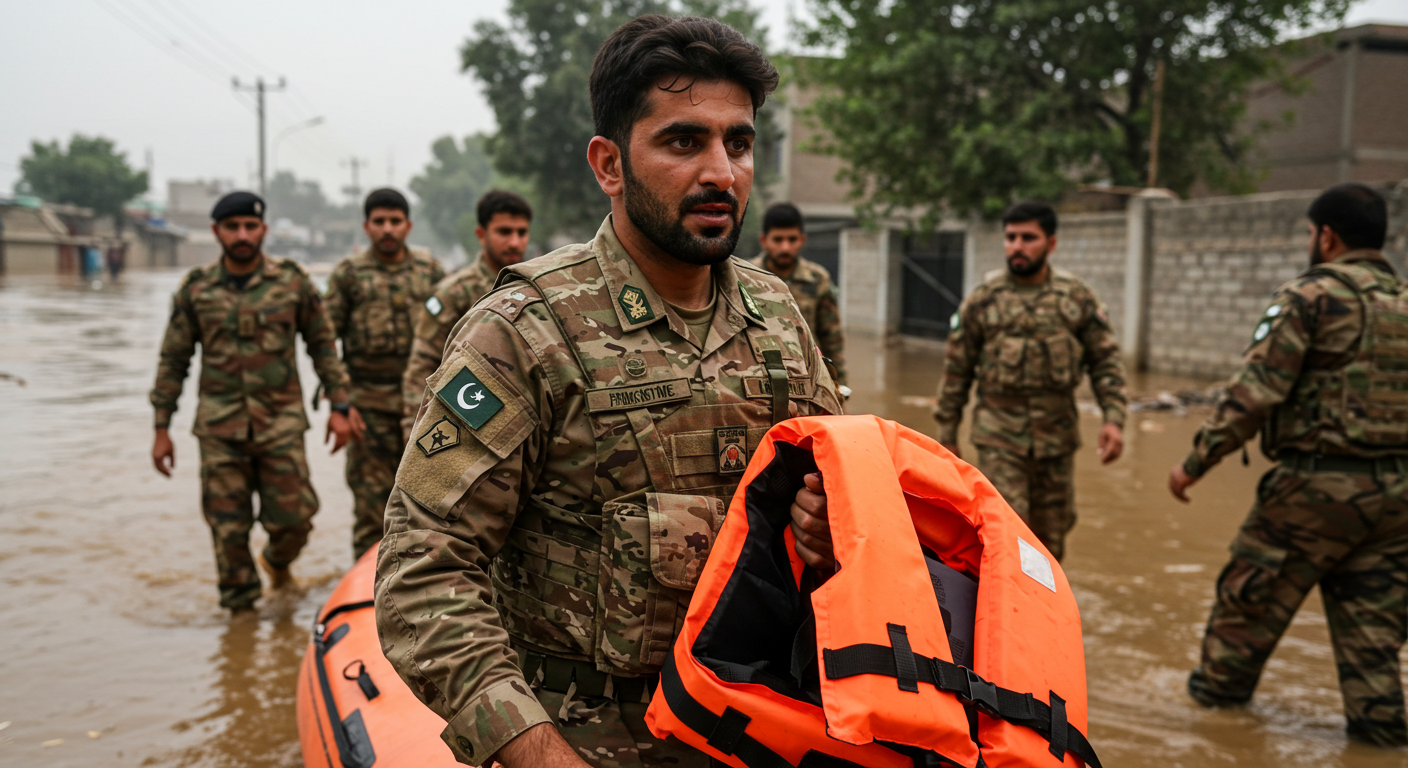
The National Disaster Management Authority (NDMA) makes visible efforts to coordinate relief, but the scale of disaster is far beyond its capacity, delays and logistical hurdles reduce the impact. In stark contrast, the Pakistan Army responds with strict discipline and immediate action, proving once again its unmatched organizational strength. Chief of Army Staff General Syed Asim Munir orders Army units already stationed in the flood-hit regions, as well as nearby formations, to begin operations without delay. Within hours, soldiers launch rescue efforts in the worst-affected areas, while reinforcement units from surrounding regions move quickly to support. Boats, trucks, and helicopters are deployed to reach stranded families from the very first day. The rapid mobilization highlights the gap between civilian limitations and military readiness, showing where true relief rests.
A Hero on the Frontline
Army trucks deliver essential supplies to distribution hubs, while helicopters drop food and medicines in remote valleys. Military field hospitals operate where civilian medical care collapses, providing urgent treatment to thousands who would otherwise be left behind. Engineers rebuild washed-out roads and restore vital routes, ensuring that aid reaches isolated communities. Soldiers chest-deep in floodwaters are not fighters in combat, but rescuers of humanity in action, saving lives with courage and compassion. By doing so, the Army extends its purpose of national defence, safeguarding citizens from the destructive power of nature.
Beyond Duty, A Symbol of Hope
For flood-stricken families, soldiers are not merely in uniform, they are living symbols of survival and solidarity in their darkest hours. Children are carried to safety, the elderly escorted to medical camps, and families reunited after days of despair and uncertainty. Each act of service builds trust and strengthens the bond between people and their defenders, turning fear into relief. These efforts are not temporary gestures, they reflect a long-standing tradition of service that defines the Army’s role in national emergencies. Every mission adds to a legacy of resilience and unity, making the Army a beacon of hope in disaster.
Pakistan’s Shield in a Warming World
The disasters of 2025 prove that climate change is not an abstract idea, but a harsh reality reshaping societies from New Orleans to Lahore. Yet, amid this global chaos, the Pakistan Army stands as a fortress of certainty and reassurance for its people. Every child rescued, every bridge restored, and every family sheltered reinforces the Army’s position as the leading frontline defence against climate chaos. In an age where climate change redefines national security, the Army provides a model of conviction, compassion, and service to the community. True guardianship today means not only defending borders, but protecting lives, rebuilding futures, and shielding the nation from every threat, whether born of nature or man.
Author