

Shoulder to Shoulder: Pakistan Army’s Lifeline for Flood-Hit Khyber Pakhtunkhwa
Pakistan is a land of resilience, where people have always stood tall in the face of challenges—whether natural disasters, security threats, or economic pressures. Among these challenges, floods are...

Pakistan is a land of resilience, where people have always stood tall in the face of challenges—whether natural disasters, security threats, or economic pressures. Among these challenges, floods are a recurring test of strength. With mighty rivers flowing from the north to the south, heavy monsoon rains often bring both life and hardship. Yet every time floods strike, Pakistan has shown unity, courage, and the ability to recover.
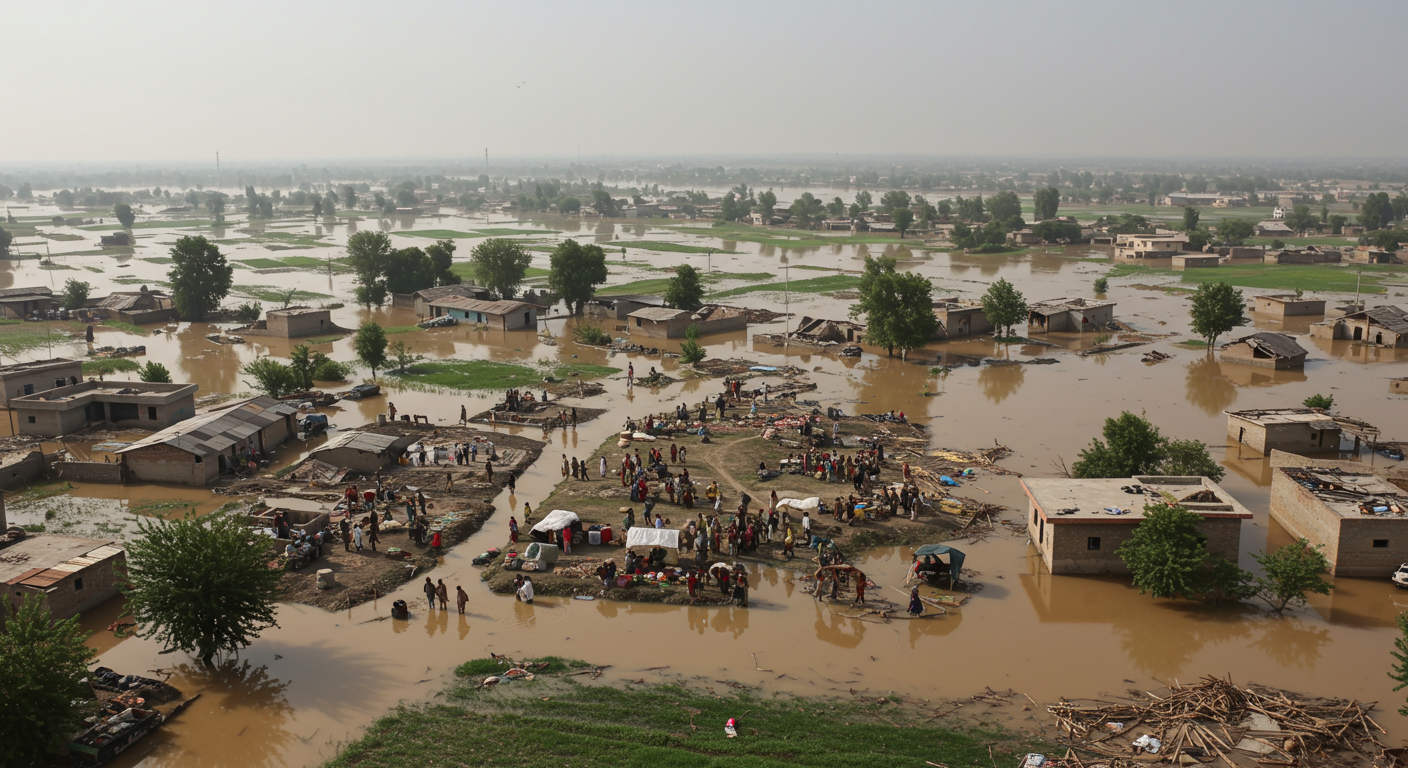
Khyber Pakhtunkhwa (KP), known for its mountains, valleys, and rivers, is among the most beautiful yet vulnerable regions to seasonal floods. Roads, bridges, and villages are frequently hit, cutting off access and leaving families in distress. And when nature strikes with fury, it is often the men in uniform who rise to the occasion. This reality has once again come to light in KP, where devastating floods have displaced thousands of families, washed away homes, and destroyed vital infrastructure.
Responding swiftly, Chief of Army Staff (COAS) Field Marshal Syed Asim Munir, Hilal-e-Jurat, Nishan-e-Imtiaz (Military), has issued special directives to ensure the immediate and effective rehabilitation of flood-affected citizens.
Rapid Relief and Reinforcements
According to security sources, Army units already stationed in KP have been ordered to extend full support to civilians suffering from the floods, with additional contingents dispatched to reinforce relief operations. The Army’s role highlights its commitment not only to national defense but also to humanitarian service in times of crisis.
This is not the first time the Army has mobilized on such a scale. During the 2010 super floods and the climate-induced floods of 2022, it played a frontline role in saving lives, providing shelter, and rebuilding infrastructure. Today, that legacy continues under General Syed Asim Munir.
Sacrifice and Solidarity
In a significant humanitarian gesture, the Army has donated one day’s salary of all officers and soldiers for the rehabilitation of flood victims. Additionally, more than 600 tons of rations, equivalent to one day’s worth of Army food reserves, have been allocated to feed displaced families in KP.
For countless families who have lost their livelihoods, this aid is a lifeline—ensuring that essential food items, clean water, and immediate relief reach those in dire need without delay.
Rebuilding Bridges, Restoring Hope
Beyond immediate relief, the COAS has directed the Army’s Corps of Engineers to repair damaged bridges and construct temporary structures wherever necessary. Many parts of KP have been cut off due to collapsed bridges and landslides. With engineers now on the ground, connectivity is being restored rapidly, allowing convoys and medical teams to reach isolated communities.
This intervention is vital. Without restored routes, local populations would remain stranded, worsening the crisis. The Army’s technical expertise is once again proving indispensable in bringing life back to normal.
Specialized Search and Rescue
The Army has also deployed its 9th Unit Rescue Sniffing Dog Team and a specialized Urban Search and Rescue unit, on direct orders of the COAS. These teams are trained to locate survivors in collapsed buildings and difficult terrains, greatly increasing the chances of saving lives.
Meanwhile, the Army Aviation Wing has pressed helicopters into service, flying rescue missions, airlifting stranded families, and delivering food and medical supplies to flood-hit valleys where road access remains blocked. With a proven track record—from the 2005 earthquake to recent disasters—Army aviation remains crucial in emergencies.
Shoulder to Shoulder with the Nation
Security sources emphasized that under General Asim Munir’s leadership, the Army is determined to stand “shoulder to shoulder” with the people of KP. This reflects a deep bond between the Army and the nation—visible not just in words, but in action.
Civil-military coordination is also in full swing. Federal and provincial authorities are working with the Army to maximize relief efforts. Prime Minister Shehbaz Sharif has lauded the Army’s response and assured that no stone will be left unturned in helping affected families rebuild their lives.
Beyond Relief: Building Resilience
The Army’s commitment to humanitarian causes is not new. From United Nations peacekeeping missions abroad to disaster relief at home, Pakistan’s troops have been first responders in nearly every crisis. The current operations in KP go beyond emergency relief—they are about building resilience. By repairing infrastructure, supporting displaced families, and restoring access, the Army is helping communities return to stability.
The devastating floods in Khyber Pakhtunkhwa are yet another reminder of the challenges Pakistan faces from climate change and fragile infrastructure. But amidst the destruction, the swift and determined response of the Pakistan Army provides a ray of hope.
Conclusion
Under the leadership of COAS Field Marshal Syed Asim Munir, the Army has once again shown that its role extends far beyond defense. By providing relief supplies, financial contributions, technical expertise, and aviation support, it has reaffirmed its oath of service and sacrifice.
In times of crisis, nations are tested. And once again, Pakistan has proven that its Army and people stand united. The message is clear: no matter how tough the circumstances, the Pakistan Army will always remain by the side of its citizens.
Author