
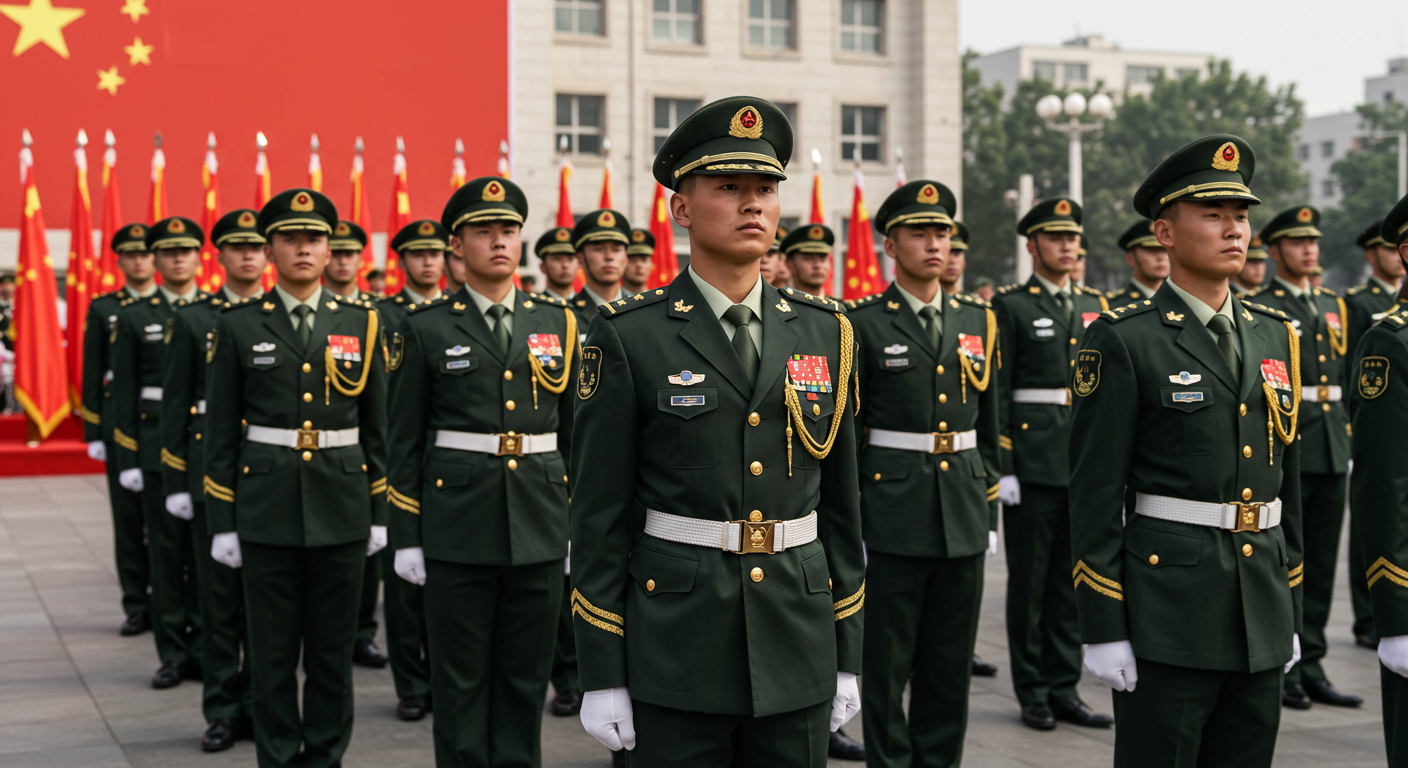
The United States being the latest to label the Balochistan Liberation Army (BLA) and its suicide outfit, the Majeed Brigade as foreign terror organisations is a potential game changer in the new world of South Asian security. It is not a mere step by the Washington in terms of its counterterrorism stance but it may alter the fragile relationship of cooperation between Pakistan, China and the US. Specifically, it can provide new levels of security confidence to Chinese people and projects in Pakistan, which have been the continuing focus of separatists groups in the country.
Over the years, Chinese nationals and investments in Pakistan were under threat by terrorist organizations that attempted to derail the China Pakistan Economic Corridor (CPEC), the showpiece project of the Belt and Road Initiative (BRI). The National Counter Terrorism Authority of Pakistan records that since 2021, at least 20 Chinese citizens have been killed in at least 14 terrorist attacks. Such attacks have been highlighted since the 2022 bombing at the Karachi University killed three Chinese teachers, or the 2024 suicide blast around Karachi airport killed two engineers.
Sanctions that have been imposed by the Washington against the BLA and its associates have had the effect of imposing asset freeze, material support restrictions and travel bans which are stipulated in the US law. In contrast to condemnation statements, these legal descriptions also have some bite: they create obstacles to raising funds, strangle the flow of funds, and put facilitators at risk of prosecution. Effectively, the US move supplements the international isolation of the BLA that Pakistan has been working hard to effect.
A Window for Trilateral Cooperation
Perhaps most striking is the diplomatic opening this creates. Analysts such as Abdul Basit in Singapore suggest that the move “opens a window for China to cooperate with the US on counterterrorism through Pakistan.” This is no small matter. At a time when Washington and Beijing are increasingly seen as global rivals, Pakistan could serve as the rare intersection where their interests converge. Both powers have a shared stake in ensuring the safety of infrastructure, personnel, and trade flows in South Asia.
China brings technological sophistication and intelligence capabilities; the US wields financial and legal enforcement power; Pakistan contributes on-the-ground counterterrorism expertise and an intimate understanding of local networks. Together, they could form a trilateral framework that weakens not only the BLA but also other militant actors such as ISIS-Khorasan and the Tehreek-e-Taliban Pakistan (TTP). Such collaboration would not diminish Pakistan’s sovereignty but rather reinforce its national security goals.
Safeguarding CPEC and Economic Stability
The stakes are not limited to security. CPEC is a cornerstone of Pakistan’s economic future, promising new energy projects, transport links, and industrial growth. Every attack on Chinese workers or installations undermines investor confidence and delays projects that are central to Pakistan’s development. Similarly, the US has begun to show greater interest in Pakistan’s resources, particularly its rare earth reserves estimated at $3–5 trillion. The parallel engagement of both Washington and Beijing in Pakistan’s economic landscape underscores a shared incentive for stability.
It is in this context that the US designation of the BLA carries weight. While China has urged for greater security guarantees, progress has been hampered by the complexity of local insurgencies. A proposed joint security company to allow China to deploy its own protective personnel in Pakistan stalled after the Karachi attack, illustrating the sensitivities around foreign security forces on Pakistani soil. By contrast, US sanctions apply pressure without intruding directly into Pakistan’s domestic security domain. This external layer of enforcement may complement Pakistan’s own counterterrorism measures, thereby indirectly improving conditions for Chinese nationals.
Beyond Rivalry: Toward Shared Security
Skeptics may argue that US interest in Pakistan’s counterterrorism efforts is self-serving, tied to its strategic rivalry with China and growing appetite for South Asia’s mineral wealth. Yet even if geopolitical competition remains, counterterrorism offers a practical area of overlap. For Pakistan, the immediate priority is clear: reducing the threat of terrorism to its citizens and foreign partners alike. If Washington’s hard line on the BLA helps achieve that, then the outcome aligns with Islamabad’s objectives.
The broader lesson here is that counterterrorism cannot be siloed by geopolitics. Militant networks exploit weak links, financing channels, and safe havens across borders. To contain them, international coordination is indispensable. For China, the security of its nationals abroad has become a pressing foreign policy challenge. For the US, the persistence of terrorism in South Asia continues to endanger regional stability and global commerce. For Pakistan, both the human and economic costs of terrorism are painfully real.
A Path Forward
The result is something special, something new: a trilateral alliance in counterterrorism based not on ideology but on need. Pakistan has the potential of being the connective link between China and the US, and this argument proves that despite international rivalry some grounds can be identified. More collaborative training, intelligence-sharing, and coordinated enforcement of terrorist financing may result as a consequence of this new alignment.
The BLA being listed by US is no magic bullet; it will not prevent terrorism in Pakistan with a snap. However, it is a positive change in the momentum that will increase the costs of gangs which attack Chinese nationals as well as CPEC related works. More to the point, it provides an opening of turning a field of common potential weaknesses into the one of combined preparation.
When the international situation is characterized by the fragmentation, and when many countries and individuals are engaged in their security, the case of terrorism warfare in Pakistan helps understand that security is collective. Provided that this movement is pursued with relative wisdom this might very well become the start of a safer future of Chinese workers stationed in Pakistan not to mention a welcome example of civil involvement between Washington and Beijing in a very bipolar manner mediated by Islamabad.
Author