

From Victims to Negotiators: Reframing Women’s Role in Peace Processes
The figure of women in war has long remained frozen in one pose: the refugee trying to cling to a child, the widow dressed all in black, the victim subjected to unheard horrors. These are actual,...
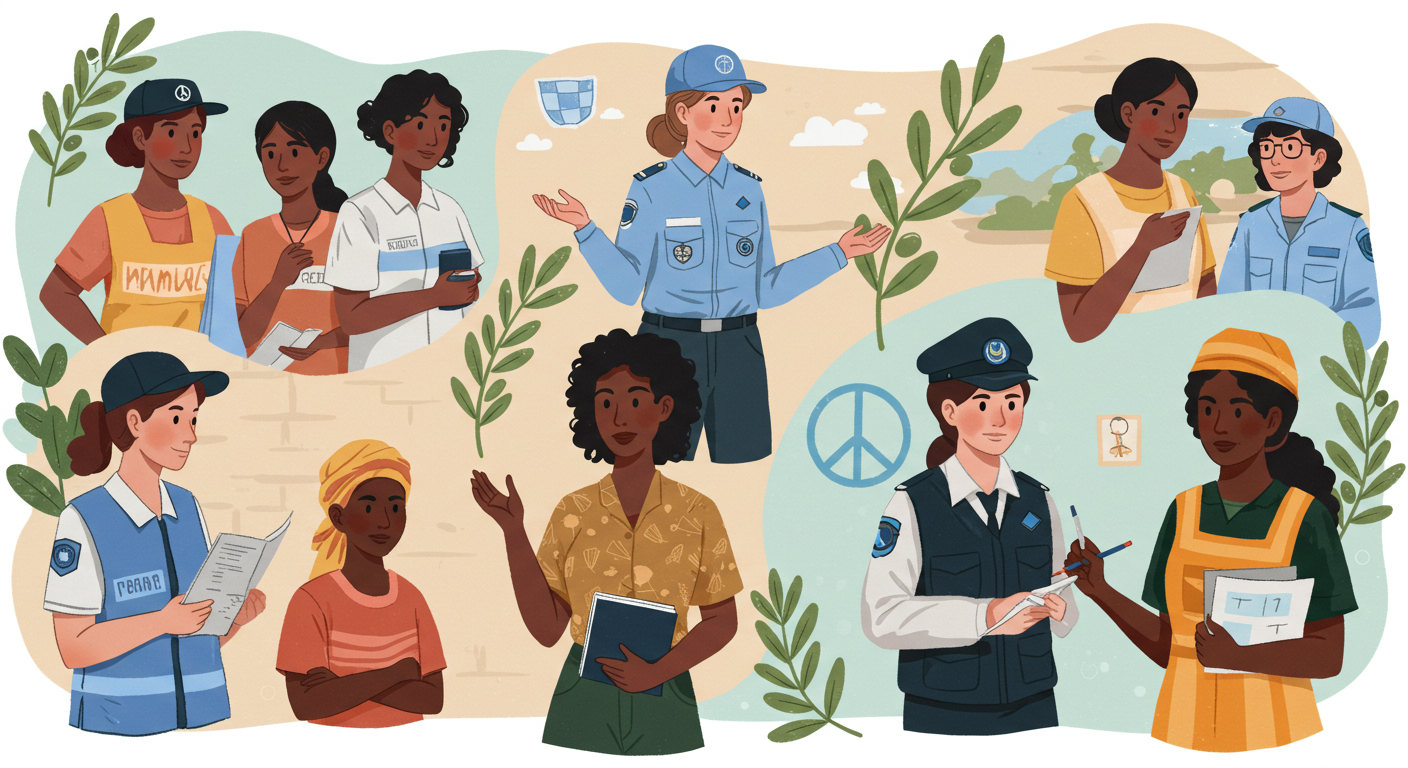
The figure of women in war has long remained frozen in one pose: the refugee trying to cling to a child, the widow dressed all in black, the victim subjected to unheard horrors. These are actual, burning facts. They are not the entire truth, however. They are not the truth in themselves. There are women at the heart of each conflict not just letting history happen but creating it. And in all peace processes they have been sidelined, history has been left, poorer, weakened and with a shorter life.
The international community likes to talk about the inclusive peace. The term decorates communiques and UN resolutions as well as donor reports. However, in reality the negotiating table is dominated by men, where the voice of women is only accepted as being symbolic rather than strategic. This is not only unfair. It is tactically stupid. Evidence provided by UN Women and International Peace Institute demonstrates that the agreements reached in peace processes involving the meaningful inclusion of women are 35 percent more likely to endure at least fifteen years. That is not a footnote in the calculus of peacebuilding, that is also a lifeline.
Think of Liberia in early 2000s. Women in markets in churches and in the streets managed to put warlords back to the negotiating table as it is said that it would take women to lock negotiators in the room until they could strike some bargain. Take the case of Northern Ireland where the female members of the cross-community Women Coalition brought clauses about human rights and the care of the victims into the Good Friday agreement. Or Colombia where the female negotiators during the 2016 peace process demanded the reform of rural areas, gender justice and reintegration initiatives that took into consideration the needs of female former combatants. These additions were not effusive, they constituted reinforcement of the structure. The peace architecture would have been fragile without them.
But even today, in far too many settings, women continue to be the “civil society representatives” and are invited to side events, not strategy sessions, whether it is South Asia or the Horn of Africa. In Afghanistan, the lack of care in U.S.-Taliban negotiations left women virtually out of the picture cancelling out years of political gains. In the tribal territory of Pakistan, women community leaders brokered local ceasefires, negotiated safe routes through militants and safe passage of civilians, but their impact has rarely transformed into formal recognition at the provincial and national levels. Cultural inevitability is not the omission. It is political decision.
The difficulty with this is partly the definition of expertise itself, which is narrow. Male leaders who have other political positions or led militias automatically become credible mediators. Women, however legitimate their grassroots legitimacy and experience in conflict resolution, are too readily treated as belonging to the sphere of the advocates, as opposed to the actors. It is an epistemic bias, hard-coded into the DNA of diplomacy, that diminishes knowledge that falls outside the elite power differentials.
The attitude and environment stipulated in this reality can be changed by something different than token appointments. It requires re-engineering even the architecture of peace processes themselves. Quotas are one thing and they have to be combined with influence the power to set the agenda, write some agreements and veto power of some issues in relation to the community as a whole. It also demands investments in women political networks even before conflicts sparken so that when it is time to engage in negotiation, the pipeline of believable female leaders is evident and irrefutable.
Often, critics will claim that the demand to have women on board slows down such tricky negotiations. This proves to be a false economy. Peace that is not negotiated by the involvement of half of the population cannot be considered peace. It is a hiatus. And stops, as history tell us, are habitual first steps towards relapse. Permanent peace is not constructed overnight; permanent peace is constructed in dimensions.
We have come to a point where war and peace become more blurred concepts in the future. Cyberattacks, disinformation campaigns, climate shocks, hybrid warfare all indicate that conflict resolution capacities are way more than the ability to sign a ceasefire. They demand an understanding, local confidence, cross-sectoral problem solving and a rejection of security as a solely gun-and-borders phenomenon. Such types of diplomacy practices have been exercised by women inconspicuously over many centuries. It is not the tragedy that they are not being present in peace tables but it is the fact that when they are not the full range of solutions is lost to whole societies.
It is high time to which the story that throws women as the mourners of the war only. They are peace builders as well. As in a time, when any show of violence will cripple wobbly-knit alliances, we dare not thus chain up half of our architects on the outside of the room.
Author