
India’s Double Game in the Tariff War
The recent tariff dispute between the United States and India has exposed a long-standing pattern in New Delhi’s foreign policy, the habit of playing all sides while avoiding full commitment to any...

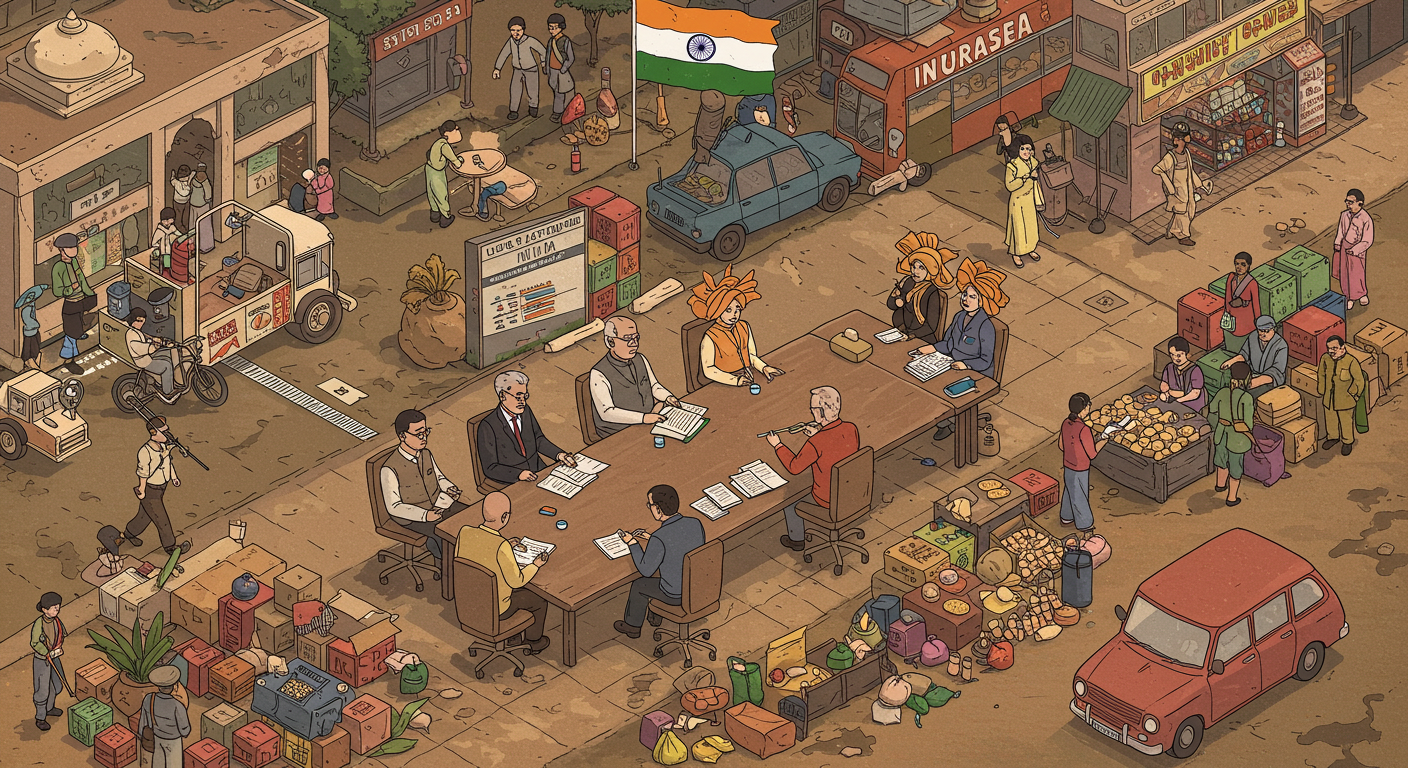
The recent tariff dispute between the United States and India has exposed a long-standing pattern in New Delhi’s foreign policy, the habit of playing all sides while avoiding full commitment to any one partner. For decades, India has described this approach as “Non-Alignment” or, more recently, “Strategic Autonomy.” In theory, these terms suggest independence in decision-making. In practice, they often mask a calculated effort to extract maximum benefits from all sides without facing the consequences of choosing one.
The current crisis began when U.S. President Donald Trump imposed a 25% tariff on all Indian exports to the United States. The move targeted more than $80 billion worth of trade and was framed as a response to India’s high import tariffs and its growing economic ties with Russia, including oil purchases and weapons deals. Washington’s message was blunt, India could not enjoy U.S. market access while deepening partnerships with Russia, a country under American sanctions.
At first, India’s public reaction was defiant. Prime Minister Narendra Modi and External Affairs Minister S. Jaishankar openly criticized the U.S. decision. They argued that India was being singled out unfairly and pointed to European countries, China, and others who also maintain trade with Russia. On the surface, it looked like a bold stand against Washington’s pressure.
However, behind the scenes, a different story was unfolding. Diplomatic sources suggest that Indian officials quickly moved to open backchannel communications with the U.S., assuring them that India would avoid actions that could cross American “red lines.” This quiet engagement stood in sharp contrast to the public rhetoric. It is a pattern India has repeated in other situations, expressing resistance in front of domestic audiences while privately seeking compromises to maintain ties with the West.
This balancing act is not new. During the Cold War, India positioned itself as a leader of the Non-Aligned Movement, avoiding formal alignment with either the U.S. or the Soviet Union while benefiting from both. In recent years, the phrase “Strategic Autonomy” has replaced “Non-Alignment,” but the underlying approach remains the same. New Delhi seeks defence cooperation with the United States, economic partnerships with the European Union, energy deals with Russia, and investment projects with China, often simultaneously.
Supporters of this strategy argue that it gives India flexibility and resilience in a competitive world. Critics, however, see it as opportunistic and unsustainable, especially in an era where major powers are demanding clearer commitments. The tariff war with Washington is a sign that the space for such balancing is narrowing.
In this case, the contradiction is particularly stark. While Modi’s government claims to be standing firm against U.S. pressure, it continues to expand trade with Europe and court American technology investment. Meanwhile, India’s outreach to Russia is presented as a sign of independence but remains carefully limited to avoid triggering harsher U.S. sanctions. This careful calibration is designed to please everyone, but in reality, it often creates mistrust on all sides.
The fallout from Trump’s tariffs has already caused unease in India’s export sectors, particularly in textiles, pharmaceuticals, and IT services. Economists warn that if the dispute drags on, it could slow India’s already fragile economic growth. At the same time, political observers note that Modi’s government is using strong language mainly for domestic consumption, appealing to nationalist sentiments without taking concrete steps that might risk relations with the U.S.
This is where the gap between image and action becomes most visible. The Modi administration has mastered the art of using symbolic gestures, especially in the Hindi language, to reassure domestic audiences that India is standing up to foreign pressure. Yet these gestures are rarely backed by policy changes. The real decisions, made quietly in diplomatic meetings, are far more cautious.
The pattern fits a broader trend in Indian foreign policy over the past decade. On issues ranging from border tensions with China to climate change negotiations, New Delhi has often taken tough public positions while privately negotiating compromises. This two-track approach allows the government to claim victories at home while avoiding costly confrontations abroad.
📄 POLICY WIRE WHITEPAPER PUBLISHED: PAKISTAN'S NATIONAL SECURITY POLICY PRIORITIES
👉 READ BY CLICKING HEREHowever, the tariff war may prove harder to manage. Unlike symbolic disputes, tariffs have direct economic consequences. They affect jobs, business competitiveness, and foreign investment confidence. For the U.S., the move is part of a broader strategy to pressure trading partners into aligning with American policies toward Russia and China. If India cannot find a way to reconcile its Russia ties with its U.S. trade interests, it may face a choice it has long tried to avoid.
Some analysts believe this moment could force a rethink in India’s strategy. The old formula of “talking tough but acting cautiously” may no longer work in a world where major powers are openly competing and demanding loyalty. Others think India will try to stretch the balancing act as long as possible, betting that its large market and strategic location will continue to make it too valuable for either side to alienate completely.
What is clear is that the image of India as a bold, independent player on the global stage has taken a hit. The tariff war has shown that much of its posturing is aimed at domestic audiences, while the real priority remains keeping all relationships, from Washington to Moscow to Beijing, intact. This is not necessarily a flawed approach, but it becomes problematic when the gap between words and actions is too wide to ignore.
In the end, the dispute may be remembered less for its economic effects than for what it revealed about India’s foreign policy style. As the proverb goes, a bitter enemy can be more reliable than a foolish friend. For Washington, Brussels, Moscow, and Beijing, the question now is whether India’s friendship is as dependable as its leaders claim.
For Modi’s government, the challenge will be convincing the world that its strategic autonomy is genuine independence, and not just a cover for playing all sides until the game is up.
Author