
We Did Not Cross the Border — The Border Crossed Us: Climate Migration and the Collapse of Human Geography
The greatest human migration in the 21 st century will not be through war zones or workplaces. It will be of the streets where the rain erupts not more, where the water drains not down the river, and...

The greatest human migration in the 21 st century will not be through war zones or workplaces. It will be of the streets where the rain erupts not more, where the water drains not down the river, and the soil itself becomes salt. Migration that was caused by climate is no longer the hushed guessing in UN briefings nor the footnote in scholarly prose. It is a global trauma in the process of happening, and the epicentre is hidden, in the unseen borders of the map, in the dispersing deltas, the submerged coast lines, the incinerated highlands, and the fractured flood plains where millions are being expelled not by politics or poverty, but by a planetary system melting down in real time.
There is no sharper evidence of this than in the Indus Delta in Pakistan, the site of some ancient civilization and currently a place where unmarked small villages lie at the mercy of the gods of thirst. In both Kharo Chan and Keti Bandar, kids play in ghost towns as their parents queue to get water that is potable delivered by boats. This is not displaced people in the traditional sense. They are the vanguard of an existential redistribution of human geography in which the boundaries established in 1947 matter less than the boundary of salty water at the edge of each rising tide.
However, this is not the only crisis in Pakistan. As the Sundarbans of Bangladesh to the Niger river Basin in Africa to the dry corridor in Central America to the sinking bits around Jakarta, Climate migration is remaking the lands before anyone has even defined the crisis. The world Bank predicts that by 2050, climate change may cause more than 216 million people to become internally displaced. This figure does not comprise the stateless, the undocumented, the uncounted, those who are already melting out of the vote tally, out of the countryside, out of the mind.
The international asylum system is not constructed this way. The 1951 Refugee Convention was not meant to cover environmental refugees but the political exiles. There is no legal status, no protection under the law, of one whose village is washed under or whose fields are sterilized by the encroaching salt water. Such migrants are neither escaping war nor pursuing opportunity. They are fleeing on elemental disloyalty- a desertion of rivers, rains and rights.
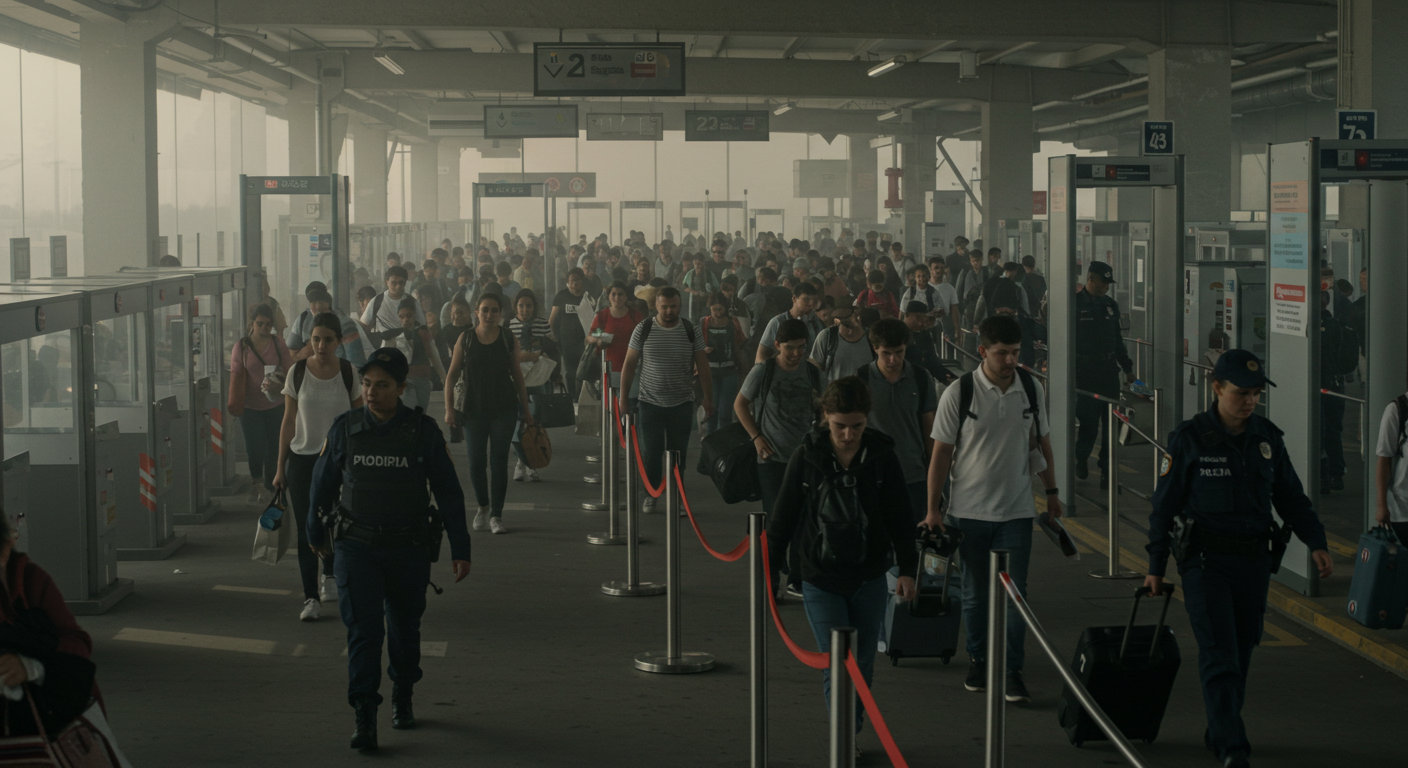
Militarized southern borders the answer to increased climate migration, has not been empathy, but exclusion, a theme that is mirrored through to the so-called Fortress Mediterranean. This is the monumental moral contradiction of our time, the victims who had little to do with the climate crisis are forced to bear the brunt of it first, but the perpetrators are fortifying their borders and closing their walls in order to keep them out.
The collapse of climate does not respect visa regimes. In 2023 alone, floods in Germany, wildfires in Canada and droughts in California displaced tens of thousands. The contrast is that in the global North, climate displacement is addressed as a crisis. It is seen as fate in the world South.
The example of Pakistan is informative. Although the share is less than one percent of global emissions, the country is ranked in top ten most climate-vulnerable countries. The 2022 floods, which uprooted more than 33 million people, offered more than a humanitarian emergency; it was a peek at a neonormal of migration. Internal migration is speeding up and the weak infrastructural assets of mega cities such as Karachi and Lahore are being stretched to the limits. This has not been random displacement; rather agrarian and coastal communities are being systematically displaced and cultural erasure and economic disruption are being inflicted on a scale that has never been experienced before.
Furthermore, the geopolitical consequences are astounding. Climate migration will redelineate regional alliances, heat up cross-border tensions, and alter demographic ratios in ways that cannot be imagined by any military doctrine. With the recession of glaciers and the drying up of rivers, water-sharing agreements such as the Indus Waters Treaty are no longer mere constructs of law, but they may also be trouble spots. So climate migration will not simply be a humanitarian crisis, but also a security question, an empty legal space and a matter of conscience.
What should we do? First, international legal framework has to be transformed. It is high time the international law established a “climate refugee” status. States should acknowledge the issue of environmental displacement as a ground of asylum and resettlement. Second, financial flows toward climate change should shift from abstractive boardroom to adaptation at the grassroots level. Instead of carbon trading in far-off global capitals, investments must focus on climate-resilient housing, local water systems, and sustainable agriculture, in first-line communities.
Third, there has to be a change in the global narrative. Climate migrants are no threat. They are survivors. They do not live as the helpless victims of destiny, but the strength of refusal. They are our witnesses of our collective failure, and the future we will share.
In conclusion, we need to realize that climate migration is not something that should be fixed, but exists, and we should be able to manage it using justice, humility, and vision. We are living in a century when such belonging, to land, to country, to climate, will be an object of contention. The boundary between exile, citizen, between the border and the biome, is becoming seamless.
To the millions like Habibullah Khatti of Kharo Chan, who stood by his mother’s grave before abandoning his ancestral village, we owe more than sympathy. We owe justice. We owe protection. And above all, we owe the courage to admit that we are all standing on shifting ground.
Because in the end, we did not cross the border. The border crossed us.
Author