

Pakistan Launches First Trackless Electric Tram in Lahore
With the introduction of its first fully electric, trackless tram systems in Pakistan, in Lahore, Pakistan is a big stride in the direction of cleaner and more modernized mass transport system....

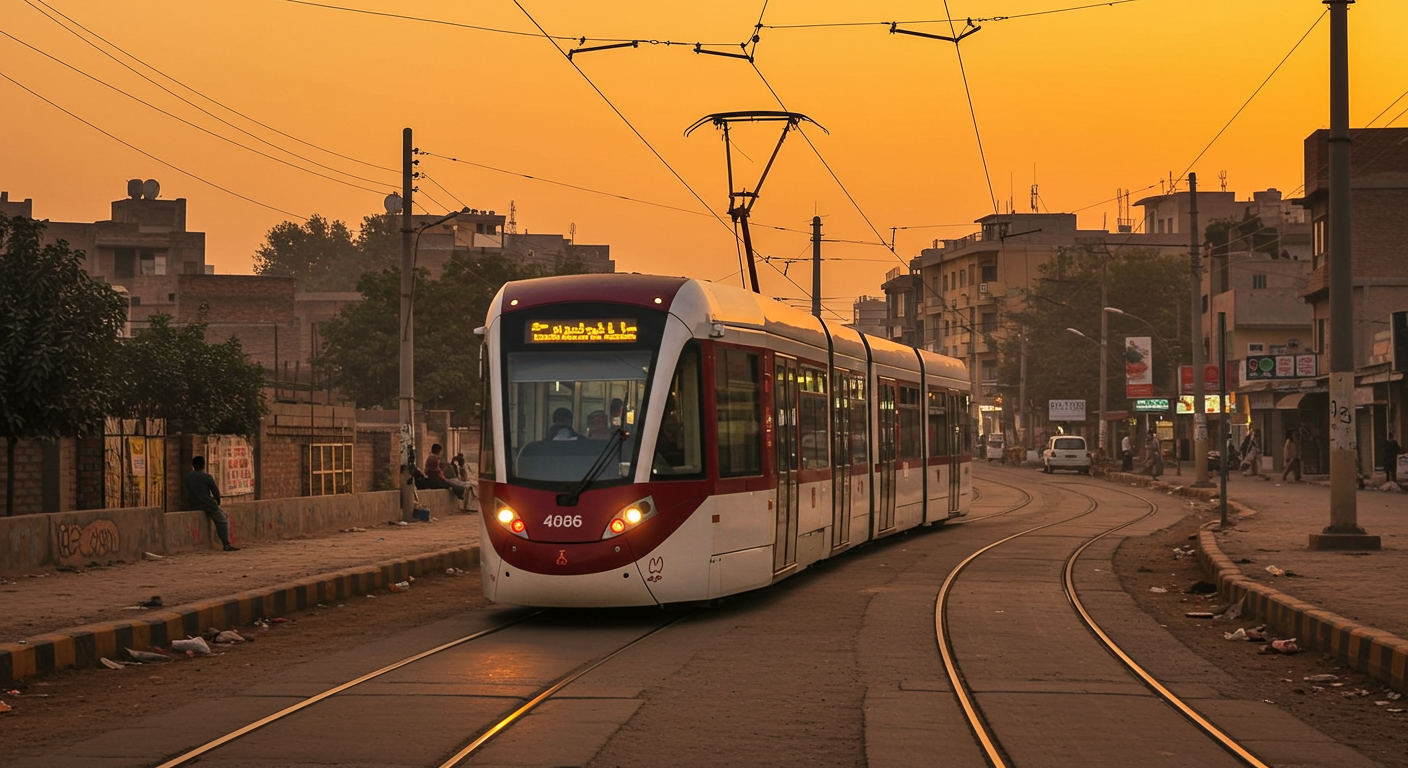
With the introduction of its first fully electric, trackless tram systems in Pakistan, in Lahore, Pakistan is a big stride in the direction of cleaner and more modernized mass transport system. Launched this week after an effective test run, the novel Super Autonomous Rapid Transit (SART) marks a new era in the way the country plans to move its urban areas. This SART employs state of the art “virtual track” technology, which enables the tram to run on normal roads without having to install conventional railway. Punjab Chief Minister Maryam Nawaz inaugurated the project by taking its first experimental ride in the tram, which started at Raiwind Road and went to Muslim Town. The Minister with Bilal Akbar in Punjab Transport, senior officials and technical experts accompanied her as they watched the vehicle run in the real traffic situation. Maryam said the launch of this was the future of public transport in Punjab. What we are doing is creating an efficient, environmentally friendly, and affordable system to everyone in the big cities and the small cities.
A Modern, Eco-Friendly Transit Solution
It is an electric train with no emission: track less tram. It was created by the Chinese company Norinco International and can accommodate the passengers up to 320 persons in 3 roomy compartments. There is a possibility to add a fourth coach, which will enable carrying passengers in excess of 400. A mate version which is under construction in Pakistan will accommodate up to 250 passengers or more according to the route and the seat arrangement. All the vehicles are equipped with air-conditioned cabins, CCTV surveillance cameras, Wi-Fi and smart screens in order to make the commute more comfortable and secure. SART operates through a combination of sensors, GPS and digital mapping to form a virtual track on which the driver can work. This makes it affordable and not inhibited by infrastructure and exclusive lanes as conventional rail or Bus rapid transit (BRT) systems. The tram can travel with a single charge up to 40 kilometres, and 27 kilometres of charging can be boosted by fast-charging points in 10 minutes.
Why Trackless Trams Matter for Lahore
The city of Lahore is considered to be one of the most densely populated cities of Pakistan and the traffic movement is a major issue in Lahore whether it is a working day or a holiday. It is very costly to construct new rail lines in that kind of environment and it can be disruptive as well. The trackless tram is a flexible system since it will operate within the road network as it will be weaved into the current situation. According to urban transport specialists, the systems have already proved to be successful in other countries. Trackless trams have been implemented in Turkey, China and the United Arab Emirates that have assisted to eliminate congestion and minimize carbon emissions. Currently, Lahore is also becoming part of the circle of cities trying new-generation transport infrastructure. During the stage of trials in Lahore, using the service will be free of charge to passengers. During this time, the government shall obtain the opinions of people on this vehicle, keep a check on its performance, and analyze its impact on the traffic in the city. Pricing of the tickets shall be an area of deliberation when the entire system has been implemented.
Part of a Bigger Transport Strategy
The SART launch is part of Punjab’s five-year transport modernisation strategy, which aims to make public transit cleaner, faster, and more widely available. The provincial government plans to introduce the system in Faisalabad and Gujranwala next, before expanding it to a total of 10 cities in the first stage. Over the next four years, the target is to bring the system to 30 cities across Punjab. Officials say the pilot route in Lahore will likely run from Thokar Niaz Baig to Harbanspura along Canal Road. This corridor is being assessed for traffic impact, passenger demand, and operational efficiency. A demonstration for senior government officials is planned at the Lahore Expo Centre in mid-August. Transport Minister Bilal Akbar described the project as a “game-changer” for urban mobility in Pakistan. “This system will not only make travel easier for people but will also help us fight climate change by reducing pollution and reliance on fossil fuels,” he said.
Clean Transport and Climate Goals
Pakistan is one of the nations that are highly exposed to climate change due to threats of air pollution, increased temperature, and smog in urban areas. Transport industry is one of the biggest contributors to such issues; their aging, fuel guzzling vehicles contribute to poor air quality in cities such as Lahore. The government wishes to reduce carbon footprint and clean up the air by replacing some of these vehicles with electric trams. This project also helps ensuring that Pakistan is adhering to its international obligations on climate change in terms of moving towards low-emission and sustainable development. According to environmental specialists such initiatives (and their large scale implementation) could become one of the ways Pakistan could address the problem of congestion alongside the climate challenge. Nevertheless, they emphasize that SART system will work only due to a proper planning system, integration with other transport services, and sustained funding in maintenance and infrastructure.
Looking Ahead
Shows Seeing-It: At this juncture, the buzz about the new track less tram at Lahore is great. Commuters will gladly jump into the more contemporary and air conditioned ride and the urban planners will be closely observing its success in the heavy traffic conditions in Pakistan. Chief Minister Maryam Nawaz has stated that her government will deliver the service to not only provide service to affluent regions, but also in smaller urban centres and towns. She explained: Public transport is not only a luxury enjoyed by people who make enough salary to afford a car.” The opening of the first trackless tram in Pakistan is a sort of a risky gesture that implies purer, more efficient transportation means. In case the trial is successful, it might change the way citizens travel within cities, reduce pollution, and bring Pakistan closer to the worldwide trend associated with sustainable urban mobility. In Lahore, a city in which the day commute is regularly characterized by tedious gridlocks, logs and choking fumes, a serene, soundless electric tram cruising down the street could be the omen of a healthier future.
Author