

Tariffs and Tensions: How US–India Relations Reached Their Lowest Point in Years
The sudden announcement of a 50 percent tariff on Indian imports by the United States has driven a deep wedge into what had often been portrayed as a steadily warming relationship between Washington...

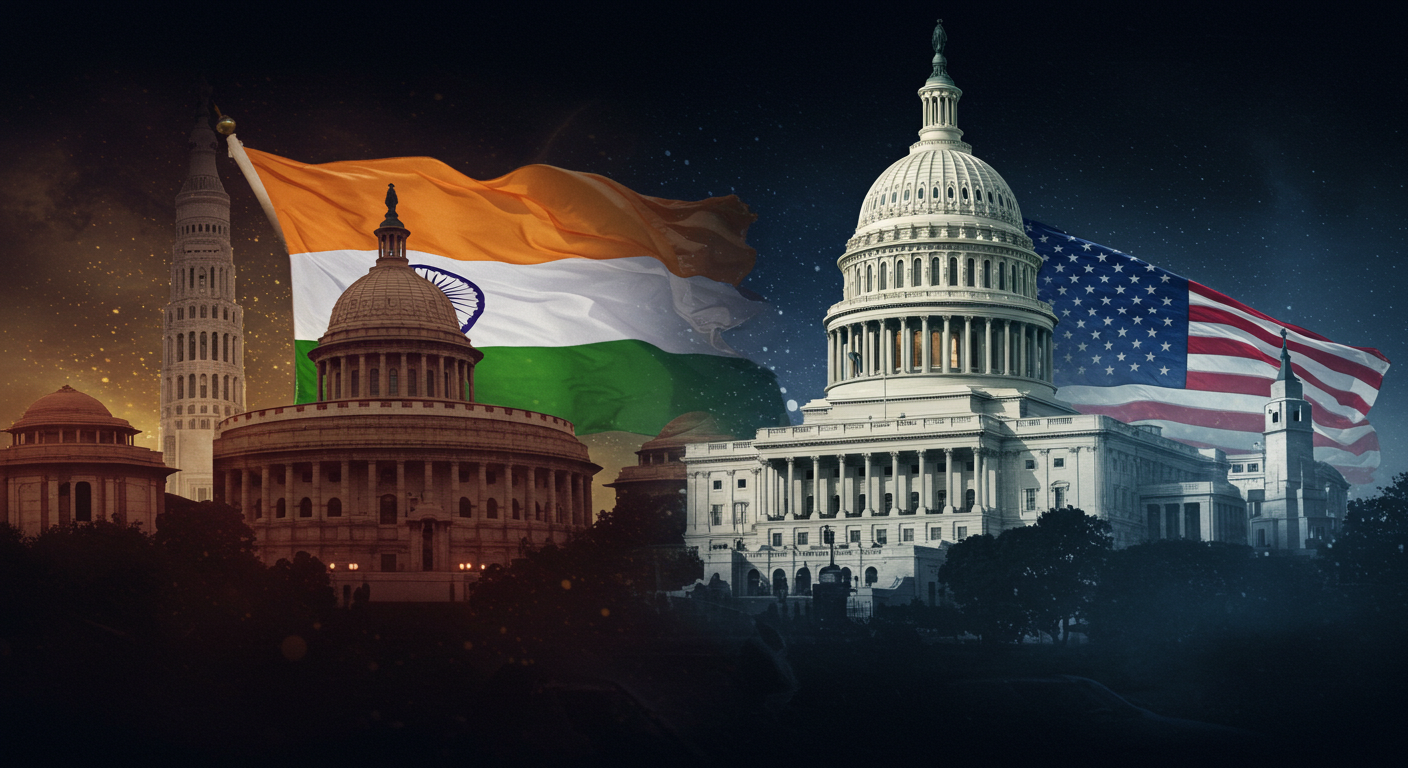
The sudden announcement of a 50 percent tariff on Indian imports by the United States has driven a deep wedge into what had often been portrayed as a steadily warming relationship between Washington and New Delhi. The official justification from the White House is straightforward: India’s continued import of discounted Russian crude oil undermines US sanctions and indirectly supports Moscow’s war economy. Yet the scale, speed, and political bluntness of the move point to something more telling, a recalibration in US thinking about the limits of partnership when strategic interests collide.
Over the last few years, the rhetoric between both Prime Minister Narendra Modi and President Donald Trump was saturated with winks of friendship, pleasantries and promises of closer ties. The close relations between the two leaders made many observers believe this personal rapport would insulate India against the best of the US trade policy. That assumption has been overturned. It is a less long term strategic arsenal of friends but transactional loyalty the Trump administration method. When the actions of one partner are considered to go against the US priorities, in this case, purchasing energy sources with a rival, the punishments will be swift and without the softening of prolonged negotiations. The demise of the ongoing trade negotiations between the 2 nations was quick, and in the view of many, surprising.
Russian oil problem is not novel. Washington has since the onset of the Ukraine conflict pressured its partners all over the world to cut on their purchases in Moscow. But in India, it was economic pragmatism to receive a discounted Russian crude as a means of ensuring cheap energy to meet the needs of an exponentially growing population and industry. However, to Washington, both the appearance and the geopolitical meaning of it could not be accepted The US has given a clear message that it would approach such economic judgments as political even when it comes to a partner in forums Quad, as it is willing to impose earlier 25 percent tariff in addition to the current 25 percent tariff.
Above and beyond the current skirmish there is a greater wake-up in Washington about the Indian economic and strategic posture. The US has been aware of the fact that India is on the path of achieving so-called strategic autonomy preserving its defence and trade relationship with Russia despite its increasing security partnership with the US. What has possibly changed is US evaluation of flexibility India enjoys to manoeuvre. Washington seems to have realized the fact that the export structure of India is more readily vulnerable to selective tariffs than what New Delhi may have imagined. A large part of India labour intensive exports to the US in textiles, gems and jewellery, footwear and others industrie are very price sensitive. A 50 percent tariff would tend to price these goods out of the American market nearly overnight endangering employment at home and export earnings.
Another concern that comes out in this episode is credibility in supply-chains. Whereas USA is driving the ideology of trusted suppliers, countries with the capability of complying with strict compliance, traceability and quality-control requirements are given a first-hand privilege in accessing markets. Although there have been periodic warnings to the Indian exporters regarding the problems in quality and unpredictability in regulations, they are competitive in many aspects. All these weaknesses are admittedly not absolute, but they provide US policymakers with good leverage in terms of dispute.
Energy dependence is one aspect that Washington has gone after. The Indian dependence on the Russian oil with no easy-to-increase alternative can only imply that any risk to set aside Moscow will come at a serious short-term economic cost. The energy imports become a strong pressure factor in US-India relations because of that dependency. Along with the failure of trade talks, it is an indication of the overestimation of the New Delhi on how fast the US would take the conflict to a new level, and on how minimal the political capital that individual levels of personal ties have when it comes to dealing with national interests.
It is compounded by the geopolitical background. In recent developments, the two governments also disagreed on the story of resolution of a border flare up between India and Pakistan. Trump took pride in the ceasefire mediation whereas to India there was no role of such a mediatory process. But to Washington, this open hypocrisy was a blow at the optics of collaboration, so monitored. To New Delhi, the inability to agree strengthened its insecurity when it comes to external intervention in its regional conflicts. Even apparently minor differences in terms of what is publicly stated can have disproportionate weight when already-shaky trust tips off the edge.
The responses to tariff shock are mixed the world over. Quiet among allies and partners in the Indo-Pacific is concern that a rift between two large democracies will fatally undermine concerted action in the effort to balance Chinese power. In the BRICS and most of the Global South, the Indian position is being interpreted to be that of defending strategic autonomy; a value that a lot of these countries uphold, as well. Others can possibly view New Delhi as defiance as a political ploy to keep their own relations with Moscow. The enticement of great powers such as China, Russia and other emerging countries is also likely to take advantage to pester India more because it is viewed as a swing state on the new global order.
The tariff increase has brought about a review of the short-term growth outlook of India in the case of financial markets. There is a danger of losing preferential access to US market, analysts say, which may hurt earnings on exports, undermine the growth in factory production, and make investment flows more cumbersome. The race to get fresh buyers or governmental intervention to compensate the losses is on now among the Indian exporters particularly those in vulnerable sectors.
The political consequence to the Modi government at home can hardly be ignored. The administration has proved itself to have a solution to balancing of great power relation and ensure that the economic growth is not affected. Both then are put to the test in the tariff episode. The government has to choose between staying true to course with its energy policy and risking long-term economic punishment or changing directions and trying to mend the trade relationship. Either way is not free.
In the case of the US, this episode can be taken as an example of economic statecraft but also as an indicator that there is a risk to hurt long-term partnership by using coercive instruments. Washington is likely to achieve temporary compliance of New Delhi in particular matters at the cost of pushing India towards further diversification of its trade and foreign affairs relationships. In the case of India, the difficulty lies in overcoming the weaknesses revealed by this confrontation: diversifying its exports markets, improving the stability of its supply chains and developing energy sources that hedge against geopolitical leverage.
Tariff crisis is not the end of the cooperation between the US and India but it has burst the bubble that the niceness on the streets and easy self-understanding on the level of democratic values are alone sufficient to install common backgrounds of collision of national interests. The two countries now have a choice: to let this break as it has, and hope that it will become cemented into mistrust or to take it as an unpleasant but salutary lesson about the need to be careful about managing expectations in an ever more transactional world. The whole world is witnessing, and in the competitive international world both the sides can not and should not risk letting this relationship drifting too much out of the repair.
Author