

Tragedy on a Russian Beach: Ukrainian Drone Strike Kills Four, Including Child
A peaceful summer evening on a public beach in Russia’s Kursk region turned into a scene of horror earlier this week when a Ukrainian drone strike killed four people, including a five-year-old boy....

A peaceful summer evening on a public beach in Russia’s Kursk region turned into a scene of horror earlier this week when a Ukrainian drone strike killed four people, including a five-year-old boy. The incident has sparked strong emotions on both sides of the war, with questions being raised about the ethics of cross-border attacks and the human cost of modern warfare.
A Night of Terror
The attack happened on the evening of July 8, when beachgoers in Kursk were enjoying the warm weather. Suddenly, a drone exploded near the beach, killing three people instantly. Among the dead was a member of Russia’s National Guard who had reportedly rushed in to help civilians flee after spotting the drone. Several others were injured, including young children and families who had come for leisure. The next day, officials confirmed that a five-year-old boy who had suffered severe burns in the explosion had died while being transported to a hospital in Moscow. This raised the total death toll to four. The boy’s injuries covered over 30 percent of his body, and doctors were unable to save him. Regional Governor Alexander Khinshtein announced the tragic update via Telegram, calling the attack “a monstrous crime” and describing it as an attack on “innocent civilians, including children.”
Why Kursk?
Kursk is located in western Russia, not far from the Ukrainian border. Over the past year, Ukrainian drones have increasingly targeted Russian territory in response to Russia’s continued air strikes on Ukrainian cities. However, this specific strike has raised major concerns because it hit a civilian beach. Some Russian journalists and analysts have speculated that the real target may have been a defense research facility located just a few hundred meters from the beach. This facility, they argue, is involved in military production, and its proximity to civilian areas makes any attack riskier. Ukrainian officials have not released any statement confirming or denying responsibility for the strike. Kyiv typically does not comment on drone strikes inside Russian territory, although Ukrainian forces have used drones regularly in the ongoing war.
Civilian Deaths and the Ethics of War
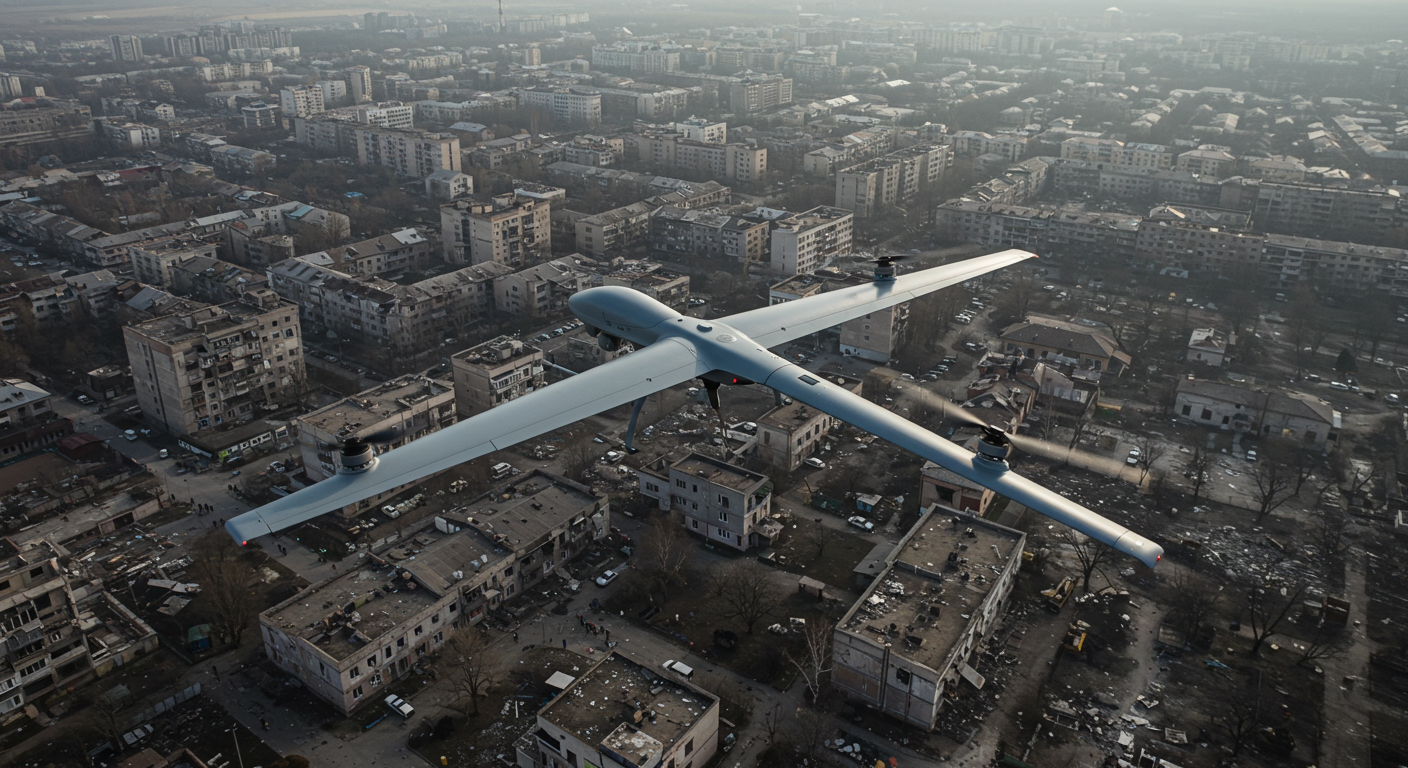
The deaths in Kursk, especially that of the child, have reignited the debate about the use of drones in warfare. Drones are often praised for their precision and ability to reduce military casualties, but they also pose a major risk to civilians when used near populated areas. Russia has been accused many times by Ukraine and international human rights organizations of targeting civilian infrastructure, including schools, hospitals, and residential buildings. Ukraine, in turn, has maintained that its attacks are focused on military and strategic targets. However, the Kursk beach strike may prove to be a turning point. While there is no confirmation yet from the Ukrainian side, the impact of this attack is deeply emotional. Images of bloodied sand, emergency workers, and a grieving family have spread across Russian media and social platforms, fueling anger and calls for revenge.
Russia’s Response
Russian authorities have promised a strong response. President Vladimir Putin, speaking at a defense meeting, called the drone attack “a crime against the Russian people” and vowed that those responsible would face consequences. Military analysts in Moscow claim that Russia may now expand its list of strategic targets inside Ukraine and increase drone surveillance along its western border. Already, air defense systems have been placed on high alert in multiple regions, and state TV has begun airing more segments about protecting civilians from aerial threats. At the same time, the Russian Ministry of Defense reported that it had intercepted 14 Ukrainian drones attempting to enter Russian airspace just a day after the Kursk incident. Officials said this showed Ukraine’s intention to increase pressure along the border.
Global Reactions
The international community has reacted with concern. While many Western nations support Ukraine’s right to defend itself, there are growing calls for restraint and for all parties to minimize harm to civilians. UN Secretary-General António Guterres called the Kursk beach deaths “a heartbreaking reminder that the war has no boundaries,” urging both sides to “respect international humanitarian law and protect innocent lives.” NATO and European Union leaders have remained mostly silent about the strike itself but have stressed the importance of ending the conflict through negotiations. The United States, which has been reviewing its military support for Ukraine under President Donald Trump, has also refrained from commenting directly on the Kursk deaths.
The Bigger Picture
This drone strike comes at a time when the war in Ukraine is intensifying once again. Russia recently launched one of its largest air attacks on Kyiv in three years, using hundreds of drones and missiles. Ukraine is seeking more advanced air defense systems from its allies and is hosting international conferences to secure funding for reconstruction and defenseThe strike in Kursk adds another layer of complexity to an already brutal war. While Ukraine fights to defend its sovereignty and Russia continues its offensive operations, civilians on both sides are increasingly caught in the crossfire. The death of the young boy in Kursk is likely to stay in public memory as a symbol of the innocent lives being lost in a war that has no end in sight. Whether or not the beach was a legitimate target, the fact remains: a child has died, and a family has been shattered. As the war drags on, both Kyiv and Moscow face difficult questions about where to draw the line between military necessity and moral responsibility. For many observers, this moment should be a wake-up call — not only for the countries involved but also for the international community that continues to watch from the sidelines.
Conclusion
The Kursk drone strike is a tragedy that highlights the human cost of modern warfare. As drones become more central to battle strategy, so too must efforts to ensure civilian safety. No matter who is at fault, the death of a child should force everyone to pause — and remember what is truly at stake in this conflict.
Author