


Escalation and Uncertainty: Russia’s Latest Offensive
On June 29, 2025, the war between Russia and Ukraine reached a new level. In accordance with Ukrainian officials, Russia carried out what was portrayed as the largest air assault since the start of...

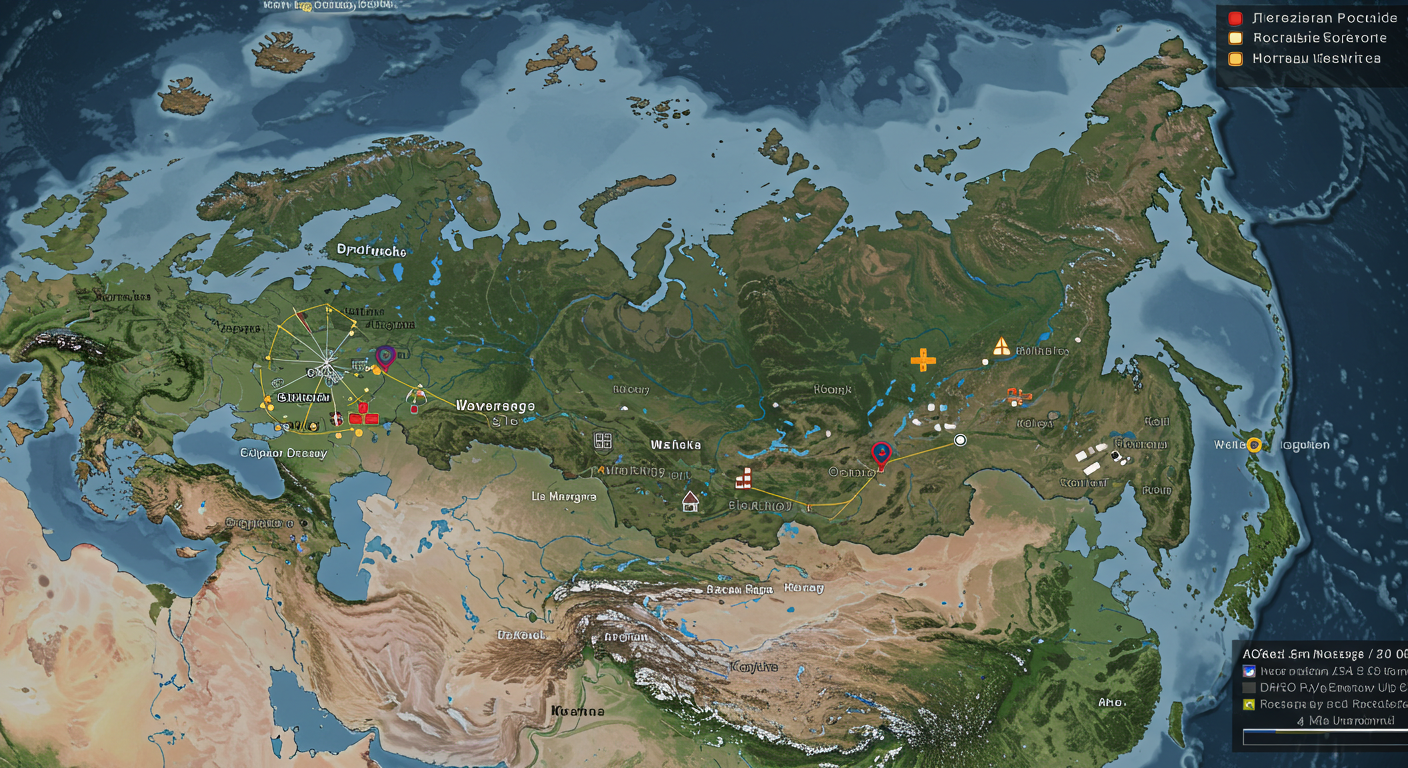
On June 29, 2025, the war between Russia and Ukraine reached a new level. In accordance with Ukrainian officials, Russia carried out what was portrayed as the largest air assault since the start of the all-out invasion in February 2022. The attack, it is said, included 537 air weapons, comprising 477 drones and decoys and 60 missiles. The extent and precision of the operation indicate a significant development in warfare planning and implementation.
The timing of the strike was only two days since Russian President Vladimir Putin told the world that Moscow would be willing to go back to negotiations in Istanbul. The news had evoked a variety of international reactions, ranging from hesitant optimism. But the subsequent air campaign has weakened the consistency between diplomatic rhetoric and action on the ground. The chain of events has been interpreted differently: as a signal to increase negotiating strength, as a probe of Ukraine’s air defenses, or as part of regular strategic deliberations.
Ukrainian military sources said much of the drones employed in the operation were Iranian-made Shahed units, along with decoys designed to disrupt radar systems. The objective seemed to be to saturate Ukrainian air defenses with what is referred to as a “swarm attack.” One of its newly purchased F-16 fighter jets was reportedly lost by Ukraine during the operation, with its pilot having been killed in the crash. Civilians were also hit; in western city Drohobych, a drone attack destroyed an industrial complex and damaged power supply lines. Whereas the military importance of the location is unconfirmed, the attack demonstrates the wider geographical extent of recent conflicts.
This period of the war has progressively moved beyond classical battlefields into civilian infrastructure and economic networks. Energy grids, transportation networks, and supply chains are being targeted, rendering it hard to distinguish between military and non-military objectives. Commentators have observed that the employment of extended-range aerial strikes can make it hard to restart serious diplomacy. Although high-level posturing on the topic of peace continues, actions like mass airstrikes add complexity to global perceptions and reactions.
Geopolitically, June 29 developments will likely shape the deliberations among Western powers, particularly regarding military and economic aid to Ukraine. American and NATO leaders have continued to reiterate that any peace process should be consistent with Ukraine’s sovereignty and territorial integrity. Intense episodes of conflict, however, can also shape the calculus for all parties and may make concessions more difficult than inviting compromise.
The humanitarian cost is still high. Millions displaced, tens of thousands dead, and significant chunks of infrastructure destroyed or damaged. Estimates from monitoring organizations indicate heavy losses on both sides, including among military personnel. These deaths continue to influence the local and global narratives around the war. Cities that were previously beyond the active combat area, like Lviv, are now within the reach of the conflict.
Strategically, the war remains a test of stamina. Russia seems to be following a strategy of a long haul of pressure, and Ukraine continues to prioritize resilience and defense. International support for Ukraine continues to be quite firm, although fears of donor fatigue continue. The long-term course of the war, and indeed any route back to negotiations, will be contingent on several variables—military dynamics, domestic political forces, and changes in global diplomatic interest.
📄 POLICY WIRE WHITEPAPER PUBLISHED: PAKISTAN'S NATIONAL SECURITY POLICY PRIORITIES
👉 READ BY CLICKING HEREThe June 29 strike took place as a significant event not simply in its immediate effects but also in its symbolic significance. When a major aerial campaign appears simultaneously with discussion of negotiations, it calls into question modern diplomas’ and war’s paradigms. The challenge for the international community is to separate tactical moves from real intentions and to ensure diplomatic channels remain open in the midst of ongoing conflict.
In the end, the conflict in Ukraine will continue to change in several dimensions—military, political, and humanitarian. Any way forward through negotiations or deterrence will need to be carefully calibrated and persistently engaged by all concerned. June 29 shows that even when the mechanisms of war are still operational, the way of peace remains extremely complicated and dependent.
Author