

Pakistan-China Dialogue as a Model of Responsible Diplomacy
In an era of strategic disorder, from power competitions and proxy conflicts to the disintegration of multilateral norms, the Pakistan–China strategic engagement remains a model of reliability,...

In an era of strategic disorder, from power competitions and proxy conflicts to the disintegration of multilateral norms, the Pakistan–China strategic engagement remains a model of reliability, trust, and common purpose. The fifth round of Pakistan-China Consultations on Multilateral Issues, which took place on 27 June 2025 in Beijing, was at a pivotal moment. The region is only just coming to terms with the aftershocks of two recent hotspots: the May military skirmish between Pakistan and India, and the bloody standoff between Iran and Israel last month. Both the fights could have found ceasefires, but they have left behind profound uncertainty regarding the future of regional stability.
In these terms, Islamabad-Beijing dialogue is not just another iteration of diplomatic rituals. It is a definitive message, to friends and foes alike, that Pakistan will keep engaging in principled diplomacy, strengthen strategic relationships with like-minded nations, and remain committed to a global rules-based order based on multilateralism. It also confirms that Pakistan will not be diplomatically isolated, even as some powers try to coerce or intimidate it through economic or geopolitical leverage.
The consultation was chaired by Pakistan’s Special Secretary (UN), Ambassador Nabeel Munir, and China’s Shen Bo, Director General of the Department of International Organizations and Conferences. The two reasserted their determination to reinforce international institutions, especially the United Nations. This is particularly significant at a time when some significant states are finding it more convenient to simply ignore UN processes and norms, opting to adopt unilateral measures instead. By contrast, the Pakistani and Chinese common focus on multilateralism reflects a strategic convergence in support of collective diplomacy, peaceful conflict resolution, and sovereignty respect – principles that have been lost in other regional alliances.
From Islamabad’s point of view, the timing of these negotiations emphasizes the need to sustain a diversified foreign policy direction. India’s recent clash with Pakistan was not merely irresponsible but symptomatic of its wider tilt towards militarized nationalism and assertive regional aggression. As New Delhi presses on with regional dominance through hard power, Islamabad has preferred to reply with strategic restraint, diplomatic dialogue, and alliances that enhance regional stability. China’s support, economic as well as diplomatic, has emerged as a vital pillar of that strategy.
The consultations also involved a sideline meeting between China’s Assistant Foreign Minister Miao Deyu and Ambassador Munir. The insistence on nurturing “historic relations” to greater heights was more than a matter of rhetorical emphasis. It is an intention to deepen cooperation in international institutions, coordinate diplomatic approaches to controversial global issues, and further support each other’s major national interests. In matters such as Kashmir, China has been always in support of Pakistan’s stand at the UN and has demanded that the issue be settled according to appropriate Security Council resolutions.
Strengthening these diplomatic relations is the China-Pakistan Economic Corridor (CPEC), a game-changing infrastructure project which continues to be at the core of both nations’ strategic calculations. Since its inception in 2013, CPEC has injected more than $60 billion of investment into Pakistan, constructing roads, power plants, fiber-optic cables, and so on. Although the venture faced setbacks from Pakistani financial constraints to bomb attacks on Chinese workers, Beijing’s resolve for CPEC has not wavered. Pakistan too has demonstrated similar determination by beefing up security for Chinese citizens and strengthening its political backing for the project.
CPEC is not an economic undertaking; it is a geopolitical declaration. It announces the establishment of a regional connectivity system that avoids conventional chokepoints and monopolies. With maritime routes becoming increasingly contested and economic blocs becoming increasingly exclusionary, Pakistan’s role as China’s gateway to the Arabian Sea becomes more critical. The initiative also enables Pakistan to increase its strategic depth and end diversify its economic dependencies, especially at a time when Western-dominated financial institutions ever more place conditionalities upon developing nations.
📄 POLICY WIRE WHITEPAPER PUBLISHED: PAKISTAN'S NATIONAL SECURITY POLICY PRIORITIES
👉 READ BY CLICKING HEREDetractors of the Pakistan-China alliance tend to refer to power asymmetries or economic imbalance. However, these detractors overlook the strength of the relationship itself: mutual respect, non-interference, and long-term strategic congruence. Pakistan is not merely a recipient of Chinese suasion. It is co-architect of a vision that aims to stabilize a crisis-ridden region, generate prospects for peaceful growth, and present an alternative to coercive diplomacy. The fact that China keeps investing, even in the presence of security threats, is a reflection of the faith it has in Pakistan’s strategic dependability.
More fundamentally, these consultations serve to reaffirm Pakistan’s continued relevance in the regional and global order. Economic turbulence and domestic security issues notwithstanding, Pakistan remains an irreplaceable player in diplomacy: a nuclear state with an internationally known military, a geopolitically placed landmass, and a voice that cuts across the Islamic world and the wider world beyond.
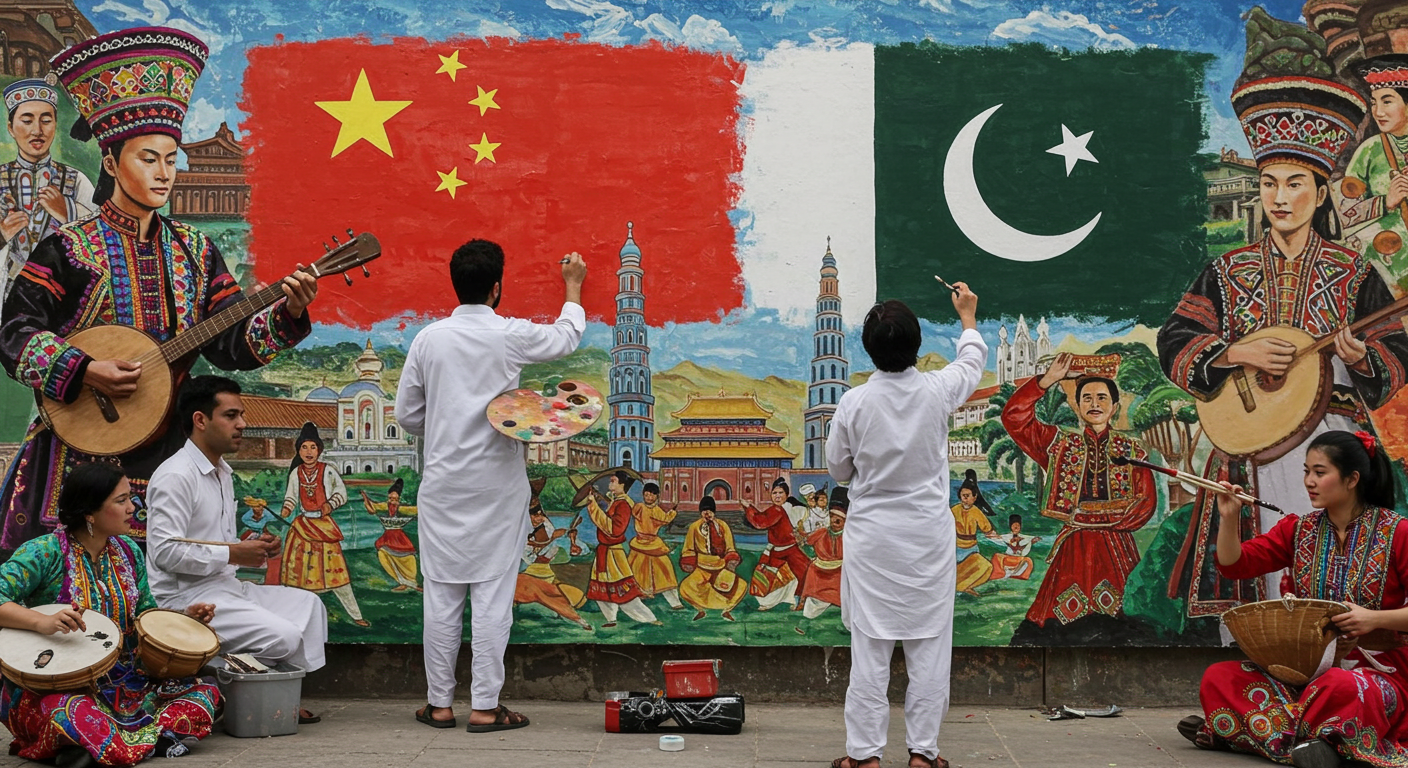
Finally, the Pakistan-China consultations in Beijing are more than just a diplomatic exercise. They are a strategic imperative in an era of regional drift and global polarization. By doubling down on multilateralism, reaffirming the legitimacy of institutions, and championing a development-first approach, Pakistan and China are establishing an example of responsible statecraft. In an era when most countries are thinking of ditching diplomacy for force, the Islamabad-Beijing axis reminds us that peace, stability, and prosperity can best be attained not by domination, but by partnership.
Author