


Pakistan and the Emergence of a New Regional Security Order
The most consequential aspect of the emerging defense partnership between Pakistan, Saudi Arabia and Türkiye is not simply its mutual defense commitment, b...

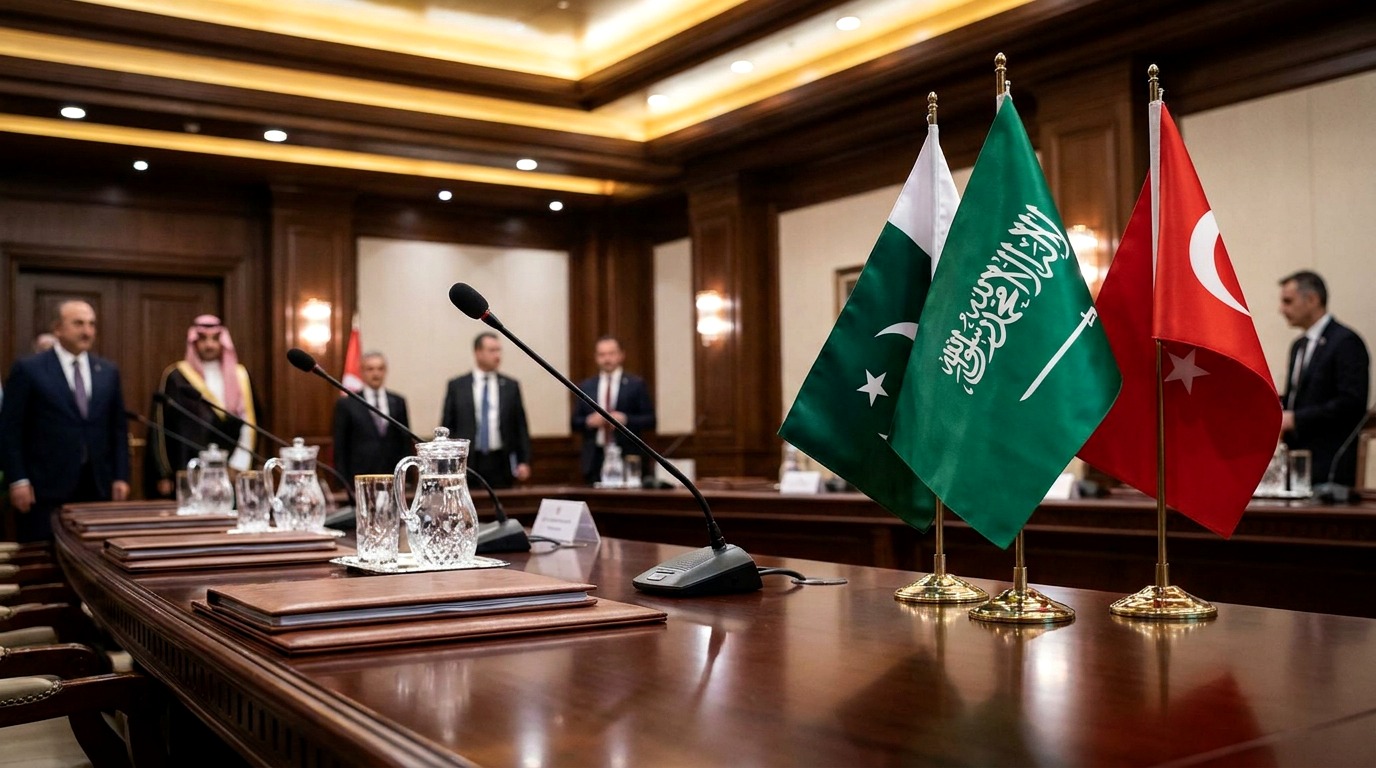
The most consequential aspect of the emerging defense partnership between Pakistan, Saudi Arabia and Türkiye is not simply its mutual defense commitment, but what it represents for the future of regional security. At a time when geopolitical rivalries, military confrontations and uncertainty over external security guarantees are reshaping the Middle East, three strategically significant countries are attempting to translate longstanding political relationships into an institutional framework for collective security. For Pakistan, this development represents an opportunity to move beyond its traditional role as a bilateral security partner and become an active contributor to shaping the regional security architecture.
The Makkah Joint Defense Agreement, signed by the three countries on August 7, 2026, establishes a fundamental principle: an armed attack against one signatory will be regarded as an attack against all. However, the agreement’s significance becomes clearer when examined through the developments that have followed its signing. Rather than remaining a political declaration, it has progressively acquired institutional foundations. At their first Strategic Political and Defense Committee meeting in Istanbul on August 31, the three countries agreed to establish a permanent secretariat in Riyadh, initially headed by a Pakistani secretary-general for a three-year term. An emergency meeting in Riyadh followed on October 5, reflecting the growing urgency of regional security concerns. The November 27 Islamabad meeting subsequently advanced discussions on implementing collective defense commitments, institutional coordination and joint military capabilities.
Türkiye’s completion of the ratification process on November 27 adds another important dimension. With the three partners advancing the agreement through their respective institutional processes, the arrangement is moving towards a more formalized framework of cooperation. The joint statement issued after the Islamabad meeting reaffirmed collective defense, mutual solidarity and respect for each country’s sovereignty and territorial integrity. It also emphasized cooperation in defence industries, technological development, training and military capacity-building. These developments suggest that the agreement is gradually evolving from a diplomatic commitment into a mechanism for sustained strategic coordination.
The strength of this arrangement lies in the complementary capabilities of its members. Saudi Arabia brings substantial financial resources, energy influence and considerable geopolitical weight in the Arab and Islamic worlds. Türkiye contributes an established defense industry, technological innovation, unmanned aerial capabilities and one of NATO’s largest military forces. Pakistan, meanwhile, offers extensive military experience, conventional defense capabilities, an established military training infrastructure and strategic deterrence. As the only nuclear-armed Muslim-majority country, Pakistan occupies a distinctive position in this partnership. Its contribution, however, extends well beyond its nuclear status. Its defense institutions, operational experience and longstanding security relationship with Saudi Arabia provide the agreement with an important strategic foundation.
This combination creates possibilities that individual bilateral arrangements cannot necessarily deliver. Cooperation in intelligence, military training, defense production and technological development could allow the three countries to pool their institutional strengths and improve interoperability. More importantly, it creates opportunities for indigenous defense capabilities through joint research, production and technology transfer. For Pakistan, whose defense industry has developed experience in aviation, naval platforms and military equipment, deeper cooperation with Türkiye and Saudi Arabia could open new avenues for industrial collaboration and technological advancement. The agreement therefore has implications not only for military security but also for economic and strategic cooperation.
The broader geopolitical context makes this development particularly significant. Regional security has historically depended heavily on external powers and their military commitments. Yet recurring conflicts and changing international priorities have reinforced the importance of regional ownership of security arrangements. This is where the Makkah Agreement acquires a wider meaning. It reflects the concept of strategic autonomy: the ability of regional states to strengthen their own security capacities, coordinate their responses and protect their national interests without relying exclusively on external guarantees. Such cooperation need not undermine existing international partnerships; rather, it can complement them by giving regional countries a greater capacity to manage their own security challenges.
Nevertheless, the agreement’s regional implications must be understood carefully. Pakistan has consistently maintained that the arrangement is defensive, consistent with Article 51 of the United Nations Charter and not directed against any particular country. This position is essential. The partnership should strengthen Saudi Arabia’s security without becoming a source of wider regional confrontation. The Islamabad joint statement’s condemnation of Houthi attacks against Saudi civilians and civilian infrastructure must also be understood alongside its emphasis on de-escalation, dialogue and peaceful dispute resolution. Pakistan’s commitment to regional stability requires a balanced approach that protects its strategic partnerships while avoiding unnecessary entanglement in regional rivalries.
The arrangement also faces important implementation challenges. A collective defense commitment derives its credibility not simply from the strength of its members but from the clarity of its procedures. The three countries will need to establish effective coordination mechanisms, clarify the nature of assistance in different contingencies, improve interoperability and develop sustainable joint planning arrangements. The agreement does not itself establish an automatic nuclear guarantee or a permanently integrated military force. Its effectiveness will therefore depend on how successfully political commitments are translated into operational capabilities.
Ultimately, the Makkah Agreement presents an opportunity to redefine Pakistan’s contribution to regional security. Its importance lies not in the creation of another military bloc, but in the possibility of building a sustainable framework through which regional powers can coordinate their capabilities, strengthen collective deterrence and support stability. Pakistan’s strategic significance in this arrangement is not confined to the military strength it brings to the table; it also lies in its ability to connect defense cooperation with diplomacy, regional stability and economic collaboration. The real measure of this partnership will be whether it can transform strategic solidarity into durable regional security.