


The Taliban’s Credibility Problem: Denials, Militancy and the Cost of Strategic Ambiguity
The Taliban government wants Afghanistan to be treated as a responsible regional actor. Its foreign minister, Amir Khan Muttaqi, says Kabul seeks normal re...

The Taliban government wants Afghanistan to be treated as a responsible regional actor. Its foreign minister, Amir Khan Muttaqi, says Kabul seeks normal relations with Pakistan, maintains diplomatic credibility abroad and has no interest in responding to Pakistani attacks through what he describes as “childish” actions. Yet the question confronting the Taliban leadership is not simply whether it can maintain diplomatic relations with its neighbours. It is whether its assurances about regional security can withstand scrutiny.
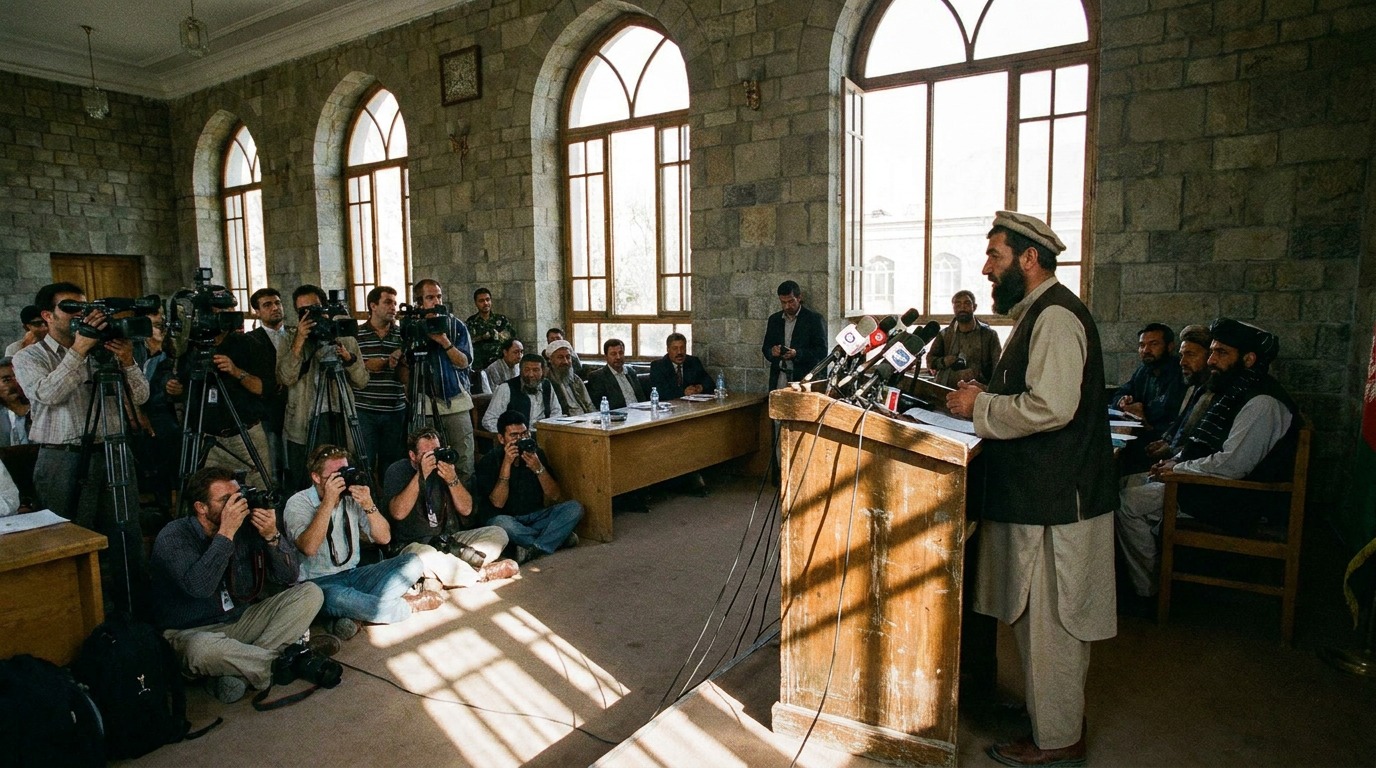
In an interview with Ariana Television on November 28, Muttaqi rejected Pakistan’s pressure, describing Islamabad’s Afghanistan policy as unreasonable and unsuccessful. He insisted that the Taliban would not surrender under pressure and predicted that the long-term balance would favour Afghanistan. He also denied that the Taliban supports the Tehrik-e-Taliban Pakistan (TTP) or Baloch militant groups, arguing that their disputes with Pakistan predated the Taliban’s return to power.
His remarks came at a particularly sensitive moment. On the same day, an explosion near a school in Asadabad, the capital of Afghanistan’s eastern Kunar province, killed at least 10 people and injured approximately 110 others, most of them children, according to Taliban authorities. The blast partially damaged the school and surrounding buildings. Taliban officials attributed the explosion to negligence at a nearby explosives depot reportedly belonging to mining companies.
However, the incident quickly acquired a wider security dimension.
A Pakistani government source cited by Afghanistan International alleged that the premises housed a TTP bomb-making facility. The outlet also reported allegations from local residents concerning the presence of such a facility near the school. These claims have not been independently verified. Taliban officials, meanwhile, maintained that the explosives belonged to mining companies and attributed the incident to negligence in their storage. The precise ownership and purpose of the facility remain unestablished.
The distinction matters. An allegation cannot be treated as proof of TTP ownership, just as an official explanation cannot substitute for an independently credible investigation. But the incident raises a question that extends beyond the immediate cause of the explosion: what mechanisms exist to prevent armed networks and potentially dangerous facilities from operating in civilian environments?
The Problem With Denial
Muttaqi’s categorical rejection of Taliban support for the TTP is consistent with Kabul’s broader position that Afghan territory is not being used to threaten neighbouring countries. Islamabad, however, has repeatedly maintained that militant networks operating from Afghanistan are contributing to insecurity inside Pakistan.
These competing positions have become a central obstacle in bilateral relations.
The disagreement is not resolved by comparing diplomatic statements. It requires examining the operational environment, the activities of armed groups and the willingness of Afghan authorities to investigate allegations concerning their presence.
The Taliban’s position also presents a wider credibility challenge. If Kabul insists that it exercises effective authority over Afghan territory, it must explain how that authority translates into preventing armed organisations from using the country as a logistical, operational or recruitment space. Conversely, if it disputes allegations made by Pakistan, it has an interest in supporting credible investigations and providing verifiable evidence.
The Kunar explosion makes this problem particularly difficult to dismiss. Even if the Taliban’s explanation of a mining-related accident is ultimately confirmed, the presence of a substantial explosives depot close to a school raises serious questions about civilian protection, regulatory oversight and accountability.
If subsequent investigation establishes that the facility was connected to the TTP, the implications would be considerably more serious. It would raise questions about the Taliban authorities’ capacity or willingness to prevent a foreign militant organisation from maintaining dangerous infrastructure in a populated area.
Neither possibility should be prejudged.
Sovereignty and the Responsibility of Territorial Control
Throughout the interview, Muttaqi emphasised Afghanistan’s sovereignty. Responding to Donald Trump’s remarks concerning Bagram Air Base, he said the Taliban would not surrender even an inch of Afghan territory. He also described American military equipment left behind following the withdrawal of US forces as war spoils that Afghanistan uses for its defence.
Sovereignty, however, carries responsibilities alongside rights.
A government that insists on exclusive authority over its territory must also be accountable for preventing that territory from becoming a source of insecurity for neighbouring states. This does not mean that every attack originating across a border can automatically be attributed to the authorities controlling that territory. Nor does it establish that the Taliban directs every organisation operating in Afghanistan.
It does mean that persistent allegations concerning cross-border militant activity cannot be addressed through categorical denials alone.
For Pakistan, the issue is particularly consequential because the TTP’s presence and operational networks in Afghanistan have become a recurring source of bilateral tension. Islamabad’s security concerns cannot be separated from the question of whether Afghan authorities are prepared to take verifiable action against organisations targeting Pakistan.
For Kabul, the challenge is equally significant. Its insistence on sovereignty and normal diplomatic relations will remain difficult to reconcile with unresolved allegations that armed groups are operating beyond effective accountability.
A Regional Security Problem, Not Just a Bilateral Dispute
Muttaqi also attempted to project the Taliban government as an increasingly accepted international interlocutor. He referred to Russia’s positive remarks about Taliban counterterrorism efforts against ISIS and argued that Afghanistan had effectively achieved recognition through expanding diplomatic engagement. He further maintained that the Taliban wanted constructive relations with Washington and described its relationship with Iran as positive.
But diplomatic engagement and security credibility are not interchangeable.
The Taliban can expand its diplomatic contacts, pursue economic relations and participate in regional discussions without necessarily resolving the security concerns of its neighbours. Recognition, engagement and cooperation are different measures of international acceptance, and none independently demonstrates that cross-border militant threats have been contained.
There is also a contradiction in Muttaqi’s security narrative that deserves attention. While he claimed that ISIS has no presence in Afghanistan and suggested that the threat originates outside the country, he simultaneously invoked Russian appreciation of Taliban efforts against ISIS. These statements need not be mutually exclusive if he means that the group has been degraded but not eliminated. Nevertheless, they raise questions about how Kabul defines the threat and assesses its remaining capacity.
The wider regional concern is that different governments are assessing Afghan security through different threat priorities. Russia is particularly concerned with ISIS-linked threats and their implications for Central Asia. Pakistan’s immediate concern is the TTP and attacks against its territory. China has its own security interests involving militant networks and threats to Chinese personnel and projects.
A Taliban government seeking deeper regional engagement will have to demonstrate that its counterterrorism commitments are credible across these different security concerns.
The Civilian Cost of Strategic Ambiguity
The Kunar explosion introduces another dimension that should not be lost in the diplomatic dispute: the people living alongside the consequences of Afghanistan’s unresolved security and governance problems.
Ten people were reported killed and approximately 110 injured, most of them children. The Taliban authorities’ initial explanation points towards negligence in the handling of mining explosives. Opposition figures, including Habib-ur-Rahman Hekmatyar, have questioned the presence of alleged TTP explosives facilities near homes and educational institutions and accused the authorities of exposing civilians to unnecessary danger. His allegations concerning TTP infrastructure remain unverified, but his criticism reflects a wider question about civilian protection and accountability.
For families affected by the explosion, the distinction between a mining depot and a militant explosives facility is not merely political. It determines who was responsible, whether the danger could have been prevented and whether anyone will be held accountable.
The Taliban cannot demand that its neighbours accept its assurances about security while treating questions about civilian safety and militant infrastructure as matters of political hostility.
Pakistan, meanwhile, must continue to distinguish between evidence-based security demands and claims that have yet to be independently established. Credible investigations, intelligence cooperation and verifiable commitments are more consequential than competing public narratives.
The Test of Taliban Engagement
Muttaqi’s interview reveals the diplomatic position Kabul wants to establish: a sovereign government unwilling to yield to external pressure, open to international relations and confident in its ability to manage Afghanistan’s internal security.
But the Kunar explosion illustrates why those claims will continue to face scrutiny.
The Taliban’s challenge is no longer simply to persuade other governments that it wants normal relations. It must demonstrate that its control of territory translates into effective oversight, that its counterterrorism commitments produce measurable outcomes and that civilian spaces are not exposed to the activities of armed networks.
Pakistan, for its part, needs more than diplomatic assurances. It requires verifiable action against organisations responsible for attacks on its territory.
The future of Afghanistan’s relations with its neighbours will depend less on declarations of sovereignty or historical resistance to foreign pressure than on whether Kabul can establish the conditions for regional security.
A government cannot demand that the world recognise its authority while leaving unanswered questions about how that authority is exercised.