

The Taliban’s Broken Promises of Security
Along the Afghanistan-Pakistan border, militant violence and civilian casualties reveal the Taliban's unfulfilled promises of stability. Ayla Reid assesses the regional fallout.

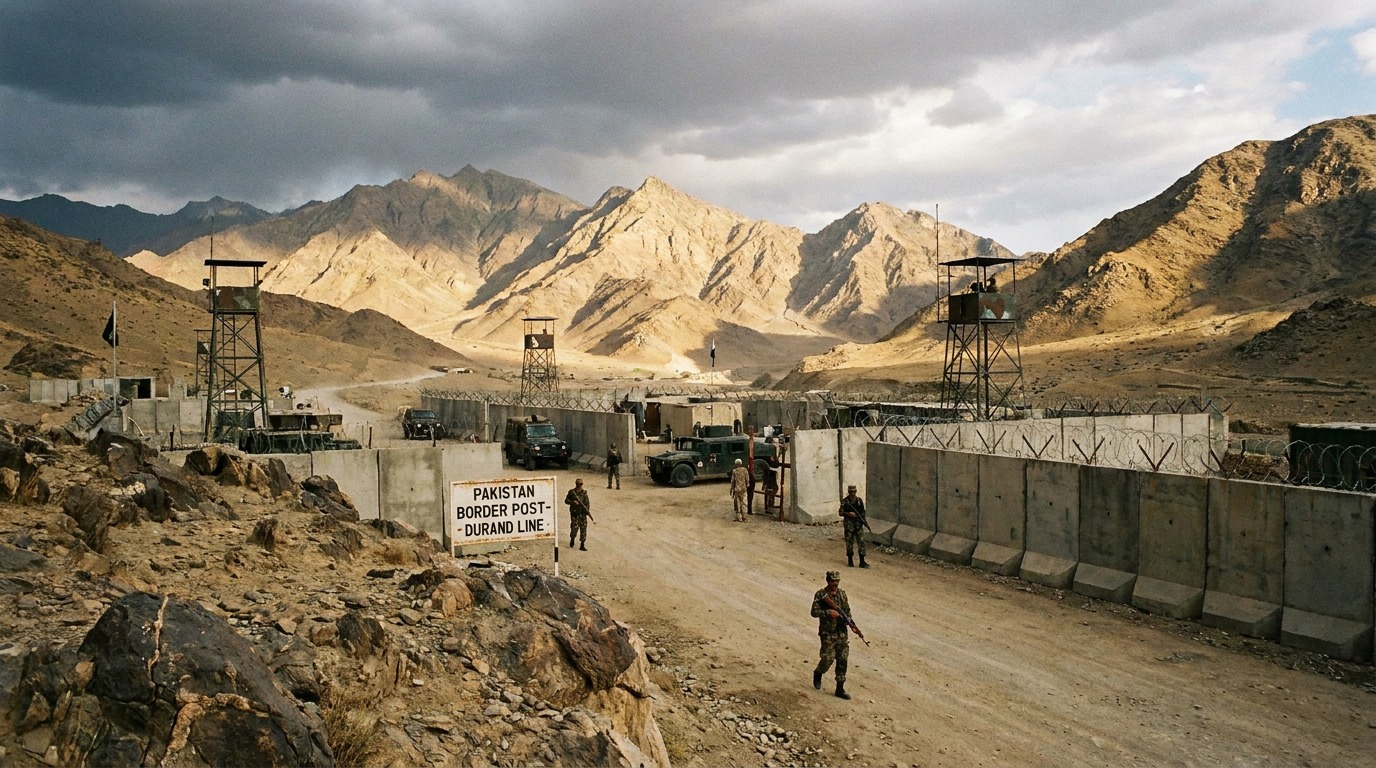
The Afghan Taliban returned to power in August 2021 promising stability after decades of war. Yet along the Afghanistan-Pakistan border, stability remains elusive, civilians continue to suffer, and the question of militant sanctuaries has become a dangerous fault line between Kabul and Islamabad. The Taliban’s greatest failure is not merely their inability to deliver peace. It is their apparent unwillingness to confront the militant networks that threaten peace beyond Afghanistan’s borders.
A recent report in The Diplomat, “In the Shadow of the Afghanistan-Pakistan Border,” documents the devastating human consequences of renewed fighting in 2026. Families have returned to damaged homes, children have suffered shrapnel injuries, and people who have endured successive wars remain trapped in uncertainty. One resident, Mustafa, lost two sons in a rocket strike. His grief exposes the human cost of a political order that continues to leave ordinary people vulnerable to armed confrontation.
The Taliban cannot credibly claim to have restored order while allowing Afghanistan to remain entangled in militant violence. Pakistan has repeatedly found evidence against the Afghan Taliban authorities of providing sanctuary to the TTP, which conducts attacks against the Pakistani state. The Taliban deny supporting the group. But denials alone cannot resolve a security crisis. What is required is verifiable action, transparent investigations, and an unequivocal commitment that Afghan territory will not be used to launch attacks against neighbouring countries.
For ordinary people living along the border, political rhetoric matters little when their lives remain in peril. Communities that hoped the end of the US-led war would bring enduring relief are instead witnessing renewed instability. When cross-border attacks take place, border closures follow, disrupting trade, separating families and devastating local economies.
By allowing cross-border militancy to persist, the Taliban authorities risk alienating neighbouring states and further isolating Afghanistan internationally. Regional stability cannot be built on tolerance for armed factions. As long as militant groups operate freely, tension between Kabul and Islamabad will continue to escalate, and the primary victims will remain the vulnerable civilians on both sides of the border.
Peace requires more than battlefield survival or political control. It requires protecting civilians, restraining armed groups, and building trust through demonstrable commitments.
The Taliban promised an end to war. Along the border, that promise remains painfully unfulfilled.
