

Afghanistan’s War on Women: The Taliban’s Assault on an Entire Generation
According to UNICEF, over 2.6 million girls have been barred from secondary education in Afghanistan. Ayla Reid analyzes the Taliban's systematic assault on women's autonomy and future.

The Taliban’s treatment of Afghan women is not a minor policy disagreement or a temporary restriction justified by cultural differences. It is a systematic assault on education, independence, dignity and the right of women to participate in society. Five years after returning to power, the Taliban have turned the ambitions of an entire generation into a struggle for basic freedoms.
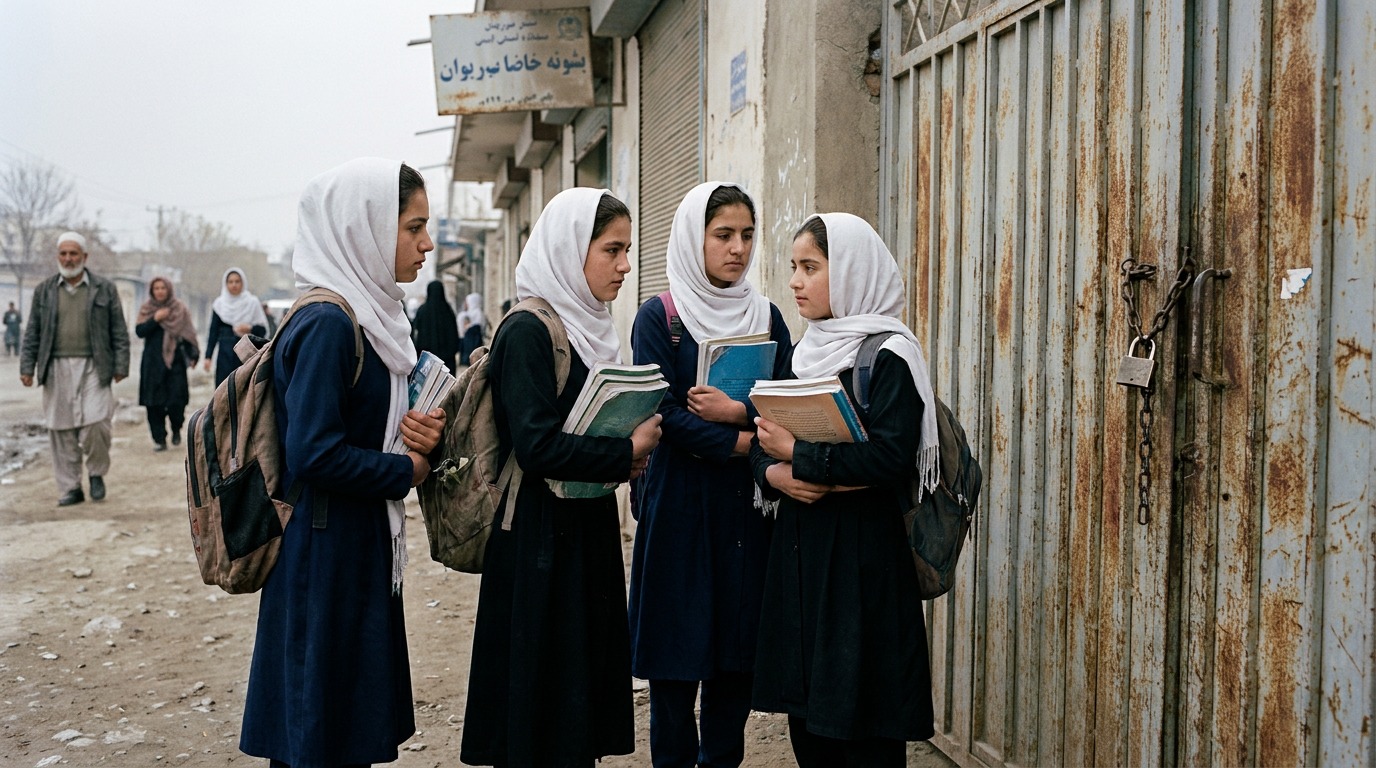
The statistics are devastating. According to UNICEF’s August 2026 assessment, more than 2.6 million girls have been denied secondary education since the Taliban takeover. Afghanistan remains the only country in the world where girls and women are formally excluded from secondary and higher education.
These figures represent millions of interrupted futures. They include girls who wanted to become doctors, teachers, scientists, lawyers and public servants. Instead of evaluating their abilities, the authorities have made their sex the determining factor in whether they may continue learning.
What justification can possibly make the deliberate denial of education to millions of children acceptable? A government claiming moral authority should have no reason to fear educated women. Education develops critical thinking, strengthens families, expands economic opportunity and allows societies to address complex challenges. Suppressing it does not demonstrate strength; it deprives a country of the abilities of a substantial part of its population.
The restrictions extend far beyond classrooms. UN Women reported in August 2026 that Taliban authorities had issued more than 100 decrees affecting women and girls. Women face extensive restrictions on employment, movement and participation in public life, while access to essential services can also be compromised.
The cumulative effect is a society in which women are expected to exist without the freedoms necessary to shape their own lives. Their ambitions are restricted, their economic independence undermined and their public presence progressively diminished.
The Taliban cannot defend these policies simply by invoking religion or tradition. Neither should be used as a blanket justification for depriving millions of people of fundamental rights. Afghan women are not outsiders in their own country. They are citizens whose futures cannot legitimately be determined by a system that denies them equal opportunities.
The international community must refuse to treat this situation as normal. Diplomatic engagement should be tied to measurable improvements in women’s rights, including reopening schools and universities, restoring employment opportunities and ending arbitrary restrictions on movement.
Afghan girls have already lost years they will never recover. Every additional year of exclusion deepens educational inequality and narrows their prospects.
The Taliban must answer for the consequences of their policies. A government that systematically denies girls the right to learn cannot credibly claim to be building a future for the whole nation. Afghanistan’s women deserve education, independence and the freedom to determine their own destinies.
