

Rivers As An Instrument of Power
For countries sharing transboundary rivers, water management can either strengthen regional cooperation or become a source of prolonged tension. As India challenges the Indus Waters Treaty,...

Water is no longer viewed merely as an environmental or developmental resource. In an increasingly interconnected world, it is closely linked to national security, economic stability, food production and political relations. For countries sharing transboundary rivers, the management of water resources can either strengthen regional cooperation or become a source of prolonged tension. The Indus river system illustrates this reality, particularly in the relationship between Pakistan and India.
The Indus Waters Treaty (IWT), signed on 19 September 1960 with the assistance of the World Bank, emerged from nearly nine years of negotiations. It established a framework for managing one of South Asia’s most important river systems by allocating the eastern rivers, Ravi, Beas and Sutlej, to India, while allocating the western rivers, Indus, Jhelum and Chenab, to Pakistan, subject to specific uses permitted to India under the Treaty. The agreement was more than a water-sharing arrangement. It represented an institutional effort to manage a critical resource despite persistent political differences. Former US President Dwight D. Eisenhower regarded the agreement as an encouraging development in an otherwise difficult international environment. Water scholar Aaron T. Wolf’s research similarly demonstrates that shared rivers do not inevitably produce conflict; sustained institutions and agreed rules can provide a basis for cooperation.
Water Security and Pakistan’s Agricultural Dependence
The importance of the Treaty becomes clearer when viewed through the history and geography of Pakistan. The partition of British India in 1947 divided an interconnected irrigation network, leaving Pakistan heavily dependent on river flows originating upstream. The interruption of canal water supplies in April 1948 exposed the vulnerability of a newly established state whose agricultural system depended on the Indus basin. The 1960 Treaty subsequently provided a legal framework for addressing this vulnerability and defining the water rights of both countries.
For Pakistan, the Indus system is fundamental to agricultural production and national economic stability. Major crops, including wheat, rice, cotton and sugarcane, depend on irrigation supplied by the basin. Any uncertainty surrounding the availability and management of water can affect crop yields, food prices, rural employment and industrial supply chains. The consequences therefore extend beyond agriculture to the wider economy and the livelihoods of millions of people. Pakistan’s treaty-based water entitlements are consequently a fundamental national interest, not simply a matter of bilateral negotiation.
Hydropower and Strategic Implications
The Indus basin also carries considerable importance for energy security. Pakistan’s major hydropower infrastructure, including the Tarbela and Mangla dams, contributes to electricity generation, water storage and irrigation management. The relationship between water availability and energy production makes the stability of river flows particularly significant for long-term economic planning.
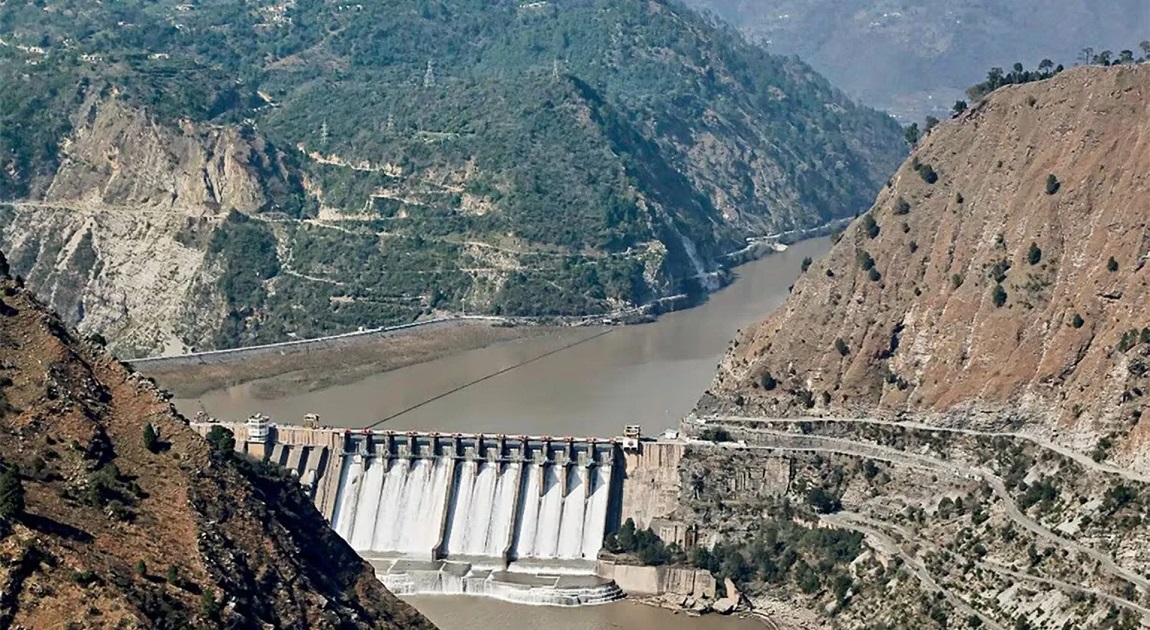
The Treaty permits India to undertake certain uses of the western rivers, including specified hydropower projects. However, these permissions are subject to clearly defined technical, operational and design restrictions. They are part of a negotiated legal framework, not unrestricted authority over the rivers allocated to Pakistan. Disagreements concerning projects such as Kishenganga and Ratle have therefore focused on compliance with treaty provisions, including design specifications, storage and operational requirements. Pakistan’s position is that development on the western rivers must remain within the limits established by the Treaty. Its established water entitlements cannot be compromised in the name of infrastructure development.
The Legal Dispute and Regional Stability
The legal dimension of the dispute became particularly significant in April 2025, when India announced its decision to place the Treaty in abeyance following the Pahalgam attack. Pakistan rejected the announcement, maintaining that the agreement is a binding international treaty and contains no provision allowing either party to suspend or terminate it unilaterally. The distinction is important: disagreements over security or political relations do not, by themselves, remove a state’s obligations under an existing international agreement.
The legal position received further clarification on 31 August 2026, when the Court of Arbitration constituted under the Treaty unanimously ruled that the grounds advanced by India did not justify suspending or terminating the agreement. It declared that the Treaty remained fully in force and that India continued to be bound by its obligations, including those governing hydropower projects on the western rivers. The Court also ordered interim measures concerning construction at the Ratle hydroelectric project, although it did not grant every measure requested by Pakistan. India rejected the Court’s jurisdiction and its ruling. Nevertheless, the award reinforced the legal principle that treaty obligations cannot be set aside through unilateral action.
This principle reflects the broader international law doctrine of pacta sunt servanda, under which agreements in force must be performed in good faith. The Treaty also contains established mechanisms for addressing differences through the Permanent Indus Commission and other dispute-resolution procedures. These mechanisms exist precisely because disagreements are inevitable in the management of shared resources. For Pakistan, protecting its water rights through these agreed legal processes remains essential.
The security implications extend beyond the immediate dispute. For Pakistan, uncertainty surrounding the western rivers has direct consequences for agricultural production, food security, electricity generation and economic stability. In a region where both countries possess nuclear capabilities and have a history of political and military tensions, turning a shared natural resource into an instrument of pressure could deepen mistrust and complicate an already fragile security environment. Preserving the Treaty is therefore not simply a legal requirement; it is also a practical measure for regional stability.
Climate Change and the Future of the Indus Basin
Climate change adds another layer of complexity to the future of the Indus basin. Changes in glacier conditions, snowmelt patterns and monsoon precipitation are affecting the timing and variability of river flows. These developments increase the need for reliable hydrological data, improved flood forecasting, scientific research and stronger institutional communication between the two countries.
Climate pressures should encourage greater technical cooperation rather than weaken existing legal commitments. Better monitoring, information exchange and disaster preparedness could help both countries respond to shared environmental risks. However, climate change cannot be used to diminish treaty-based entitlements or justify unilateral departures from established obligations. Adaptation must take place within a framework that respects the rights and responsibilities already agreed upon.
International Law Must Prevail Over Unilateral Measures
The Indus Waters Treaty remains central to Pakistan’s agricultural security, energy requirements and economic stability. Its significance lies not only in the allocation of rivers but also in the principle that shared resources must be managed through agreed rules rather than unilateral decisions. India’s development objectives must remain within the limits established by the Treaty, just as Pakistan’s legitimate water entitlements must be respected.
The future of the Indus basin will depend on whether both countries preserve the legal and institutional framework created in 1960. Political disagreements may continue, but they should not become a justification for undermining established international obligations. For Pakistan, safeguarding its treaty-based rights is inseparable from protecting its economic future and national security. Ultimately, the stability of South Asia requires respect for international law, the integrity of existing agreements and the recognition that water security cannot be separated from regional peace.