


COP31 and Pakistan’s Climate Future
As global climate cooperation struggles against political divisions at COP31 in Antalya, Pakistan's pursuit of climate justice, economic transformation and environmental resilience offers an...

As global climate cooperation struggles against political divisions, Pakistan’s pursuit of climate justice, economic transformation and environmental resilience offers an opportunity to turn vulnerability into national strength.
A tonne of carbon emitted today carries no passport, a melting glacier recognises no territorial boundary, and a rising river makes no distinction between those responsible for climate change and those paying its price. Yet the consequences of a warming planet remain profoundly unequal. While wealthy nations possess the resources to protect themselves, developing economies are compelled to divert scarce development resources towards surviving a crisis they did relatively little to create. Pakistan stands at the intersection of this global injustice.
The outcome of COP31 in Antalya, Turkiye, has exposed the widening gap between scientific urgency and political willingness. However, Pakistan’s climate narrative must evolve from highlighting its climate vulnerabilities towards building economic resilience, strengthening institutional preparedness and promoting sustainable development.
The Economics of Climate Injustice
Despite contributing less than one per cent of global greenhouse gas emissions, Pakistan remains disproportionately exposed to climate disasters. Germanwatch’s Climate Risk Index 2025 identified Pakistan as the country most affected by extreme weather events in 2022.
The catastrophic floods that year affected 33 million people, causing $14.9 billion in physical damage and $15.2 billion in economic losses. Furthermore, the World Bank’s Pakistan Country Climate and Development Report estimates that climate-related disasters, environmental degradation and air pollution could reduce Pakistan’s GDP by 18–20 per cent by 2050.
Meanwhile, the international financing architecture remains inadequate. According to UNEP’s Adaptation Gap Report 2026, developing countries require approximately $305 billion annually for adaptation by 2035, compared with international public adaptation finance of approximately $28.2–31.7 billion in 2024.
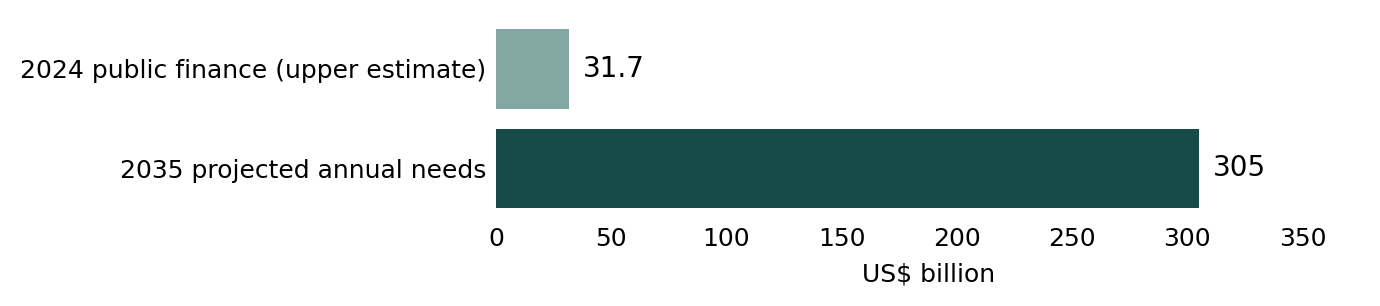
Pakistan’s advocacy for grant-based climate financing is therefore economically justified. Climate justice cannot be achieved by compelling vulnerable economies to accumulate additional debt.
Pakistan’s Constructive Diplomacy
Independent assessments by the Atlantic Council and the International Institute for Sustainable Development highlight how geopolitical divisions, fossil fuel disagreements and financing disputes have weakened international climate cooperation.
Despite these challenges, Pakistan’s continued diplomatic engagement reflects its commitment to multilateralism. Prime Minister Shehbaz Sharif’s emphasis on accessible climate financing reinforces Pakistan’s longstanding advocacy for developing countries. Pakistan’s contribution as chair of the G77 and China during COP27, when agreement was reached on establishing the Loss and Damage Fund, remains an important diplomatic achievement.
An emerging national challenge
While international negotiations remain unsettled, Pakistan faces immediate meteorological challenges. The Pakistan Meteorological Department’s seasonal outlook anticipates strong El Nino conditions during November 2026–January 2027. Between August and October 2026, national rainfall remained 23.5 per cent below normal, while temperatures averaged 1.03°C above normal. Balochistan and Sindh recorded rainfall deficiencies of 40.4 and 39.2 per cent, respectively.
Although El Nino is a naturally occurring climatic phenomenon, its interaction with global warming can intensify environmental stresses. Its geographically varied effects demand region-specific preparedness. Pakistan’s National Drought Plan 2025–2035 provides an important foundation for addressing agricultural vulnerability, groundwater depletion and water insecurity. Translating meteorological forecasts into timely agricultural advisories, efficient irrigation and community preparedness must remain a priority.
From Climate Vulnerability to Climate Prosperity
Pakistan’s evolving policy architecture demonstrates a growing recognition that environmental resilience and economic development are inseparable. The National Adaptation Plan 2023, National Climate Finance Strategy 2026 and Pakistan Climate Prosperity Plan reflect this transformation.
Pakistan’s NDC 3.0 targets a 50 per cent reduction in projected greenhouse gas emissions by 2035 against a business-as-usual scenario, comprising 17 percentage points of unconditional commitments and 33 conditional upon international support.
According to the Pakistan Economic Survey 2025–26, the Climate Prosperity Plan envisages approximately $1.6 trillion in climate-related investment requirements by 2050, alongside ambitions to climate-proof 75 per cent of infrastructure by 2040. These commitments, supported by the government’s URAAN Pakistan framework, represent a shift towards integrating environmental sustainability into national economic planning.
Translating Commitments into Community Resilience
The Living Indus Initiative recognises the ecological importance of Pakistan’s principal river system, while the $77.8 million Recharge Pakistan project aims to strengthen resilience for approximately 7.7 million people through ecosystem restoration and nature-based flood management.
Similarly, the $37.5 million GLOF-II programme addresses glacial lake outburst flood risks through community preparedness and early-warning mechanisms. Sindh’s flood-resilient housing reconstruction programme further demonstrates how post-disaster recovery can incorporate long-term adaptation. These initiatives illustrate Pakistan’s capacity to translate climate financing into practical community protection.
Pakistan’s Solar Transformation
Perhaps Pakistan’s most remarkable environmental development has emerged from the rooftops of its citizens. Research by international energy think tank Ember and Renewables First estimates that distributed solar generation increased from 15 terawatt-hours in FY2023 to 51 terawatt-hours in FY2025, raising its estimated contribution to the electricity mix from 10 to 28 per cent.
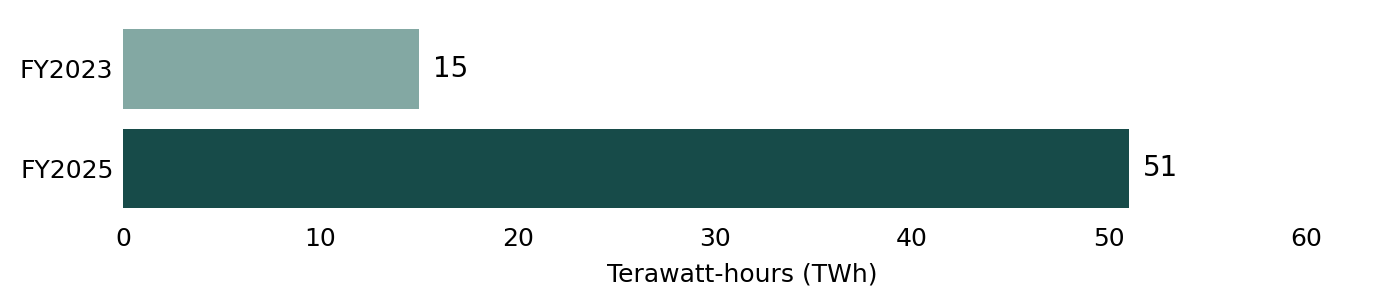
This citizen-driven transformation offers opportunities to reduce fossil fuel imports, improve industrial competitiveness and strengthen energy security. Predictable regulation, grid modernisation, affordable storage and equitable access can consolidate these gains.
Climate Resilience as National Security
Climate change increasingly intersects with Pakistan’s food security, public health, economic stability and territorial water interests. Uncertainty surrounding the Indus Waters Treaty further reinforces the importance of regional cooperation, scientific data sharing and responsible transboundary water governance.
Domestically, the Pakistan Green Taxonomy, climate-responsive budgeting and green financing instruments can mobilise sustainable investment. Stronger federal-provincial coordination, empowered local governments, climate education and transparent implementation remain equally essential.
Recognising implementation challenges does not diminish government achievements; it strengthens the foundation for sustained progress. Pakistan must continue demanding international climate accountability while accelerating domestic resilience. Environmental vulnerability need not determine a nation’s developmental destiny.
Ultimately, the true measure of Pakistan’s climate leadership will not be the eloquence of its interventions at international summits, but the security of its citizens when the next climate crisis arrives.