


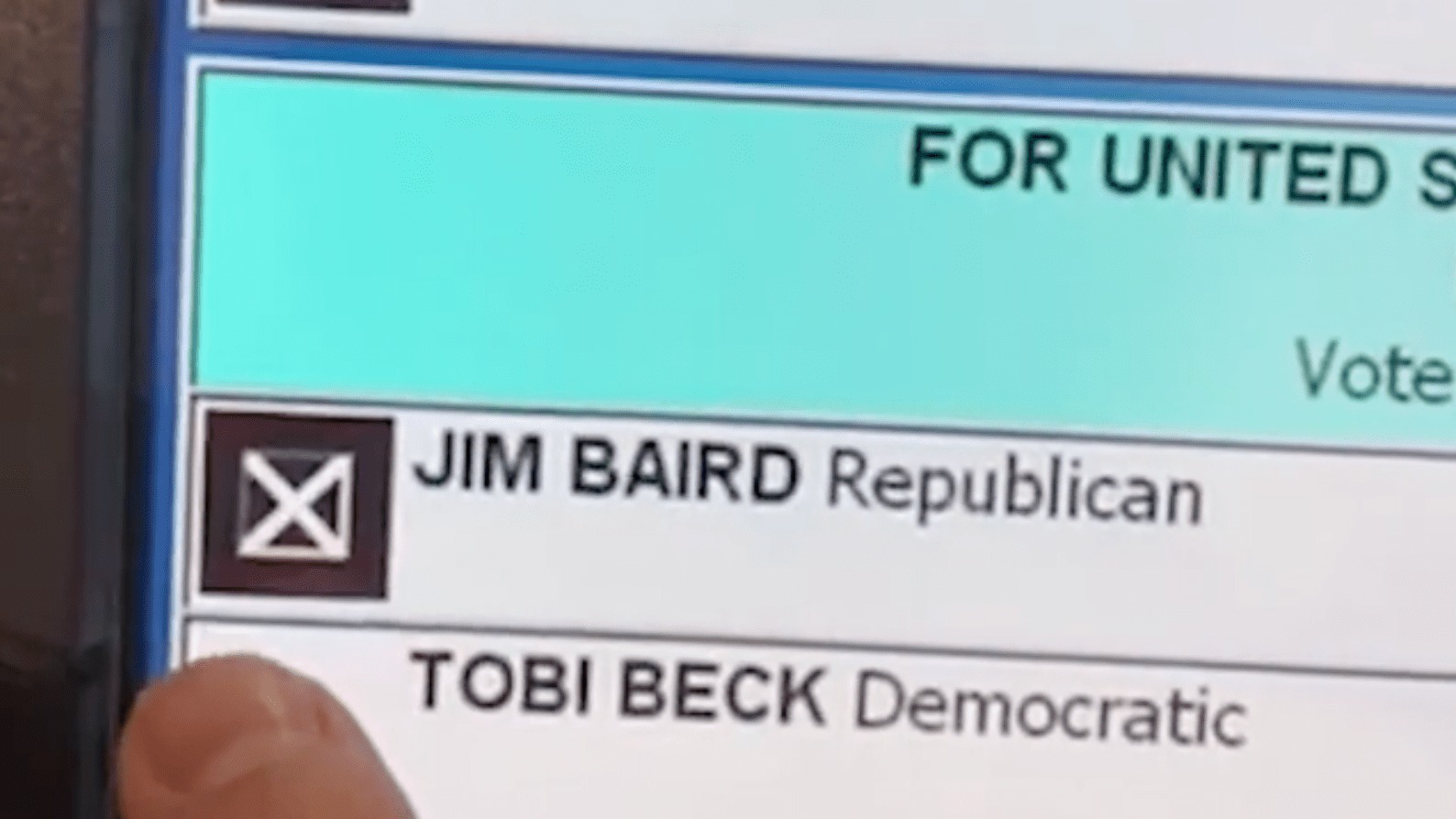
POLICY WIRE FACT CHECK: Investigating the Spread of False Claims Regarding Touchscreen Voting Machine Malfunctions
The Claim A viral narrative has circulated across social media platforms, specifically Facebook, asserting that touchscreen voting machines are being deliberately manipulated to alter voter intent....

The Claim
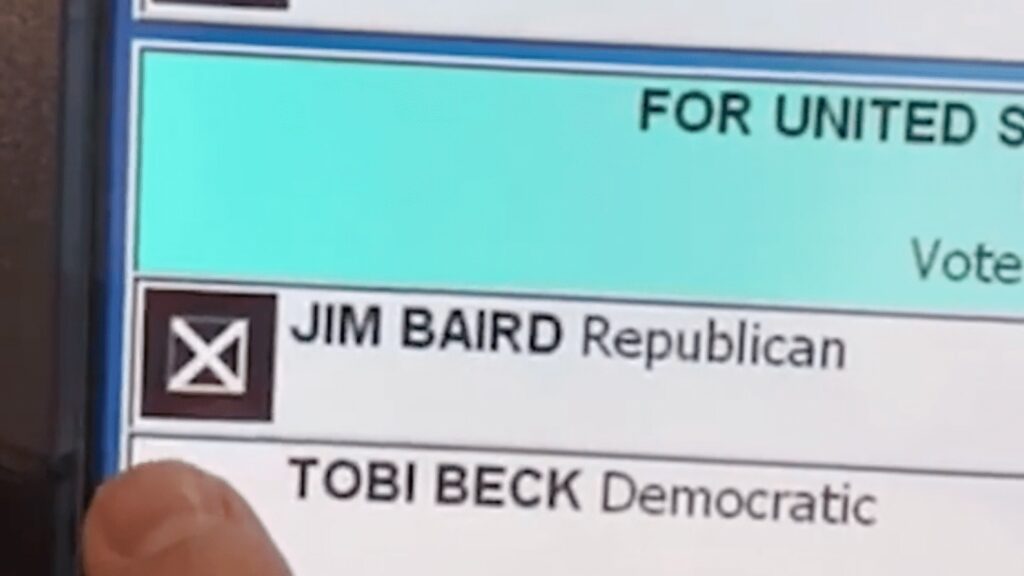
A viral narrative has circulated across social media platforms, specifically Facebook, asserting that touchscreen voting machines are being deliberately manipulated to alter voter intent. The central tenet of this claim is that the devices are systematically switching votes cast for Democratic candidates to Republican candidates. This assertion has triggered significant public concern regarding the integrity of the electoral process, suggesting a coordinated effort to undermine specific partisan outcomes through hardware manipulation rather than political means.
Posts making these claims often accompany screenshots of alleged voter confusion or technical glitches, framing isolated incidents of error as proof of a widespread, intentional sabotage. The specificity of the claim—that the direction of error consistently favors one party over the other—adds a layer of perceived conspiracy that distinguishes this from general skepticism about election technology. This narrative has gained traction amidst a politically charged environment where trust in electoral institutions is under scrutiny.
The Details & Investigation
To evaluate this claim, we examined the verified data provided by election experts and state officials, as cited in the source material from FactCheck.org. The primary evidence indicates that there is no evidence supporting the allegation that touchscreen voting machines are deliberately switching voter selections from one party to another. The assertion that a systematic, partisan bias is engineered into the code of these devices lacks corroboration from independent technical audits or official state election records.
Instead of intentional manipulation, the verified explanation for reported irregularities points to technical factors that are well-documented in the field of election administration. Experts and state election officials attribute instances where machines initially fail to record votes correctly to familiar machine calibration issues. Calibration is a standard technical procedure; when a touchscreen sensor is not perfectly aligned with the balloting display, it can result in a mismatch between the intended input and the recorded data. This is a hardware sensitivity issue, not a software conspiracy.
Furthermore, a significant portion of reported errors stems from voter error. In complex interfaces, users may inadvertently leave a selection in a default state or misinterpret the visual cues of the ballot interface. These human factors are common in any high-stakes technological interaction and do not imply malicious intent by the machine operators or manufacturers. The aggregation of these individual, varied errors can create a false narrative of directional bias if not analyzed in the context of the entire electoral system.
It is critical to contextualize these claims within the broader architecture of U.S. voting systems. Nearly the entire country utilizes a voting method that includes a robust verification step: voters review a paper ballot before their votes are officially cast and counted. This paper audit trail serves as a final check against both technical malfunctions and human error. Even if a touchscreen interface records an initial selection incorrectly, the subsequent paper ballot verification allows the voter to catch and correct the discrepancy before the vote is finalized. This multi-layered security design makes the seamless, undetected switching of votes at scale, as claimed by the viral posts, technically and logistically implausible.
In terms of classification, this scenario presents elements of both misinformation and disinformation. If users are sharing reports of machine glitches without understanding the context of calibration or the protective nature of paper audits, they may be spreading unintentional misinformation by omitting critical technical details. However, the specific framing of the claim—that the errors are deliberate switches from Democratic to Republican votes—suggests a coordinate disinformation campaign designed to delegitimize the electoral outcome by suggesting a targeted, partisan tampering. The deliberate construction of a false causal link between technical errors and partisan intent is a hallmark of disinformation designed to erode public trust in democratic institutions.
The Verdict
Based on the available evidence, the claim that touchscreen voting machines are deliberately switching Democratic votes to Republican votes is FALSE. There is no documentary, technical, or administrative evidence to support the existence of a deliberate mechanism that alters votes to favor one political party. The reported issues are conclusively identified by experts as resulting from standard machine calibration variances and voter user error, not from intentional sabotage.
The claim fails because it ignores the fundamental safeguards of the voting process, specifically the universal practice of reviewing a paper ballot before casting a vote. This review process neutralizes the potential impact of interface errors, ensuring that the final recorded vote matches the voter’s intent. Therefore, the assertion of deliberate, systematic vote-switching is factually baseless and contradicts the verified operational reality of U.S. election administration.
Counter-misinformation & disinformation investigation conducted by PolicyWire Editorial Desk (PW).