
POLICY WIRE FACT CHECK: Falling gas prices are driven by seasonal trends and Iran war dynamics, not political manipulation by oil companies
The Claim In the immediate aftermath of the November 3 election, a significant wave of viral social media content emerged asserting a coordinated conspiracy between major energy corporations and...

The Claim
In the immediate aftermath of the November 3 election, a significant wave of viral social media content emerged asserting a coordinated conspiracy between major energy corporations and political actors. The central narrative, propagated across platforms such as Instagram by accounts using names like “Republican Party” (despite these not being official GOP accounts) and conservative influencer David J. Harris Jr., posits that falling gasoline prices are direct proof that gas companies “purposely increased the prices” prior to the election. The claim explicitly argues that this artificial inflation was a deliberate strategy to shift the blame for high costs onto President Trump, thereby motivating voters to support the Democratic candidates. Harris Jr. further amplified this narrative by stating the price changes had “nothing to do with the Iran war,” framing the financial relief for consumers as purely political manipulation rather than a response to geopolitical or market realities.
This narrative has sparked considerable public concern, as it implies a level of unchecked market power by the energy sector that would allow them to dictate national political outcomes through price volatility. The claim suggests a sinister coordination where corporate interests align with partisan aims, stripping the complexity of global supply chains and seasonal economics from the equation. By attributing the price drop solely to the unwinding of a pre-election scam, the viral posts ignore the documented timeline of market trends and the explicit statements from industry analysts regarding the structural causes of the price movements.
The Details & Investigation
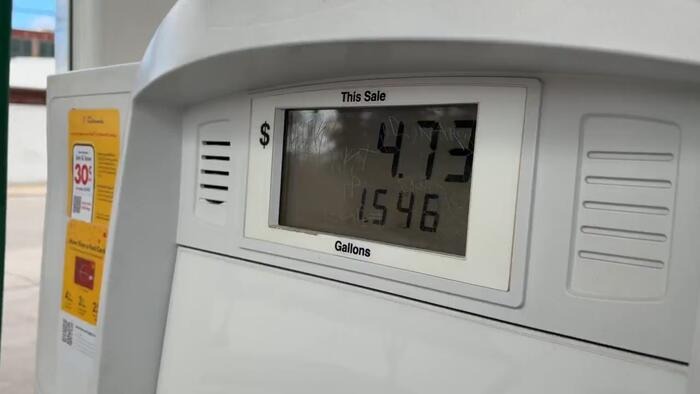
A rigorous examination of the timeline refutes the core premise that the price drop was a post-election revelation of prior manipulation. According to data from the U.S. Energy Information Administration (EIA) and the AAA, average U.S. gas prices have declined every single week since September 21. This downward trend began weeks before the November 3 election, making the notion that the price drop was a direct consequence of the election results or the unmasking of a pre-election inflation plot chronologically impossible. The national average reached a peak of $4.48 on September 21 and had already fallen significantly below that mark prior to the election date. By the week of November 9, the average dropped below $4.00 for the first time since July, reaching approximately $3.94 on November 11. This sustained, pre-existing downward trajectory contradicts the idea of a sudden, coordinated reversal of artificial prices following the vote.
Energy market experts identify the primary drivers of this shift as seasonal fluctuations and geopolitical adjustments rather than corporate malfeasance. Patrick De Haan, head of petroleum analysis at GasBuddy, explained that gas prices naturally drop in the autumn due to reduced driving demand and the transition to a cheaper wintertime gasoline blend. Hugh Daigle, an associate professor of petroleum and geosystems engineering at the University of Texas at Austin, corroborated this, noting that while the drop is slightly more pronounced than typical seasonal trends, it remains consistent with broader market expectations. De Haan explicitly stated there is “no reason to believe gas companies purposely inflated prices,” emphasizing that the price movements align with standard seasonal patterns and specific changes in global oil flow.
The geopolitical context of the Iran war is central to understanding the price volatility, a factor the viral claims attempt to dismiss. Following U.S. and Israeli attacks on Iran in February, Iran closed the Strait of Hormuz, a critical chokepoint for global oil supply, which contributed to the earlier price spike. However, recent developments have eased this pressure. Despite continued Iranian attacks on commercial tankers, oil exports through the Strait of Hormuz and alternative routes, such as pipelines, have increased. Trump’s public stance on November 9, stating he did not see a need for further military strikes, likely influenced market expectations, but analysts note that the physical increase in oil supply is the more tangible driver. The Wall Street Journal reported in October that more oil was coming out of the Persian Gulf than before the war began, further undermining the claim that prices were artificially held high by corporate actors.
Economically, the claim falls apart when examining the incentives and power structures of the global energy market. De Haan noted that oil is a globally traded commodity, and American gas companies have limited ability to dictate global crude prices. Furthermore, the political incentive suggested by the conspiracy theory is flawed; De Haan pointed out that Democrats tend to regulate the oil and gas industry more heavily than Republicans. Therefore, there is no clear strategic incentive for oil companies to manipulate prices to favor a Democratic administration, which would likely lead to stricter regulatory scrutiny. Any short-term gain from artificially inflating prices before an election would be offset by the long-term regulatory risk under a Democratic presidency. The notion that corporations would risk their operational integrity and regulatory standing on such a gamble is not supported by the behavior of markets over decades.
Regarding the classification of this falsehood, the evidence points toward a mix of misinterpretation and deliberative disinformation. While individual users may share the claim out of confusion about market mechanics (misinformation), the coordinated nature of the posts by influencers and named but unverified party-affiliated accounts suggests a deliberate effort to shape political narrative (disinformation). The complete dismissal of the “Iran war” as a factor, as seen in Harris Jr.’s posts, ignores verified reporting from major outlets like CNBC and the Wall Street Journal, indicating a desire to direct anger toward the energy sector and the President rather than acknowledging complex geopolitical supply issues.
The Verdict
We rate the claim that gas companies purposely inflated prices to hurt Trump as FALSE. The available evidence from the Energy Information Administration, the AAA, and industry experts definitively shows that gas prices had been falling since late September, well before the November 3 election. The decline is attributable to well-documented seasonal trends, reduced winter demand, the switch to cheaper fuel blends, and increased international oil supply following the initial shock of the Iran war. There is no evidence from primary market data or expert analysis to support the allegation of a coordinated corporate conspiracy to manipulate prices for political gain.
The viral narrative relies on a false timeline that ignores the pre-existing downward trend and misattributes complex global economic factors to domestic political malice. By dismissing the geopolitical realities of the Iran war and the structural economics of the oil market, the claim misleads the public about the forces at play. While consumer frustration with high energy costs is valid, attributing the relief to a political scam by oil companies is not supported by the facts and serves to misdirect accountability away from the actual geopolitical and seasonal drivers of market prices.
Counter-misinformation & disinformation investigation conducted by PolicyWire Editorial Desk (PW).