

India’s Politics of Permanent Suspicion
Security incidents between India and Pakistan repeatedly risk being interpreted through a political lens before evidence faces independent scrutiny. From Samjhauta Express to Pathankot and Pahalgam,...

A verdict is supposed to follow an investigation, not precede it. Yet, in international politics, the construction of an external enemy can sometimes begin long before the evidence establishes responsibility. Security incidents become more than questions of law and public safety; they can turn into instruments through which governments shape national perceptions, reinforce political narratives and define an external threat. Once a particular country becomes the recurring suspect, every new incident risks being interpreted through the same political lens, regardless of whether the available evidence supports that conclusion or not.
This pattern has become increasingly visible in India’s security discourse surrounding Pakistan. From allegations following major incidents in Kashmir to the identification of alleged social media handlers in the November 2026, Rajasthan railway blast investigation, Pakistan repeatedly finds itself at the centre of India’s official and media narratives. The latest arrests in Punjab have once again brought allegations of Pakistan’s involvement to the forefront, with Indian media circulating claims of recruitment through financial incentives and romantic relationships. But the more important question remains: when does an investigative allegation become a politically convenient conclusion, and why does Pakistan repeatedly become the preferred target of attribution before the evidence has faced independent scrutiny?
India’s own investigative history provides compelling reasons to examine this question.
Samjhauta Express
The February 18, 2007, Samjhauta Express bombing killed 68 people, including 43 Pakistani nationals. Given that the train connected India and Pakistan, the attack immediately carried serious implications for bilateral relations. However, the subsequent investigation produced findings that challenged the initial assumptions surrounding Pakistan-based involvement.
In June 2011, India’s National Investigation Agency (NIA) filed a chargesheet identifying individuals associated with Hindu extremist networks, including Swami Aseemanand and his associates, as participants in the conspiracy. The agency’s investigation described a revenge-driven conspiracy and identified Pakistani passengers as a specific target of the attack.
More significantly, in May 2016, the NIA clarified that it had found no evidence linking Pakistan-based Lashkar-e-Taiba to the bombing. In March 2019, a special NIA court acquitted all four surviving accused because the prosecution failed to establish their guilt. The case demonstrates why national attribution must follow evidence rather than political assumptions.
Pathankot
The January 2016 Pathankot airbase attack provides another important example. Indian authorities attributed the attack to Jaish-e-Mohammed and alleged links with Pakistan. However, a distinction emerged between allegations against a Pakistan-based militant organisation and claims implicating the Pakistani state.
On June 2, 2016, then NIA Director General Sharad Kumar publicly stated that investigators had found no evidence that the Pakistani government or its agencies had assisted Jaish-e-Mohammed in carrying out the attack.
This statement deserves attention because it came from India’s own counterterrorism investigation leadership. It demonstrated that even where investigators alleged the involvement of a Pakistan-based organisation, they could not automatically establish the involvement of Pakistan’s government. Repeatedly blurring that distinction creates an impression of state complicity without necessarily establishing it.
Hashim Musa and Pahalgam
The April 22, 2025, Pahalgam incident, which killed 26 people, became another major source of tension between India and Pakistan. However, the investigative sequence surrounding the identification of the alleged attackers deserves closer examination.
Two days after the attack, Kashmir Police released sketches identifying three suspected individuals. Initial reporting named Pakistan-based suspects, including Hashim Musa and Ali Bhai, alongside local Kashmiri suspect Adil Hussain Thoker.
However, on June 22, 2025, the NIA announced that two arrested suspects had disclosed the identities of three alleged attackers whom the agency described as Pakistani nationals affiliated with Lashkar-e-Taiba. The following day, the agency issued a clarification stating that it had not yet reached conclusions on the identities and that the evidence was still being analysed.
Subsequent reporting by The Indian Express on June 23 noted that the initial sketches did not correspond to the three attackers identified through the subsequent investigation. The NIA later identified the alleged attackers as Faisal Jatt, also known as Suleman Shah, Habeeb Tahir and Hamza Afghani. Its December 2025 chargesheet named the three slain men, Pakistan-based handler Sajid Jatt and other accused.
This sequence exposes an important problem in the handling of high-profile security investigations: preliminary identities and investigative claims can circulate internationally before authorities have completed verification. It also demonstrates why early media reporting should not be treated as conclusive evidence of national responsibility.
The Pahalgam investigation should be assessed on its actual evidence and eventual judicial findings, rather than on preliminary speculation. Equally, allegations against individuals and organisations should not automatically become proof of the responsibility of Pakistan’s state institutions.
Rajasthan Railway Blast
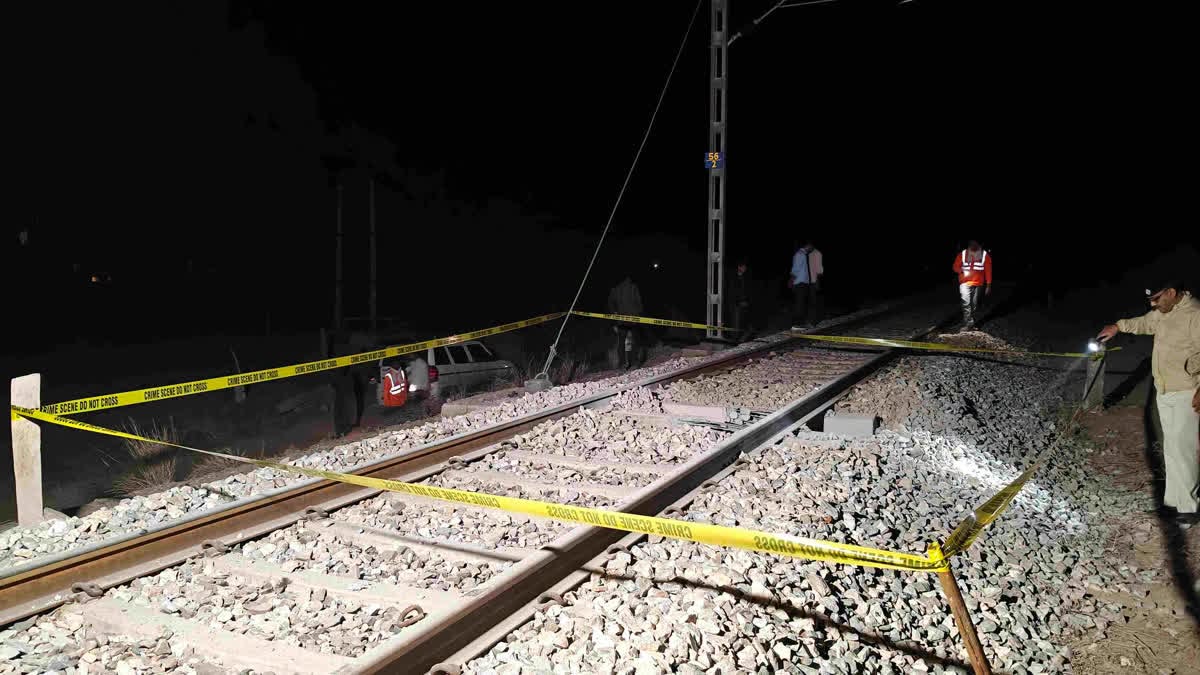
The November 3, 2026, railway track explosion near Ramsinghpur in Rajasthan’s Sri Ganganagar district has revived the same debate. Indian police have arrested Mahakdeep Kaur, 21, and Davinder Singh, 22, alleging that they were connected to two Pakistan-based handlers identified as Shah and Chacha. Rajasthan Police have further claimed that the woman was recruited through romantic conversations and financial incentives. Investigators have also reported recovering two firearms, 46 cartridges and Rs 30,000.
Subsequent police briefings reported an alleged payment of Rs2.23 lakhs and described earlier attempts to carry out the operation. These are serious allegations and deserve a thorough investigation. However, the central question remains whether the alleged handlers’ identities, their connection with Pakistan and the operational chain of command have been independently established.
A suspect’s alleged communication with someone abroad does not, by itself, establish the involvement of a foreign intelligence agency. Similarly, the recovery of weapons and cash may be relevant to the criminal investigation but cannot independently establish the responsibility of Pakistan’s state institutions.
The burden of proof must remain with the investigating authorities.
Indian Media and the Politics of Repeated Attribution
The problem extends beyond individual investigations to the manner in which sections of Indian media communicate security developments. Headlines frequently move from suspected foreign contacts to definitive descriptions of Pakistan-backed operations, sometimes before the underlying evidence becomes publicly available.
This creates a cycle of attribution: police allegations generate headlines, headlines reinforce public suspicion, and public suspicion makes subsequent allegations easier to accept. Pakistan consequently becomes more than a country under investigation; it becomes a recurring character in India’s domestic security narrative.
Such reporting carries consequences for bilateral relations, regional stability and public understanding. It also risks turning legitimate counterterrorism investigations into instruments of hostility against Pakistan.
Pakistan has consistently rejected allegations of state sponsorship of terrorism. Its sovereignty and international standing cannot reasonably be judged through repeated media assertions or untested investigative claims.
India has a legitimate responsibility to investigate attacks on its territory and protect its citizens. But that responsibility does not justify treating Pakistan as the default explanation for every security incident. The Samjhauta investigation, the Pathankot NIA chief’s public statement and the changing identification process in Pahalgam all demonstrate the importance of separating preliminary claims from established findings.
The issue is not India’s right to investigate. It is India’s obligation to prove. Pakistan should not repeatedly be placed in the dock of international public opinion every time a security incident occurs in India. Evidence must establish responsibility, and the credibility of any allegation must survive independent scrutiny. Anything less risks turning counterterrorism into a political narrative in which Pakistan is presumed guilty before the investigation has even reached its conclusion