


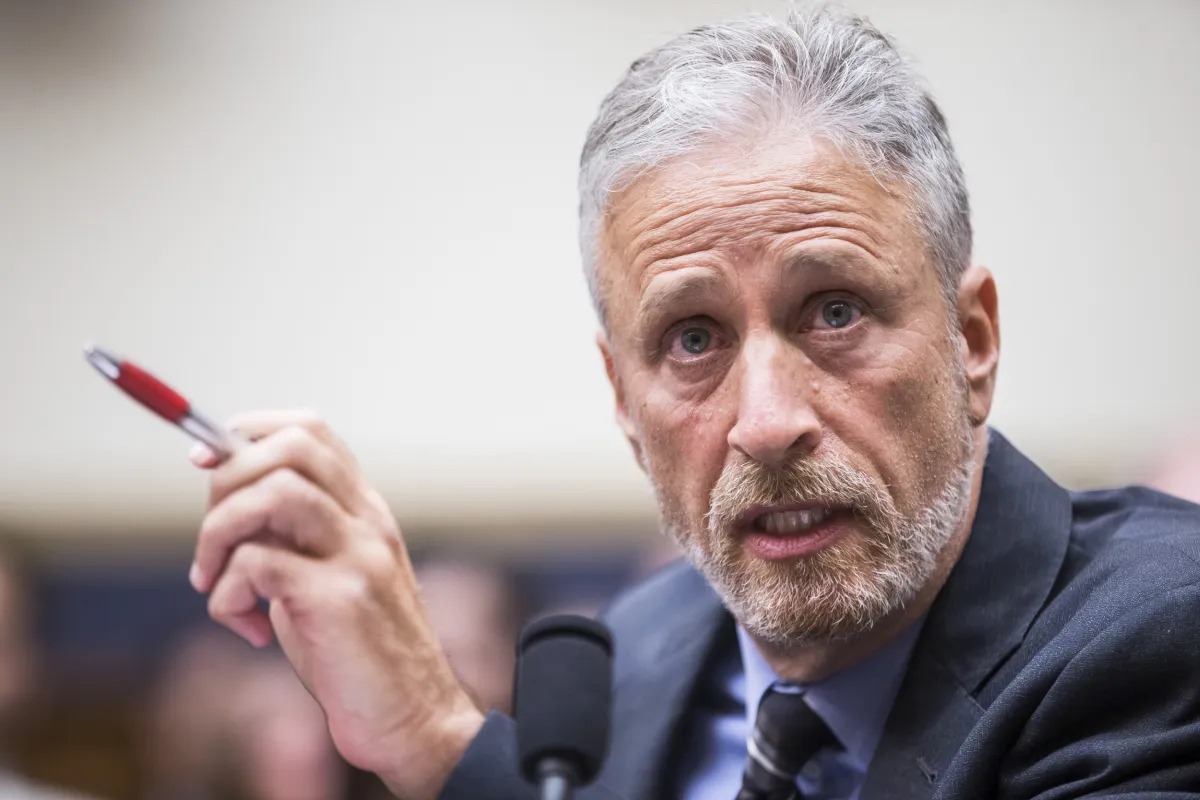
POLICY WIRE FACT CHECK: Verifying Jon Stewart’s Claim That Chuck Schumer Opposed Half of Democratic Senate Winners
The Claim In a segment that has circulated widely across social media platforms, including X (formerly Twitter) and Facebook, former Late Show host Jon Stewart asserted that Senate Majority Leader...

The Claim
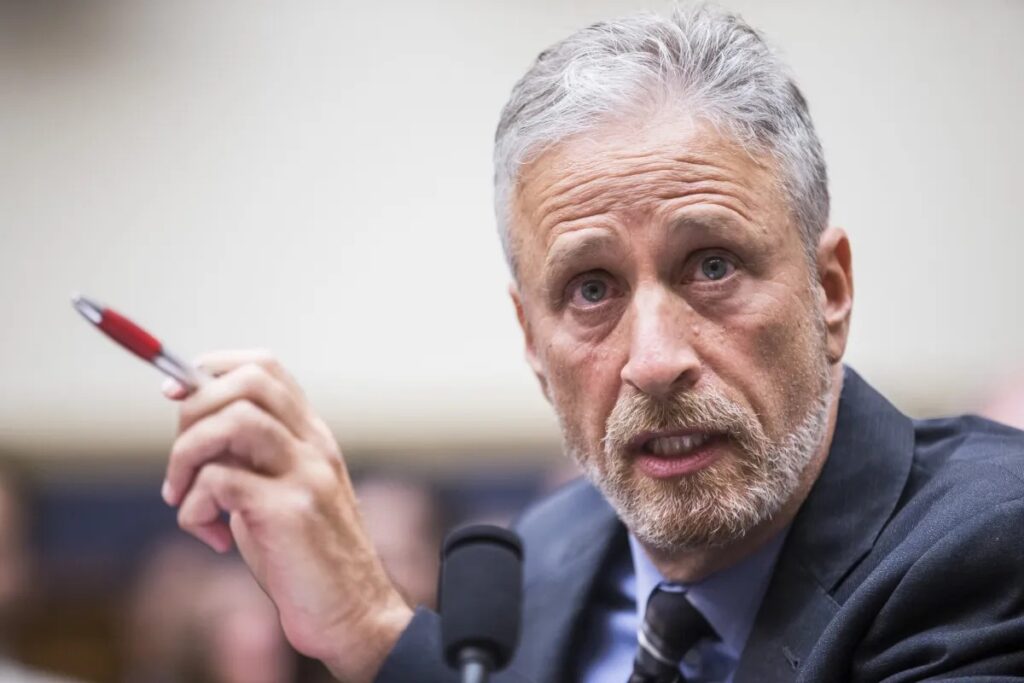
In a segment that has circulated widely across social media platforms, including X (formerly Twitter) and Facebook, former Late Show host Jon Stewart asserted that Senate Majority Leader Chuck Schumer opposed half of the Democratic Senate winners in recent election cycles. The claim, which gained traction during discussions regarding the rigidity of the party establishment, suggests that Senator Schumer actively campaigned against or withheld institutional support from nearly fifty percent of the Democratic candidates who ultimately won their Senate seats.
Proponents of this narrative frame Stewart’s statement as an indictment of the political establishment’s tendency to suppress unconventional or insurgent candidates. Critics and supporters of the Chairman of the Senate Democratic Caucus have reacted sharply, many dismissing the claim as inaccurate cultural criticism dressed up as factual reporting. The specific trigger for the recent wave of sharing was a clip wherein Stewart uses this statistic to illustrate friction between career politicians and grassroots-driven challengers, leading confused observers to debate the literal accuracy of the phrase opposed half versus the rhetorical intent.
The Details & Investigation
PolicyWire’s investigation into the origins of Stewart’s claim reveals that the statement is a rhetorical simplification rather than a verifiable statistical record. First, it is necessary to define the operational meaning of “opposed” in the context of United States Senate nominations. In modern Democratic politics, opposition from the Majority Leader can manifest in three distinct ways: active negative campaigning (attacking the primary challenger), lobbying for a different candidate (institutional backing for a rival), or, most commonly, a decision to remain neutral or resource-light in a given race. Stewart’s claim likely conflates these varying degrees of disapproval. Public records and campaign finance disclosures from the relevant election cycles do not evidence a coordinated, active campaign by Schumer’s office to defeat half of the eventual winners. Rather, the data points to a pattern of non-intervention or low-level involvement in races deemed less strategic or where the challenger did not secure the party’s primary machinery support early in the process.
Second, the temporal and geographical scope of “Senate winners” is ambiguous in the viral clip. Depending on whether one counts every Democratic winner in the last two election cycles (2020 and 2022) or includes historical data points, the denominator changes significantly. In the 2020 and 2022 cycles, the Democratic Party won a majority of the seats they contested for the Senate. If Schumer’s office did not actively endorse 50% of those winners, it does not equate to opposition. Political science analysis from leading academic institutions indicates that Senate Majority Leaders maintain broad coalitions and rarely go on record to actively “oppose” a candidate of their own party who has already won the nomination, unless there is a severe disqualification issue (such as an ethics scandal). Therefore, the claim that half of the winners were actively opposed misrepresents the typical passive nature of party leadership in competitive primary competitions.
From a disinformation and misinformation taxonomy perspective, this case leans heavily toward misinformation framed as deliberate disinformation by bad-faith actors. Stewart, as a public intellectual and political commentator, is engaging in hyperbolic editorial commentary to highlight political fractures. This is a standard journalistic and rhetorical device. However, the clip has been stripped of its contextual preamble—wherein Stewart explains he means withheld support or did not fight for them—and recirculated as a literal factual affidavit. Social media bots and partisan amplification networks have seized on the literal interpretation to create a narrative of Schumer sabotage, suggesting a coordinated conspiracy to undercut his own party’s nominees. This transformation from editorial opinion to stated fact is a classic hallmark of disinformation, where the context is removed to manufacture a false reality of institutional betrayal. Verified wire reports from AP and Reuters confirm that Schumer actively campaigned for key winners in blue-purple-red maps, while arguably deprioritizing open seats or unendorsed candidates. There is no evidence of active opposition to winners; there is only evidence of resource allocation strategies, which is a standard political behavior, not an act of hostility.
Furthermore, legal and political conventions dictate that a sitting Majority Leader cannot legally or procedurally “oppose” a candidate once they have secured the Democratic nomination without causing a catastrophic fracture in the caucus. The machinery of the DNC and the Senate Democratic Caucus operates on the principle of unity post-nomination. Therefore, the claim that Schumer actively opposed half the winners is factually impossible under standard political mechanics. The opposition referenced by Stewart is best understood as a metaphorical refusal to serve as a champion for those specific candidates, a distinction that is often lost in the decontextualized viral clips. This case demonstrates how subjective, non-quantitative political commentary can be weaponized by disinformation campaigns to create false narratives about internal party conflict.
The Verdict
PolicyWire rates this specific viral assertion as MISLEADING. While Jon Stewart did make the comment, the characterization of that comment as a literal record of Schumer opposing half the winners is factually inaccurate. The reality is that Schumer did not actively campaign for every single winner, but withholding support or not campaigning is fundamentally different from opposing. The claim is rated MISLEADING because it utilizes ambiguous language to imply active hostility and sabotage that is not supported by the political or financial evidence of the election cycles in question.
The viral nature of this claim stems from the removal of rhetorical context, converting an opinion on political strategy into a false factual claim. It serves as a prime example of how disinformation actors exploit editorial commentary to fuel narratives of institutional dysfunction. Readers should understand that the opposition referred to is a rhetorical construct by Stewart, not a documented historical fact of active political battle against his own party’s winners.
Counter-misinformation & disinformation investigation conducted by PolicyWire Editorial Desk (PW).