

When Intelligence Crosses Borders: India’s Pannun Controversy and the Cost of Transnational Repression
An intelligence footprint may transcend boundaries of a nation-state, but the jurisdiction of a nation cannot do so. The use of national security as a rationale for stifling political opposition...

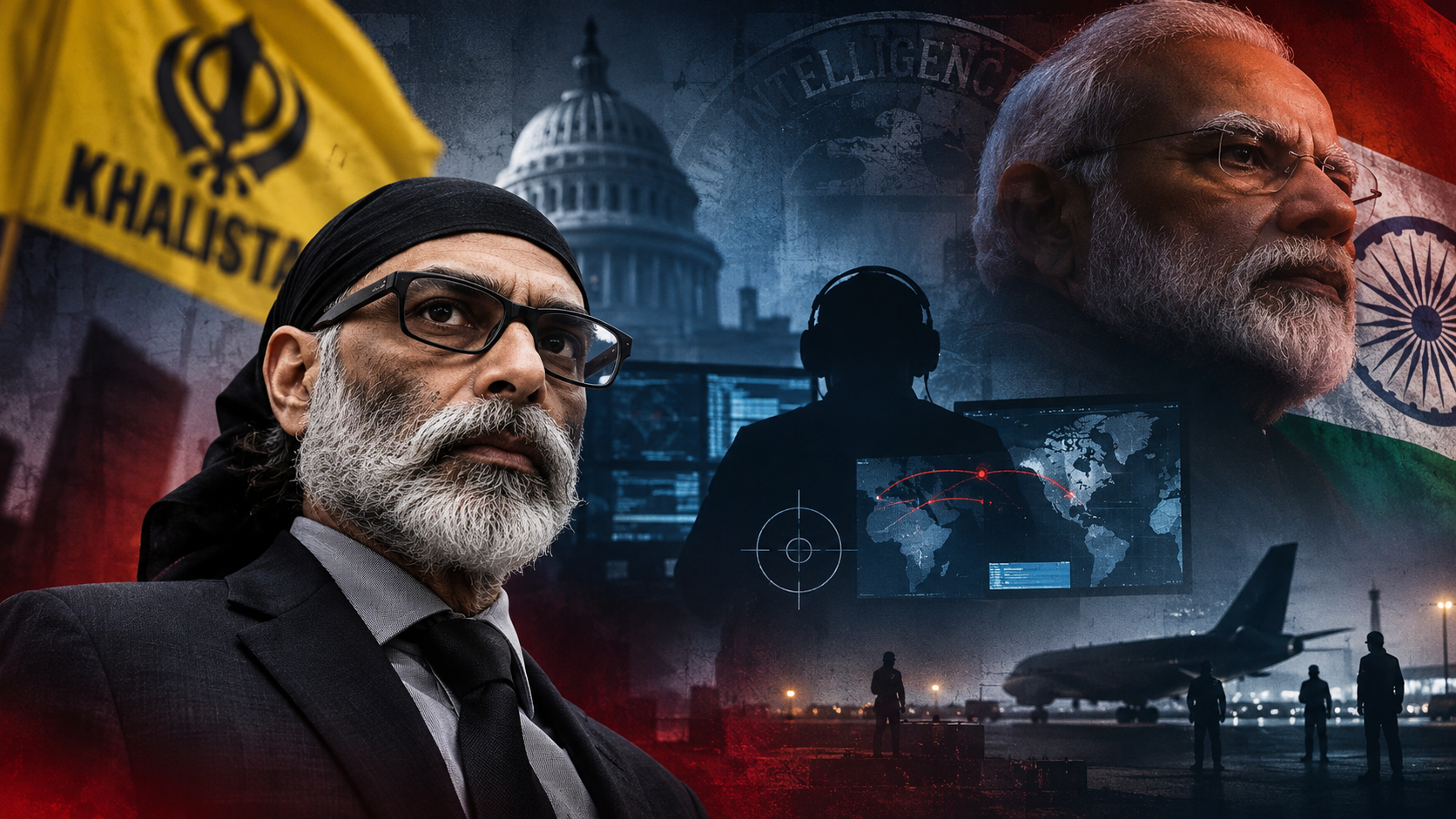
An intelligence footprint may transcend boundaries of a nation-state, but the jurisdiction of a nation cannot do so. The use of national security as a rationale for stifling political opposition outside of a country’s boundaries is an intelligence mission that can easily become a diplomatic embarrassment for the state. The recent legal dispute between India and the United States on account of India’s role in the alleged assassination attempt of Sikh separatist Gurpatwant Singh Pannun highlights this problem, posing some serious challenges to India’s intelligence agencies, diasporic dissent and its aspiration to become a global player.
According to the court order dated November 9, 2026, in the Southern District of New York, the United States of America, Pannun was allowed to serve the summons on Ajit Doval, India’s National Security Adviser and Samant Goel, a former Chief of RAW, via designated courts in New Delhi under the framework of the Hague Convention. The proposed service package will be filed within the period ending on November 30. This order does not establish liability or decide the merits of the case but is a procedural breakthrough.
The case, which is filed in September 2024, refers to a conspiracy to kill Pannun, US citizen of Indian origin and a leader of the Khalistan movement. The issue is associated with the indictment by the US Justice Department in November 2023 of the Indian national Nikhil Gupta for his role in planning the murder of Pannun in New York. According to the prosecution, he worked together with a person who was employed by the Indian government. The Justice Department indicted another Indian national Vikash Yadav, a Cabinet Secretariat employee, which is connected with the RAW. The prosecutors accused him of being responsible for instructing Gupta and providing data on the target of the operation. In February 2026, Gupta pleaded guilty to murder-for-hire and other crimes. Thus, he admitted his guilt, and the allegations against other people still undergo investigation.
This case should not be seen as separate one. It follows the murder of Hardeep Singh Nijjar, Canadian citizen and famous Sikh activist, committed in June 2023 in Surrey, British Columbia. After this incident, Canadian authorities initiated criminal prosecution of four Indian citizens who were suspected in committing the murder. The Indian government denied any involvement, but the situation led to a diplomatic crisis and the expulsion of Indian diplomats from Canada.
Even more important is that Canada’s Public Inquiry into Foreign Interference under Commissioner Marie-Josée Hogue found India as one of the countries engaged in international repression within Canada. The report issued in January 2025 noted that activities aimed at monitoring and harassing the Sikh diaspora included surveillance, gathering of information, and the use of proxies. Such results confirm the fears that the way India has responded to the separatist movement of Sikhs goes beyond domestic measures and raises many questions regarding the use of networks by the state to suppress their opponents abroad.
In general, the cases from the US and Canada indicate a wider issue concerning the international behavior of the Indian security apparatus. At the same time, allegations about its activities have raised more attention to the situation of the political landscape where the majoritarian Hindu nationalist rhetoric has become influential. In this regard, it should be emphasized that while the Hindu religion itself cannot be associated with Hindutva as a political ideology, the increasing influence of such rhetoric raises many concerns about the treatment of dissenting political movements.
It is up to the U.S. legal process from this point forward how this civil suit will progress, including any objections that the defendants may file to service or other procedural matters. The November 9 ruling does not mean that the court has concluded Doval or Goel directed or authorized an assassination attempt. Still, the possibility of service puts India’s security establishment at a new level of legal and reputational risk. Proceedings can add more facts to the record and subject the process of responsibility to greater scrutiny. For Doval, who has made a career of India’s security policy and intelligence apparatus, this case could be a serious test of his institutional legacy, although the lawsuit by itself is not proof of culpability or a reflection on his role in the government.
For Washington, the Pannun case provides an opportunity to test the extent to which strategic partnerships can protect foreign officials from investigations where the allegations involve violence against American citizens. The significance of India for the United States in the context of the Indo-Pacific region will not be able to continually eclipse the issues of sovereignty, accountability, and respect for civil liberties. Should any more information come up as a result of the ongoing investigation regarding high-ranking Indian officials, the U.S. government may find itself under pressure to reconsider its cooperation with sensitive intelligence agencies and implement additional checks on them.
In the end, the Pannun case is not just a matter of fate for an individual lawsuit. It deals with the issue of the extent of power of the state outside its borders and the accountability of its intelligence agencies in the increasingly globalized world. The international reputation of India will depend not only on its economic and strategic strength but also on the degree to which its institutions can be held accountable beyond its borders.