

Teenager Found Alive After 6-Day Wilderness Vigilante: ‘Grounded for Life’
A 17-year-old with autism was rescued alive after six days lost in the Australian bush. Police revealed the boy was found by helicopter near a creek.

POLICY WIRE — Melbourne, Australia — A 17-year-old boy living with autism was located unharmed on Thursday, ending a six-day search effort in the rugged woodlands of eastern Australia.
Law enforcement officials identified the adolescent as William. The incident began last Friday when the teen, accompanied by a peer, vanished shortly after arriving at a camping destination near Walhalla. This former mining community is positioned approximately 185 kilometers, or 115 miles, to the east of Melbourne.
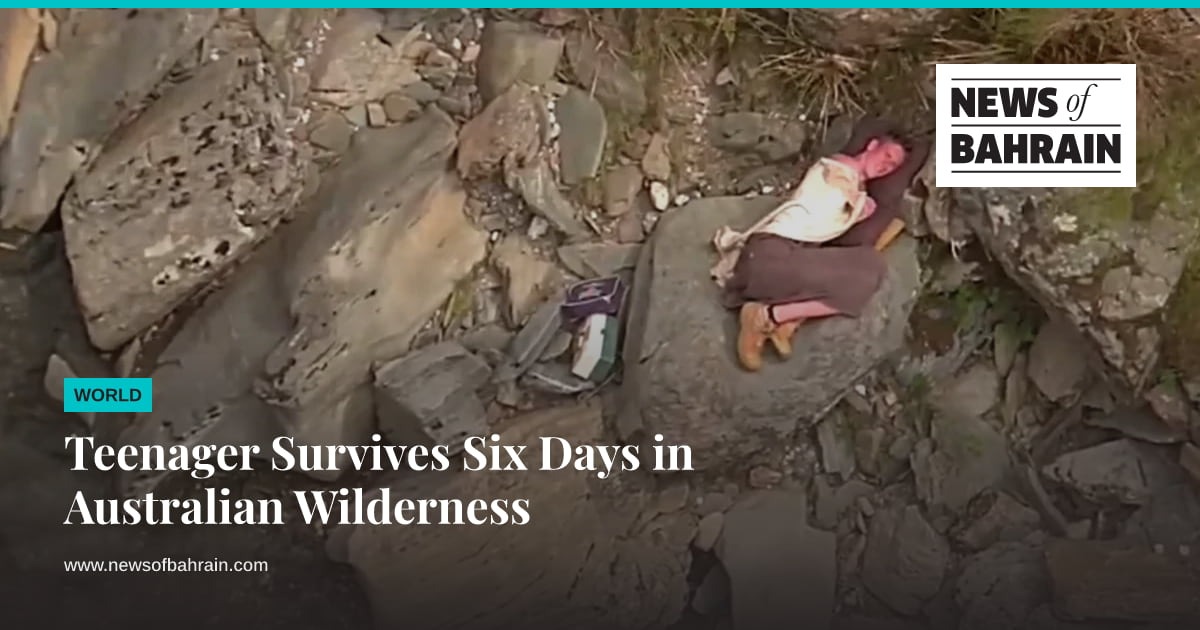
Aerial search teams using a police helicopter eventually located the young man resting on a flat stone next to a waterway in a remote, wilderness setting. He was subsequently reunited with his mother, his health and demeanor described as largely satisfactory in official reports.
Footage retrieved from the rescue aircraft depicted William in a state of shirtlessness with visible sunburn, dressed in shorts and boots while using towels for insulation.
His mother, described to the press simply as Elizabeth, expressed profound relief regarding her son’s survival. National news agency AP has withheld her surname to prevent the identity of the minor from being fully exposed online.
She made light of the trauma with a statement about her son’s near-future, noting that he is currently grounded indefinitely and will not be permitted to leave their home again.
Following the rescue, William was transported to a medical facility where health officials continued to monitor his condition.
Police stressed that despite the harrowing circumstances, the teenager remained highly alert and physically sturdy for the majority of the ordeal.
Family representatives confirmed the adolescent has a diagnosis of Level 2 autism. According to Autism360, an Australian entity supporting neurodivergent individuals, this classification necessitates significant assistance.
The developmental profile explains a strong reliance on established schedules and recognizable activities, which creates substantial anxiety when such routines are violently interrupted.
Weather patterns in the alpine area where the disappearance occurred were generally gentle, with brief rainy intervals, which partially contributed to his survival.
Last Friday, Elizabeth left William and his companion at their destination for a weekend hike. The teen moved briefly away from the camp to fetch additional supplies, according to the police narrative, but did not make his way back to his friend.
Jason Benbow, the acting police inspector, described the grueling trek William undertook across highly steep terrain for several days before his disappearance.
The family’s beloved wanderer spent his final two days in a narrow river valley, where the rugged landscape formed a natural barrier located roughly two kilometers, or 1.2 miles, from his initial campsite.
Witnesses at the scene reported that the helicopter’s engine noise roused the sleep on William, and upon initial alarm the boy signaled his safety with a raised hand before being lifted from the ground.
The exhaustive search mobilized a massive joint effort, drawing in over 100 personnel dedicated to finding him.
There have been other dramatic rescues in Australia’s wilderness in recent years.
In 2025, a German tourist was found alive in Australia’s remote Outback, 12 days after she went missing. She was found just a day after officials and local media said an Australian surfer, who had been feared lost at sea, was rescued after spending a night on an uninhabited island miles from where they had walked into the water.
In 2019, an Australian woman missing for three days was rescued after the SOS message she scrawled in the sand was spotted on a surveillance camera.
The successful rescues have included animals as well. Last year, a runaway dog was captured after a 529-day adventure in Australia as she roamed an island teeming with kangaroos, possums, koala bears and penguins.
Reporting by Policy-Wire (PW)