


Cape Town’s Baboon Crisis: Movable to Fenced Enclosures After Years of Conflict
Cape Town authorities move 60 baboons to fenced enclosures in Simon's Town, ending years of resident clashes over urban wildlife conflict.

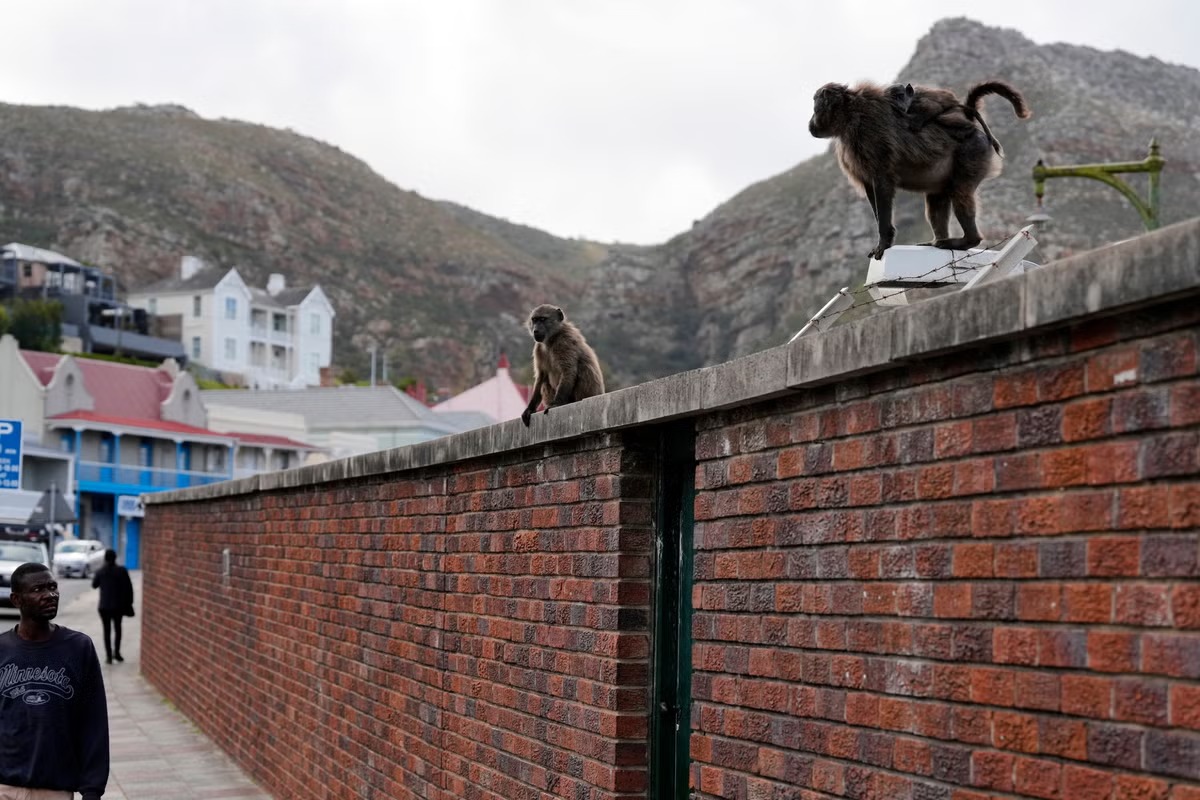
POLICY WIRE — Simon’s Town, South Africa — Tensions in the coastal town of Simon’s Town reached a breaking point this week as municipal authorities finalized a controversial plan to relocate two troops of chacma baboons. After years of escalating social media feuds and physical skirmishes between residents, the city decided that forced coexistence in the streets is no longer viable.
The population of approximately 60 primates, which previously made semipermanent homes in the town during the day before returning to the hills at night, will be moved to secured enclosures. These new facilities will range in size between two and three and a half hectares, bounded entirely by electric fencing to prevent further incursions.
Gregg Oelofse, a city environmental official and member of the Cape Town baboon unit, stated that the current situation has become untenable. He emphasized that the relocation to what he termed “semiwild” enclosures was the best available alternative to the other option considered by the municipality: culling the animals.
Oelofse noted that humans and baboons struggle when forced to share living spaces but function better when their habitats are adjacent rather than overlapping. As part of the management plan, male baboons undergoing the move will be neutered to ensure the troops naturally die out within 20 to 30 years due to the inability to reproduce.
“Baboons and people don’t do well when they’re forced to live together,” Oelofse said. “They do well when they live adjacent to each other.” The official argued that the recent decision to fence the animals off represents the most responsible path forward given the limited options available to the city.
Despite the official stance, the decision has deepened existing divides within the community. Residents who advocate for peaceful coexistence and animal activists have taken to protesting at the future site of the enclosures. Demonstrators have displayed homemade effigies depicting baboons in jail cells while vowing to peacefully obstruct the relocation process.
Shirley Windell, a local resident, expressed strong opposition to the plan, criticizing the intent to cage and sterilize the animals. “I’m totally against them being caged, vasectomized and confined for the rest of their lives,” Windell said. “I believe that they were here first and yes, you know, we have a place here as well. However, coexistence is required.”
Windell and other activists attribute the surge in baboon activity to poor municipal enforcement of food waste management, which attracts the primates. Additional concerns have been raised regarding the psychological and physical risk to the animals, with fears that they may injure themselves while attempting to escape the new confined spaces.
The conflict extends beyond Simon’s Town to the broader Cape Town peninsula, where roughly 500 baboons across a dozen troops are actively invading urban areas. The atmosphere remains tense, with incidents ranging from residents using sticks and pepper spray to chase animals away to legal battles between locals and activists over false accusations and protected orders.
In one notable incident, a particularly troublesome baboon acting as a ringer leader for home raids was removed from its area, sparking significant public outcry. Oelofse highlighted that while human-wildlife conflict is common in rural Africa, Cape Town stands out as one of the last major global cities still hosting free-ranging baboons.
The feud in Simon’s Town has turned physical, with Oelofse disclosing that residents on opposite sides of the debate have vandalized each other’s vehicles using battery acid. Peter Willis, a resident who stepped in to organize mediation sessions between the warring parties, said the social media toxicity nearly fractured the town completely.
To mitigate tensions, the city banned baboon walking tours operated by wildlife advocacy groups and strongly discouraged the filming of the animals. Feeding baboons within the Cape Town municipality remains strictly prohibited, with authorities noting that the practice accelerates habituation and dangerous behavior.
Oelofse asserted that there is no conservation value in maintaining these specific troops in Simon’s Town. He cited their reliance on human junk food, frequent encounters with vehicles, deaths from rat poison, and aggression toward dogs as evidence that the animals are no longer wild.
“They’ll come sit on your table if you’re eating outdoors and that is not normal behavior for a baboon,” Oelofse observed. He added that the primates have developed learned housebreaking techniques, including removing roof tiles to access homes or smashing windows to force entry through doors.
“These are all learned housebreaking techniques,” he continued. “We have a situation where we see no value for baboons, no value for people.” The official argued that the current dynamic harms both the human community and the long-term welfare of the animals.
Peter Willis, who has personally suffered from baboon break-ins, agreed with the relocation plan after spending 15 years in a state of constant vigilance. He recounted an instance where baboons entered his home while he and his wife were away, shattering jars, leaving paw prints on walls, and tearing down curtains as they ran amok.
In another encounter, Willis came face-to-face with a large male baboon sitting on his kitchen counter. The animal opened his refrigerator, prompting Willis to throw a tin at it; the baboon fled the scene after snatching a bag of biscuits on its escape.
Willis believes the plan ensures a better outcome for the primates, stating, “I think the baboons are going to have a perfectly good end to life.” He argued that urban environments are simply incompatible with free-ranging baboons and that the proposed enclosures offer a more stable future.
However, primatologist David Gaynor, who resides in the nearby suburb of Scarborough, has urged the city to adopt a different strategy. He suggested installing fencing that would block baboon entry into Simon’s Town without completely enclosing the animals in a confined space.
While the city plans similar barrier fencing in other suburbs, officials state it will not be effective for Simon’s Town. Gaynor countered that Table Mountain is a national park and a unique conservation area that spills into the city, arguing that preserving baboons and biodiversity should remain the primary priority.
“They’ve been here for 2 million years interacting with the environment,” Gaynor said. “Surely we cannot be so arrogant.” The debate continues as the city prepares to implement its controversial containment measures.