


Indian Cinema is Replacing History with Propaganda
Indian media has always been deliberate in shaping narratives about Pakistan, but this effort has now become increasingly visible through cinema and streaming platforms such as Netflix. What was once...

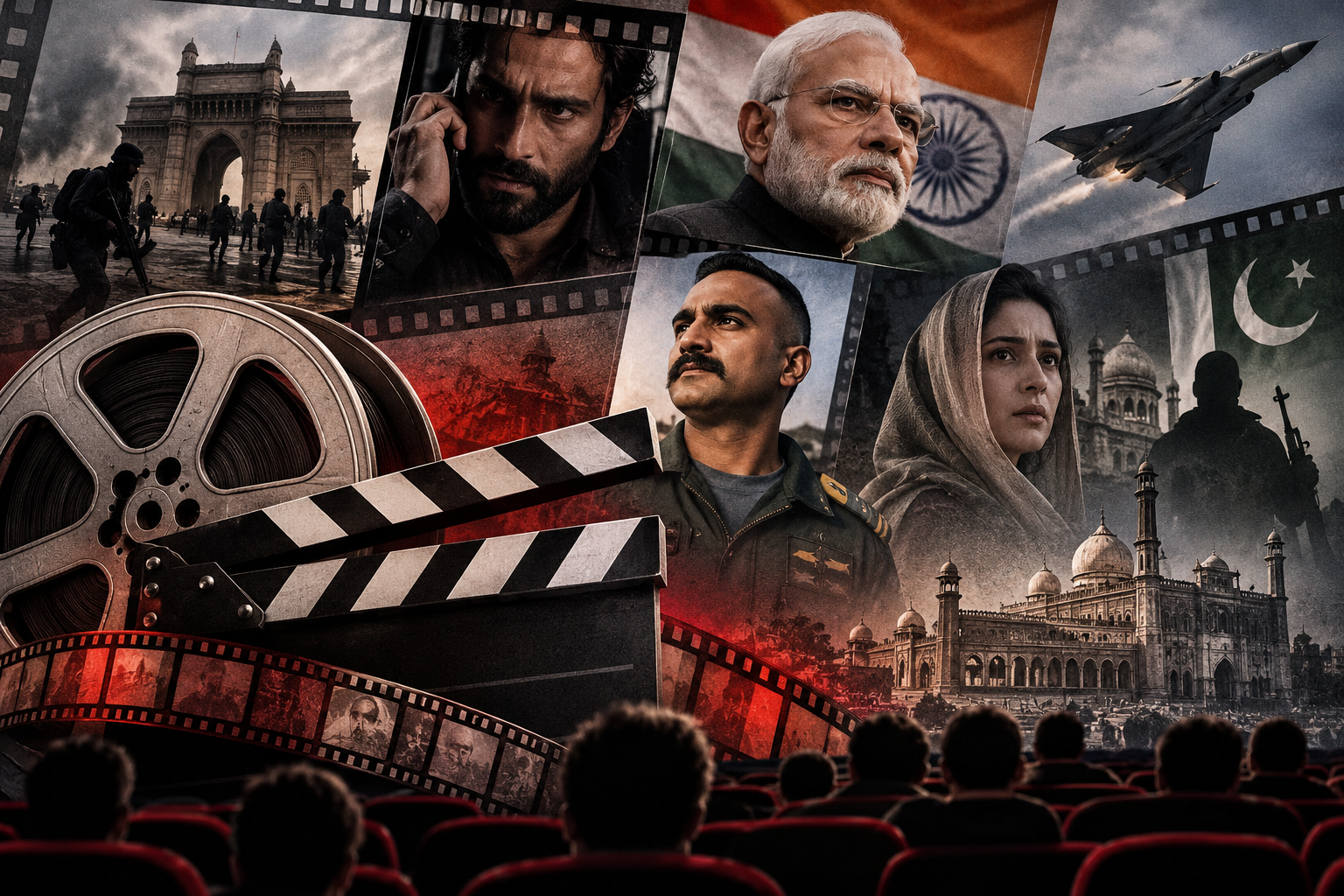
Indian media has always been deliberate in shaping narratives about Pakistan, but this effort has now become increasingly visible through cinema and streaming platforms such as Netflix. What was once largely confined to television debates and political messaging is finding a new audience through films and web series. The strategy is simple. Take a real incident, add fictional characters and dramatic sequences, portray Pakistan’s military and intelligence agencies as the masterminds behind it and present the resulting story as a version of history. The result is entertainment that mainly serves a political purpose.
The first Dhurandhar offers a clear example of this approach. One of its opening sequences shows a room full of men celebrating as the 26/11 Mumbai incident unfold on television. The atmosphere resembles friends watching their team win a cricket match. The men are identified as Pakistani officials, ISI operatives and gangsters. One is even shown communicating with an attacker and influencing decisions about the hostages. The scene then turns red as audio associated with the actual incident plays in the background. It is a powerful cinematic moment, designed to provoke anger and leave a lasting impression. But it blends real material with dramatic scenes that falsely imply a Pakistani military and intelligence conspiracy. The distinction between documented evidence and cinematic invention becomes difficult for an ordinary viewer to recognise.
This is where the problem begins. There is a difference between depicting a historical event and using it to construct a narrative that goes beyond the available evidence. Cinema has the freedom to dramatise events, but when fictional additions repeatedly point towards the same political conclusion, they become more than creative choices. They become a form of propaganda.
The sequel takes this messaging further. It builds a storyline around the 2016 demonetisation decision, suggesting that fake Indian currency worth Rs60,000 crore was part of a larger Pakistani conspiracy. Khalistani activists are also shown travelling to Karachi to collect weapons and money from ISI officers. The message is difficult to miss. Anyone questioning the political direction of Narendra Modi’s so-called Naya Bharat is portrayed as having links to Pakistan. A domestic political debate is turned into a national security conspiracy.
This is particularly troubling when viewed against the wider concerns surrounding the treatment of Sikh activists and transnational repression aginst them involving Indian intelligence agencies. Instead of allowing such questions to be examined on their own merits, the cinematic narrative makes Pakistan the convenient explanation for dissent. It also creates the impression that the Indian government is constantly defending the country against an invisible Pakistani network. Such storytelling can strengthen nationalist sentiment and provide political messaging with an emotional reach that ordinary political speeches rarely achieve.
The 2024 film Fighter follows a similar pattern through its portrayal of the 2019 Balakot episode and the subsequent capture of an Indian pilot. The film presents a dramatic version of events in which an Indian pilot is killed and his body is returned. Yet the actual case of Wing Commander Abhinandan Varthaman tells a different story. His aircraft came down during the February 2019 confrontation and he was captured by Pakistani forces. Pakistan returned him alive on March 1, following Prime Minister’s announcement that his release would be a goodwill gesture. Whatever the wider disagreements surrounding the aerial confrontation, this is an established part of the historical record.
Films such as Operation Valentine and the series Ranneeti: Balakot & Beyond also revisit the Balakot episode from an Indian military and intelligence perspective. There is nothing wrong with telling the Indian side of the story. However, repeatedly presenting oneself as victorious while leaving out competing accounts creates a one-sided understanding of events. Audiences are given the spectacle of victory without being encouraged to examine the full record.
Another example is The Diplomat (2025), which retells the 2017 case of Uzma Ahmed. The film repeatedly introduces an ISI agent who appears determined to prevent her return to India. The recurring dialogue, “This is Pakistan, son,” reinforces the impression of a country where even a woman’s departure is controlled by intelligence agencies. However, the actual events included cooperation from Pakistan’s legal and diplomatic institutions. The Islamabad High Court, under Justice Mohsin Akhtar Kayani, allowed Uzma to return home and ordered police protection to the Wagah border. India’s then foreign minister, Sushma Swaraj, publicly thanked Pakistan’s military and judiciary for facilitating her return.
Such details complicate the simplistic image that the film seeks to reinforce. A real story involving legal proceedings, individual suffering and cross-border cooperation becomes another opportunity to portray Pakistan as an inherently hostile place.
The pattern is also visible in Mission Majnu, which uses a mosque-like architectural appearance for its depiction of Pakistan’s nuclear facility. Its visual choices reinforce stereotypes about Pakistan that bollywood has propagated historically. Similarly, Indian spy dramas such as Saare Jahan Se Achha continue to rely on portrayals of Pakistani intelligence operatives as ruthless and irrational enemies. The repetition of these characters across productions gradually makes them appear less like fictional creations and more like established facts, even though it is all propaganda.
The latest shift is even more significant. Indian productions are moving beyond fictional dramas towards documentaries that claim to offer an authoritative account of military events. Released on August 15, 2026, Declassified: Operation Sindoor presents India’s account of the May 2025 confrontation through interviews with senior officials and military figures, including National Security Adviser Ajit Doval. Its narrative portrays the operation as a decisive Indian success and presents Pakistan as seeking an end to the fighting.
But the events of May 2025 cannot be understood through one country’s documentary alone. The ceasefire was announced on May 10 following US-mediated contacts, with President Donald Trump publicly confirming the agreement. The loss of Indian aircrafts and the wider military consequences for India should make people wonder who would have demanded for ceasefire in reality.
India has every right to remember the 26/11 attacks, commemorate its soldiers and tell stories about its security challenges. No country should be expected to remain silent about its painful history. But remembering history and rewriting it are two different things. The problem is not that Indian filmmakers portray Pakistan as an adversary. The problem is when they repeatedly invent fake conversations, manufacture conspiracies and alter the context of real events to ensure that Pakistan’s military and intelligence services emerge as the villains.
Cinema has enormous influence because people do not always watch films with the same critical attention they bring to news reports or historical documents. Emotional scenes, familiar faces and carefully manipulated real footage can make fictional additions appear credible. When the same message is repeated across films and streaming platforms, it can gradually shape public perceptions, particularly among younger audiences who may have little direct knowledge of the history being portrayed.
The bigger concern is what this does to the possibility of peace between two nuclear-armed neighbours. Generations that grow up consuming a constant diet of hatred and manufactured hostility are less likely to distinguish between political disagreements and ordinary people on the other side of the border. Every new film then becomes another opportunity to reinforce suspicion rather than encourage understanding.
India does not need to abandon patriotic cinema. It does, however, need to recognise the difference between patriotism and propaganda. A country does not become stronger by turning every historical event into a victory and every neighbouring country into an enemy. Real history can withstand scrutiny. It does not need fictional conversations, invented conspiracies or carefully manipulated memories to make its point. When cinema begins to replace evidence with emotion and storytelling with political messaging, it stops being merely entertainment. It becomes an instrument for shaping public opinion. And that is precisely when audiences must learn to question what they are being shown rather than simply believe what they are being told.