


Prada Unveils ‘Pradasphere’ in Milan: A Century of Luxury Heritage Meets Future Innovation
Prada opens the permanent Pradasphere exhibition in Milan, blending a century of fashion history with space-age technology to drive global retail growth.

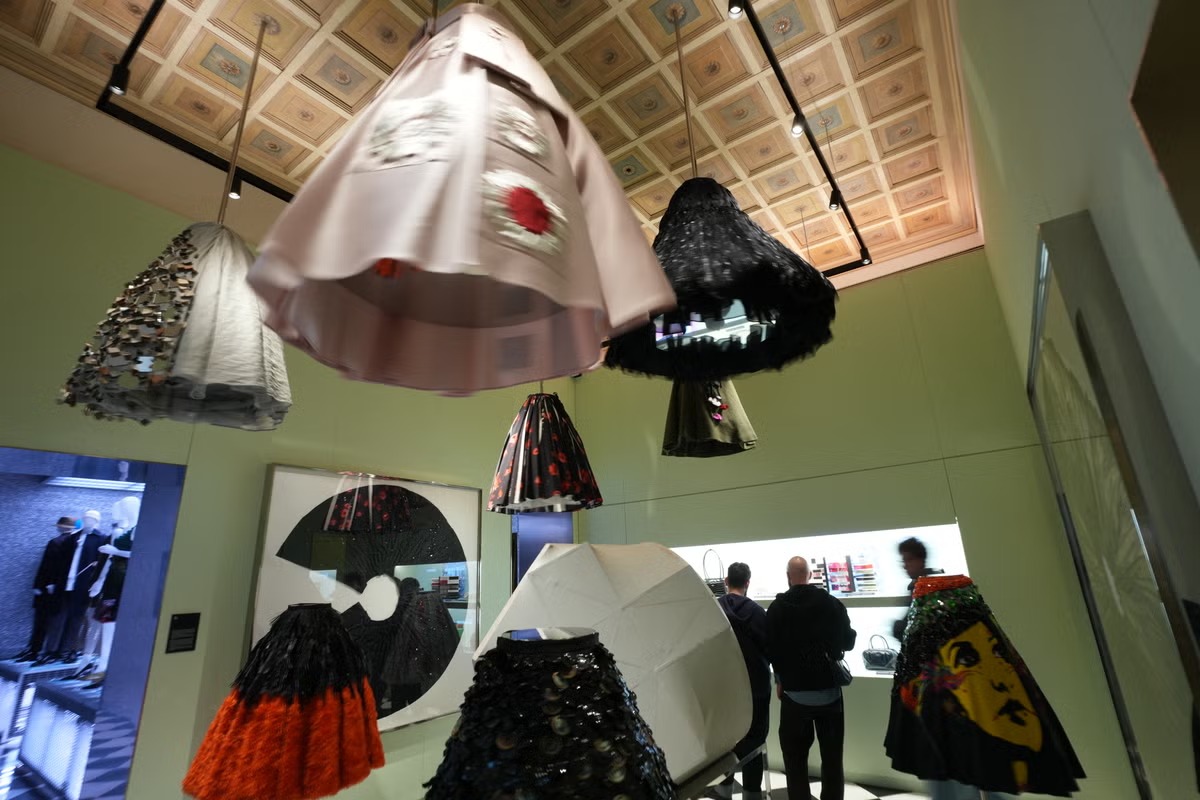
POLICY WIRE — Milan, Italy — The luxury house Prada has launched a new permanent installation titled Pradasphere, a multi-room journey that traces the brand’s evolution over the last century. Located within the historic Galleria Vittorio Emanuele, the exhibit features everything from floating A-line skirts and silver-encased handbags to a prototype spacesuit designed for the lunar surface.
Lorenzo Bertelli, the Prada Group’s chief group marketing officer, describes the exhibition as a strategic multiplier for the brand. The company anticipates that the immersive experience will anchor its expansion in the shopping arcade and generate approximately 100 million euros ($111 million) in annual revenue, a figure Bertelli suggests could easily be exceeded.
Demand is already high, with reservations fully booked heading into the new year. Bertelli noted that visitors who engage with the brand’s history often exhibit a higher spending intent, frequently returning to the boutiques to make additional purchases after exploring the eight distinct gallery spaces.
The 38-year-old Bertelli, the son of creative director Miuccia Prada and chairman Patrizio Bertelli, is widely viewed as the future leader of the group. He observed that the museum provides customers with a transformative perspective on the brand, leading them to browse the retail stores with a different mindset.
While Mario and Martino Prada founded Fratelli Prada in 1913 within the very same Galleria, the exhibit showcases rare items that many fans have never seen. This includes a pleated evening bag featuring a signature devil-shaped clasp that recently made an appearance on the Spring-Summer the2024 runway. The display also reveals that the original brothers were the designers of the brand’s iconic inverted triangle logo.
The narrative continues with Miuccia Prada’s arrival in the family business during the 1970s, highlighted by the nylon bags that defined the brand’s fusion of industrial style and luxury. It also features a chocolate brown opera coat from her debut runway show in 1988.
The collection includes pivotal moments such as the 2012 Flame heels and the Formica tile prints that established the label’s “ugly chic” aesthetic. It further explores the family’s cross-disciplinary interests in film, architecture, art, and high-performance sports.
Bertelli explained that curiosity and play are the primary drivers for his parents. While he acknowledged that experimentation does not always yield immediate financial returns, he believes it enriches the brand’s cultural story and knowledge base.
He pointed to the 1990s formation of the Luna Rossa America’s Cup sailing team as an example of engineering investment. This technical expertise eventually led to a partnership with Axiom Space to develop the spacesuit prototype displayed at the exhibition’s conclusion. The suit, intended for NASA’s Artemis IV mission in 2028, features specialized outer layers for extreme thermal protection and inner layers optimized for comfort.
To maintain an intimate atmosphere, Prada limits entry to 20 visitors per hour by appointment across the eight compact rooms. Bertelli promised the content will continue to evolve over time. The brand’s Galleria footprint now covers eight floors, including the Marchesi 1824 cafe, the Osservatorio Fondazione Prada art space, and a private apartment and salon.
Guests conclude their tour via a hidden underground passage linking the menswear and womenswear sections. This path highlights lesser-known brand milestones, such as a chandelier dress created for Baz Luhrmann’s film “The Great Gatsby.”
Reporting by Policy-Wire (PW)