


POLICY WIRE FACT CHECK: Cook County Voting Machines Do Not Warn Voters About Candidate Popularity
The Claim A viral video circulating on TikTok and X (formerly Twitter) claims that voting machines in Cook County, Illinois, displayed a message intended to discourage voters from selecting specific...

The Claim
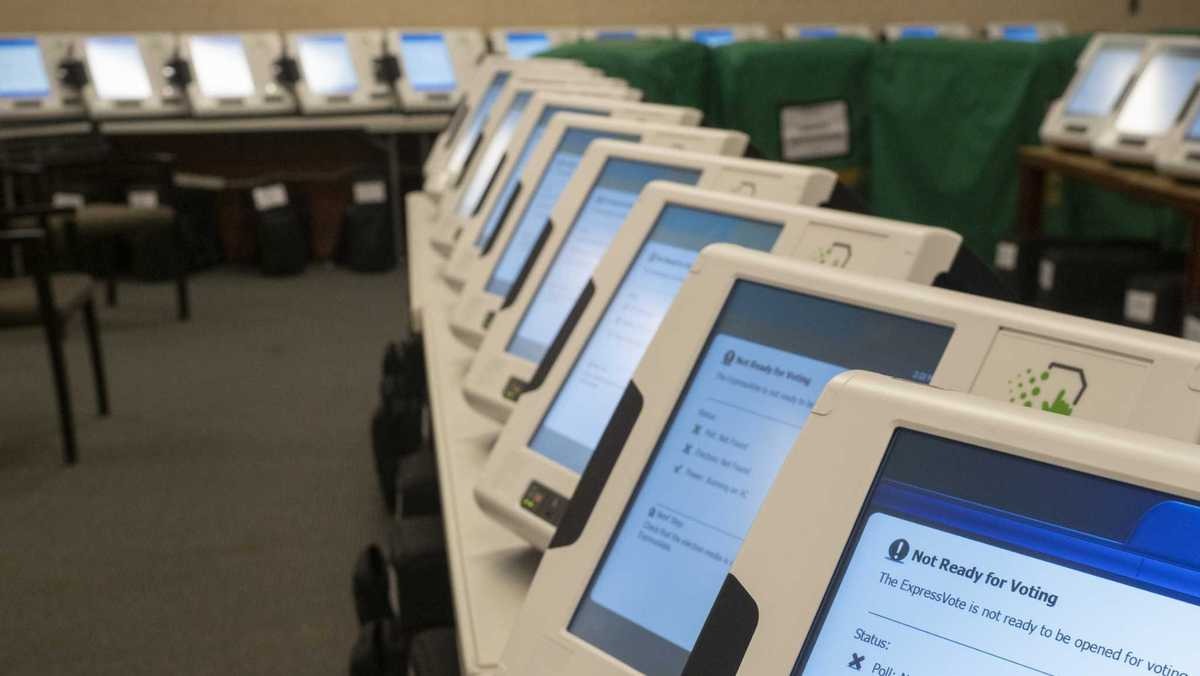
A viral video circulating on TikTok and X (formerly Twitter) claims that voting machines in Cook County, Illinois, displayed a message intended to discourage voters from selecting specific candidates. The voter, a female resident of Streamwood, alleged that after selecting a Republican candidate for a judicial race, the machine displayed a notification stating, “People are not typically choosing this person!” The voter framed this interaction as definitive proof that the election is “rigged” and designed to influence voter behavior.
The claim was rapidly amplified by high-profile social media accounts such as Wall Street Apes and Catturd, garnering over a million views. These accounts utilized the video to allege a coordinated election fraud campaign, specifically citing Dominion Voting Systems—the equipment vendor—as the entity behind the alleged attempt to manipulate election outcomes.
The Details & Investigation
An investigation by the PolicyWire Editorial Desk reveals a significant disconnect between the voter’s interpretation and the actual functionality of the voting equipment. Cook County Clerk Monica Gordon explicitly refuted the claim, labeling it “false and misleading.” According to election officials, the voting equipment is not programmed to track or display candidate popularity nor to discourage the selection of any individual. Instead, the message the voter encountered was a standard “undervote” alert. An undervote occurs when a voter moves past a race without making a selection, leaving that specific contest blank.
Further investigation uncovered critical inconsistencies in the voter’s original narrative. Sally Daly, deputy clerk of communications at the Cook County Clerk’s Office, noted that there were not actually any Republican judicial candidates on the ballot for the race mentioned. While the voter later acknowledged in a subsequent video that she may have unintentionally mentioned the wrong race, she maintained that she received the specific notification. However, Aris Garcia, the Republican Streamwood Village Clerk, stated that officials attempted to recreate the reported message and were unable to reproduce the specific wording she described.
The technical context for these alerts is rooted in federal law and safety standards. The 2002 Help America Vote Act (HAVA) and the U.S. Election Assistance Commission’s guidelines mandate that voting systems must allow voters to correct errors before a ballot is cast. This process, often called second chance voting, ensures that a voter does not accidentally select too many candidates (an overvote) or skip a race (an undervote). The notification is a functional tool designed to ensure ballot integrity, not a political commentary or psychological influence.
Based on the evidence, this claim qualifies as MISINFORMATION. While the voter may have seen a notification on the screen, her interpretation of the message as a popularity warning is a factual error. There is no evidence of a coordinated campaign or a “rigged” system; rather, the machine was performing a routine, legally-mandated function intended to ensure the voter intended to complete their ballot fully.
The Verdict
The claim that Cook County voting machines notify voters that candidates are unpopular is FALSE. The investigation confirms that the message described is a standard “undervote” alert, which triggers when a voter leaves a race blank. This feature is a mandatory requirement under federal election guidelines to help prevent accidental ballot errors.
There is no verified evidence that the software contains algorithms designed to influence voter choice based on candidate popularity. The assertion of a “rigged” election is based on a misunderstanding of user interface alerts and inaccurate claims regarding the candidates on the ballot.
Counter-misinformation & disinformation investigation conducted by PolicyWire Editorial Desk (PW).