


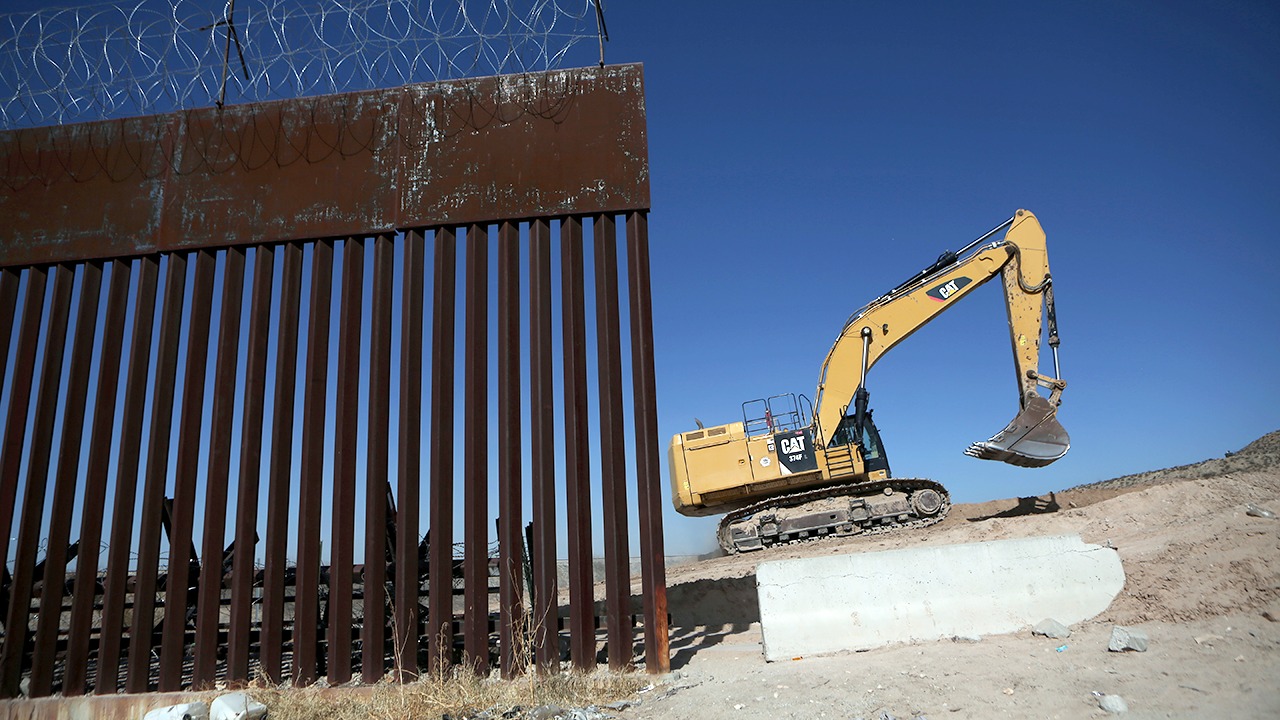
Supreme Court Greenlights Border Wall Resumption in West Texas Big Bend
The Supreme Court lifts an injunction, allowing the Trump administration to resume border wall construction in Big Bend even as legal challenges continue.

POLICY WIRE — Washington, D.C. — The Supreme Court issued a ruling on Monday that permits the Trump administration to continue work on a border wall and associated infrastructure in a remote section of West Texas while legal battles persist.
In a decision that lacked a formal signature, the high court overturned a previous district court’s injunction which had halted the development of the barrier and related facilities within the Big Bend sector. This area spans over 500 miles of the southern border and encompasses Big Bend National Park.
Justice Ketanji Brown Jackson expressed her dissent, stating she would have rejected the Justice Department’s petition for emergency intervention.
The court’s five-page opinion noted that the lower court’s stay stalled the progress of roads and the barrier in the Big Bend region, which “impedes the Government from advancing its ‘compelling interests’ in border security and integrity.”
While opponents of the project argue that building in the Big Bend Sector would harm their use and enjoyment of the land, the court observed that federal immigration law allows the Secretary to bypass environmental and conservation requirements. This legislation indicates a distinct congressional priority for rapid border construction over the specific concerns raised by the plaintiffs.
The Center for Biological Diversity, a primary plaintiff that sought to block the construction, issued a sharp critique of the court’s ruling.
Laiken Jordahl, the national public lands advocate for the group, stated that the administration and its contractors are determined to ravage one of the nation’s premier national parks and that the Supreme Court has provided permission to proceed.
Jordahl argued that the ruling allows contractors to destroy untouched desert landscapes and blast through canyon walls before the legality of such actions is determined. She described the move as an endorsement of the permanent destruction of Texas’ wildest region and the loss of a major American river.
Last month, the Trump administration petitioned the Supreme Court to intervene in the dispute, asserting that the halt imposed by U.S. District Judge Kathleen Cardone hindered their efforts to manage illegal crossings in that specific zone.
Solicitor General D. John Sauer cautioned that pausing work on the wall and roads would have significant repercussions. He cited potential disruptions to the government’s capacity to protect a quarter of the southern border from drug trafficking, gangs, and illegal entries.
Sauer also warned that the halt could create a major gap in protection, potentially directing traffic toward the unprotected Big Bend area, while also causing avoidable costs and operational damage by stopping projects that had already begun.
Conversely, a group comprising an environmental nonprofit, a riverboat guide, and a religious organization filed the lawsuit claiming that resuming construction would permanently damage an irreplaceable landscape. This area includes Big Bend National Park, Big Bend Ranch State Park, and nearly 200 miles of the Rio Grande Wild and Scenic River corridor.
Legal counsel for the plaintiffs maintained in their court filing that no final ruling could restore the environment once the habitat is lost, vegetation is removed, historical sites are harmed, or wilderness is divided by infrastructure and barriers.
President Trump has advocated for a wall along the U.S.-Mexico border for more than ten years, viewing the 30-foot structure as a central element of his strategy against illegal immigration.
To accelerate the project in Texas, the Secretary of Homeland Security—held by Kristi Noem and later Markwayne Mullin—authorized three separate waivers for projects in the Big Bend area starting in February.
While the federal government usually must follow environmental and historical preservation laws, the Department of Homeland Security utilized a 1996 immigration statute. This law grants the secretary the power to waive any regulations deemed to ensure barriers and roads are built quickly along the southern border.
Following these waivers, the plaintiffs sued to stop the building of the 30-foot bollard walls and other structures, claiming the DHS actions authorized the unauthorized construction in Big Bend.
Reporting by Policy-Wire (PW)