
‘The Currency of War is Death’: Former SAS Commander Reveals Brutal Reality for Elite Soldiers
Former SAS commander Colonel Richard Williams explains the grim reality where soldiers must sacrifice lives for political outcomes during Ireland's peace pro...

POLICY WIRE — London, United Kingdom — A retired leader of the Special Air Service revealed that he informed his troops in Northern Ireland their lives held less value than those of terrorists during the high-stakes peace negotiations of the 1990s.
Speaking on the final episode of The Independent podcast SAS: The Shadow War, Colonel Richard Williams offered a stark and unflinching perspective on the inherent demands placed upon elite military personnel.
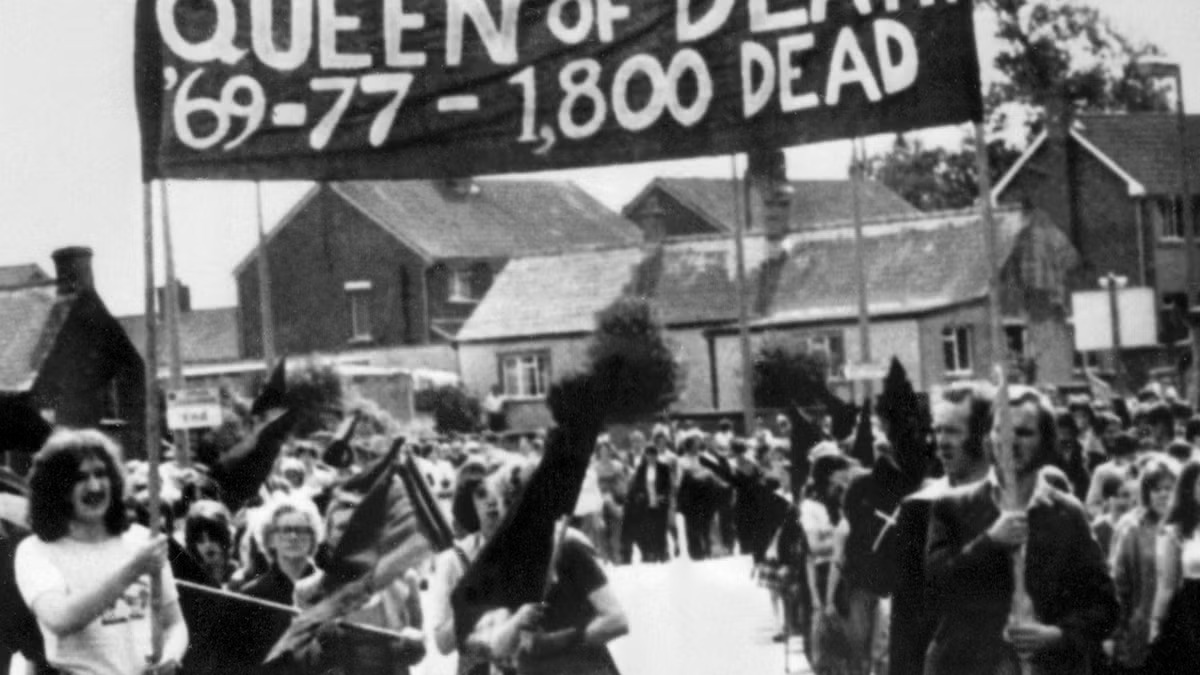
Williams commanded the UK’s premier special forces in Northern Ireland during the critical period that eventually culminated in the 1998 Good Friday Agreement. At the time, he told his men plainly that their personal sacrifice might be necessary to secure a more stable future.
He told the unit that in that specific historical moment, soldiers had to acknowledge that the life of a terrorist was actually more valuable to the nation than their own existence.
The former colonel explained that while the death of a single soldier would not jeopardize the ongoing peace process, the death of an adversary at that juncture could have derailed the entire effort.
Williams maintains that this philosophy defines the fundamental difference between a professional soldier and a civilian: a combatant must accept that their own survival is never the primary mission objective.
In Williams’ view, a soldier’s life and equipment are simply resources utilized by the state to achieve specific political goals. Sometimes this logic requires eliminating the enemy, and other times it requires the soldier to take greater risks to ensure the enemy survives.
He noted that at the most extreme level, the military agreement can require a soldier to accept a nearly certain probability of dying.
Williams reminded his men that they signed a contract of unlimited liability, which carries no guarantees for health or safety, as they were there to die for the sake of their country.
While his stance is uncompromising, he insisted it is not born of blood. During his time in Northern Ireland, as the peace process gained momentum, the strategic calculus shifted even though the SAS was still being deployed against armed IRA members.
Although lethal force remained permitted when absolutely necessary under the rules of engagement known as the ‘Yellow Card,’ Williams expected his troops to exercise high levels of self-control and restraint.
The former commander discussed this grim calculation with then-Prime Minister Tony Blair before the US-led invasion of Iraq. He argued that any leader considering military action must face two questions: how many soldiers and how many civilians are they prepared to lose to achieve victory?
Williams stated Blair’s response was to keep friendly casualties as low as possible, yet soldiers must understand that their lives are part of the primary exchange in warfare.
This blunt description of service comes at an era where Western militaries invest heavily in drones, precision weapons, and armor to reduce casualties. However, Williams argues these technologies do not remove the underlying moral obligation.
He concluded that if the value of a soldier’s life is so high that they cannot fight, they should remain at home. Even in a scenario where national survival required every soldier to fall, Williams said it would be a tragic day, but it would not invalidate the order.
In Northern Ireland, the bargain was more subtle; his men were simply asked to subordinate their survival instincts to the political objective, a demand Williams says they were prepared to meet.
Despite this, Williams and another former SAS commander, Major David*, are vocal critics of the UK government’s Legacy Act, arguing that elite troops fear the state will not support them after returning from combat. Williams asserted that if the state expects people to risk their lives, the state owes them a long-term duty of care.
Reporting by Policy-Wire (PW)