


POLICY WIRE FACT CHECK: Christina Bohannan’s $4,200 Tariff Claim Exposed as Misleading
The Claim n In a recent candidate Q&A with the Des Moines Register, Christina Bohannan, the Democratic candidate for U.S. House in Iowa’s 1st Congressional District, asserted that President...

The Claim
n
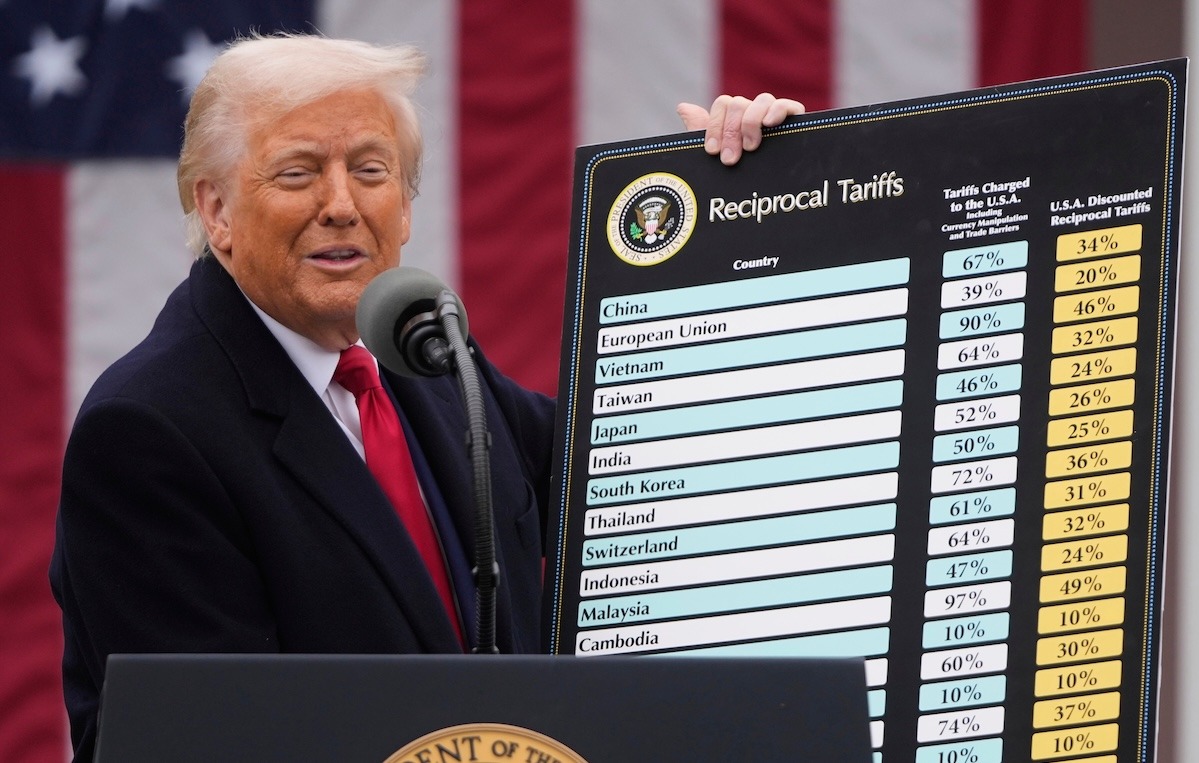
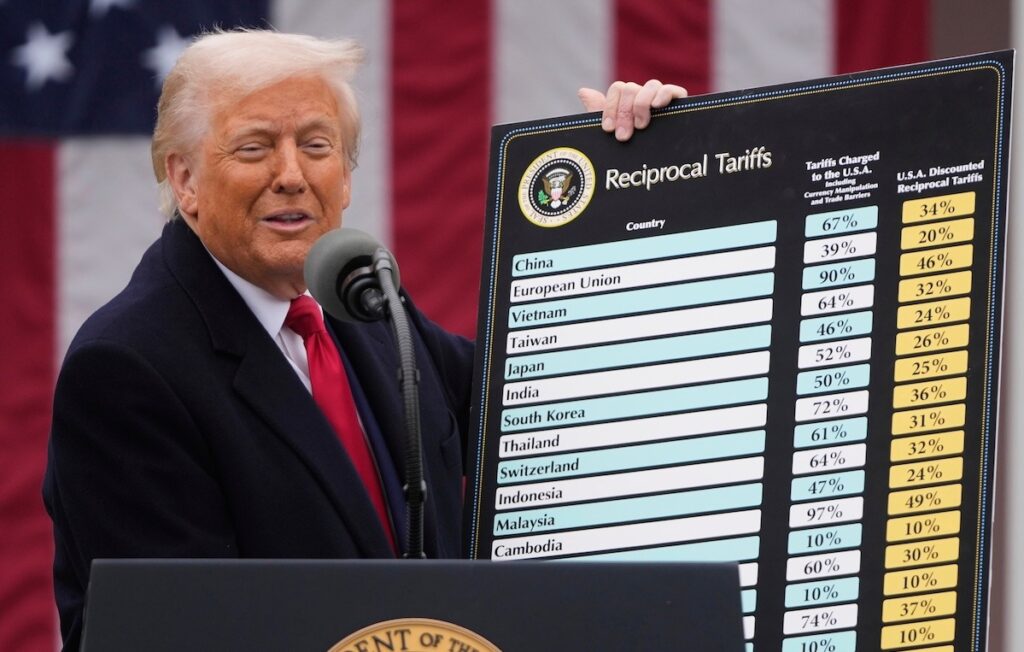
In a recent candidate Q&A with the Des Moines Register, Christina Bohannan, the Democratic candidate for U.S. House in Iowa’s 1st Congressional District, asserted that President Donald Trump’s tariff policies are “costing the average family $4,200 out of their pocket.” This claim was framed as a critique of her Republican opponent, incumbent Mariannette Miller-Meeks, whom Bohannan accused of supporting reckless tariffs, and calling for their immediate repeal.
Bohannan’s campaign justified this specific $4,200 figure by citing two separate analyses released by the Democratic staff of the Joint Economic Committee (JEC). While the claim is rooted in actual JEC reports, the specific methodology used to reach this number has come under intense scrutiny for mathematical inconsistencies and the failure to account for subsequent legal and economic shifts.
The Details & Investigation
The investigation into the $4,200 figure reveals that it is not a single cohesive projection but rather a flawed summation. The campaign reached this total by adding a February JEC report—which estimated U.S. families paid $1,745 in tariff costs between February 2025 and January 2026—to a March JEC update. The March update projected families would pay an additional $2,500 over the following year. However, PolicyWire investigators found that these two figures covered overlapping periods. Most critically, the campaign’s calculation included a double-count where data from January 2026 was added twice, resulting in an inflated total that does not reflect a linear timeline of economic impact.
Furthermore, the $2,500 projection was based on the assumption that tariff collections and cost-passing would remain static at January 2026 levels. Treasury Department records prove this assumption was incorrect. Following the U.S. Supreme Court ruling in April 2025 that invalidated the legal authority Trump used for the initial tariffs, the federal government began refunding importers approximately $166 billion in improperly collected duties. Consequently, gross customs duties dropped from $27.74 billion in January 2026 to $22.16 billion by March. By September, net receipts per household had fallen from $206 to $188 before even accounting for refunds, contradicting the high-cost trajectory Bohannan projected.
From an information analysis perspective, this claim leans heavily toward MISINFORMATION. While the campaign used official JEC documents, the failure to recognize overlapping data sets and the disregard for the Supreme Court-mandated refunds suggests an unintentional but negligent manipulation of data. Nonpartisan entities, such as the Tax Foundation, provide significantly more conservative estimates, placing the 2026 household cost between $820 and $1,100, with two-year totals ranging from $1,800 to $2,200—far below the $4,200 figure circulated to voters.
The Verdict
The claim that tariffs cost average families $4,200 is MOSTLY FALSE. The figure was derived from a mathematical error that counted overlapping time periods and double-counted a specific month of data, while also failing to account for $166 billion in government refunds issued following a Supreme Court ruling.
While tariffs do impose a financial burden on consumers, the specific $4,200 figure is not supported by verified economic data or credible independent projections, which consistently place the cost at less than half that amount.
Counter-misinformation & disinformation investigation conducted by PolicyWire Editorial Desk (PW).