


Leading Bollywood star is no more
For decades, Bollywood has been India’s most persuasive ambassador. Its songs, romances and larger-than-life heroes sold the world a fantasy of shinning India, glamorous, emotional and...
For decades, Bollywood has been India’s most persuasive ambassador. Its songs, romances and larger-than-life heroes sold the world a fantasy of shinning India, glamorous, emotional and endlessly optimistic and that fantasy became one of the most successful soft-power exports of the modern era.
But the fantasy has a darker side. In recent years, critics in India and abroad have accused a wave of Bollywood hits of turning cinema into political propaganda. The Kashmir Files (2022) and The Kerala Story (2023) were both criticised for vilifying Muslims, stoking communal tension and distorting facts, yet each earned more than Rs 300 crore and was praised by Prime Minister Narendra Modi for revealing “the truth”. The Israeli filmmaker who chaired the jury at India’s own international film festival called The Kashmir Files “a propaganda, vulgar movie”. In April 2026, Modi defended the trend at a rally, saying critics had called Kerala Story, Kashmir Files and Dhurandhar lies. When a state’s cinema learns to glamorise hostility toward its own minorities, turning that craft on its neighbours is a short step.
Lately, the fantasy has found a new subject: Pakistan. In December 2025, Dhurandhar cast Ranveer Singh as an Indian intelligence agent infiltrating the gangs of Karachi’s Lyari and crossed Rs 500 crore worldwide. Sindh’s government was offended enough to announce a film of its own in reply. In August 2026, Discovery released Declassified: Operation Sindoor, now streaming on platforms including Apple TV, retelling India’s May 2025 conflict with Pakistan through the eyes of its own war rooms with National Security Advisor Ajit Doval at the centre. Pakistani critics have argued that its cinematic reconstruction cannot edit out what happened on the battlefield.
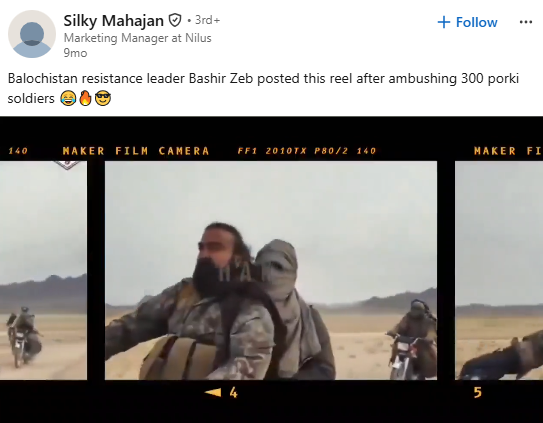
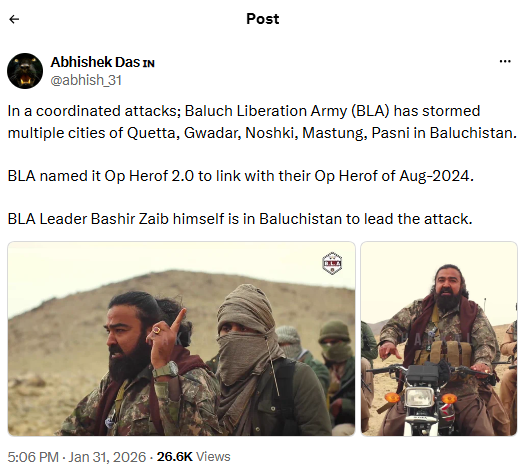
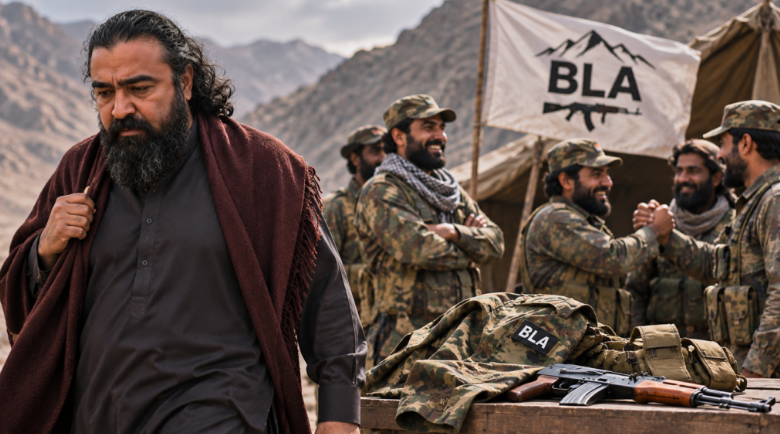
It is Bollywood had lent its skills to Hakkal Media, the propaganda wing of the BLA, a group designated as a terrorist organisation by Pakistan, the United States and the United Kingdom. When the Balochistan Liberation Army launched Operation Herof 2.0 in January, its media wing, Hakkal packaged the attacks like a blockbuster release complete with a hero shot. Watching its output, one could be forgiven for thinking some of it was filmed on a set rather than a battlefield. Its leading man was Bashir Zeb, shown in the open desert between Chagai and Kharan, reportedly riding a motorcycle with no guards in sight.
If Bollywood has its King Sharukh Khan, Hakkal was trying to build its own. Sympathetic Indian accounts across social media celebrated the campaign as a triumph and Indian outlets turned Zeb into a regular headline, the brooding rebel commander at the centre of every story. Then, on 3 November, the star vanished. No final scene, no farewell, not even a photograph. Just a short statement saying Zeb was no longer the BLA’s chief.
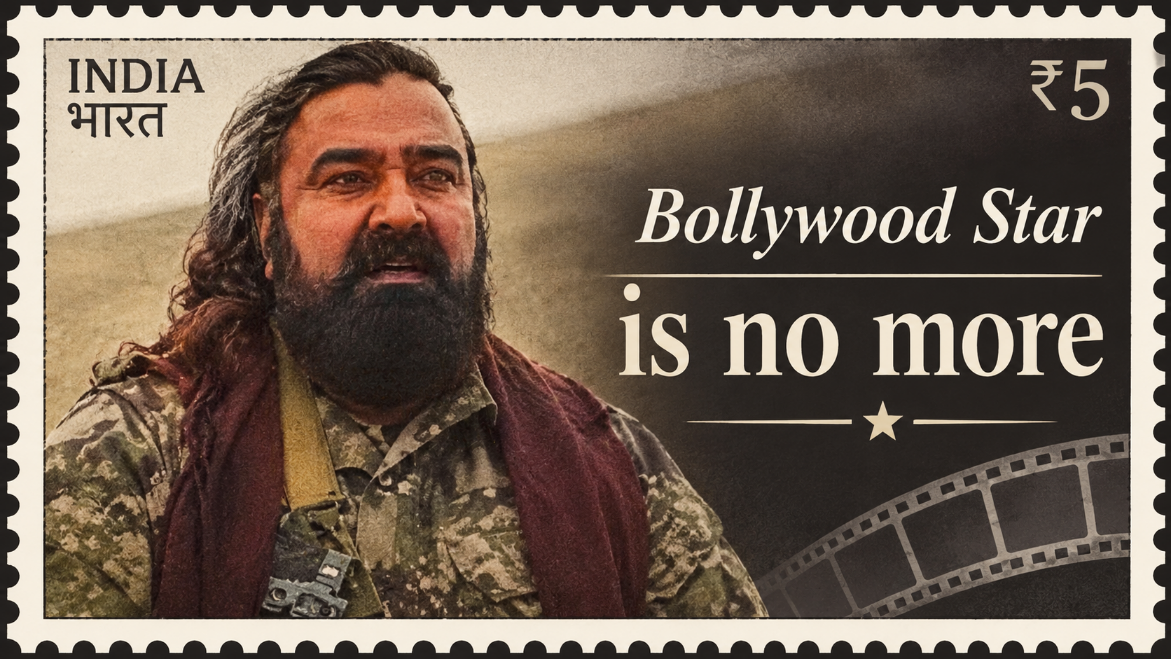
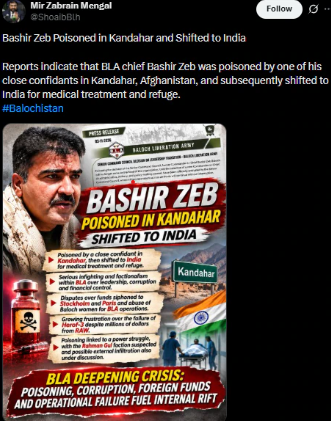
Within hours, the internet had written its own endings: he’d been poisoned, killed or spirited abroad. None has been confirmed. What is certain is that the face of the BLA’s biggest production has been written out of the script and the way it happened says a great deal about the group and about the audiences it performs for.
Spoiler Alert: The BLA’s Manipulated Narrative
In a story already thick with rumour, the line between fact and claim matters more than usual.
Confirmed by the BLA itself. The group’s statement reported by The Balochistan Post and carried by ANI said that following a decision of the Senior Command Council, Zeb “will no longer serve as the head of the organization”. It said senior commanders had unanimously agreed the transition at a meeting on 16 October that a new commander-in-chief would be named “soon” and that attacks would continue without interruption. It framed the change as constitutional: no individual, however prominent could remain commander-in-chief for life. Indian outlets meanwhile described his status as a mystery.
Not the first time. In March 2025, posts on X claimed he had been killed in Iraq. The rumour spread widely and proved false and as the next section shows, the BLA answered it on camera.
A Grand Entrance
Bashir Zeb’s rise began with a death. In December 2018, the faction’s founder, Aslam Baloch was killed in a suicide attack in Kandahar and Zeb, a former chairman of the Baloch Students Organisation-Azad from Nushki took over. The circumstances of Aslam’s killing have never been resolved.
Over the next eight years, the BLA’s media wing, Hakkal, turned Zeb into its main character. His statements framed each campaign, and his name became shorthand for the organisation itself. The peak came with Operation Herof 2.0, launched on 31 January 2026. The offensive was projected as a major achievement across sympathetic social media accounts, and Hakkal crowned it with the footage of Zeb in the desert, filmed, pointedly, in the mineral belt that holds the Reko Diq and Saindak projects.
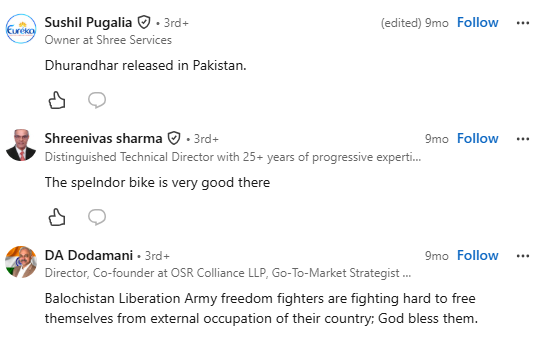
It was a staged entrance in every sense: a commander placed in the spotlight at the moment of maximum attention to show the world that the BLA had a living, confident leader at its head. What the cameras didn’t show was what came next. Some of the Indian accounts were tracked and this is what they were posting:
Post:
Comments:
Post:
One Video, Two Audiences
The same footage carried a different message to each group watching it.
To supporters and recruits, it said the leader was alive, present and sharing the risk. Death rumours corrode militant groups from within; a commander seen on the ground during the group’s biggest operation, answers them more powerfully than any statement.
To foreign investors, it was a warning. Shot in desert terrain made to resemble Balochistan’s mineral belt, and paired with a message against projects the BLA opposes, it linked the group’s violence directly to the region’s most valuable investments. Where it was actually filmed lie across the border in Iran, where Pakistan struck BLA and BLF hideouts in January 2024.
Behind all this sat a single claim: that the BLA was a cohesive organisation with a living, functioning chain of command. It didn’t survive the months that followed.
The Campaign That Backfired
Hakkal sold Herof 2.0 as proof of the BLA’s strength. The battlefield told a different story.
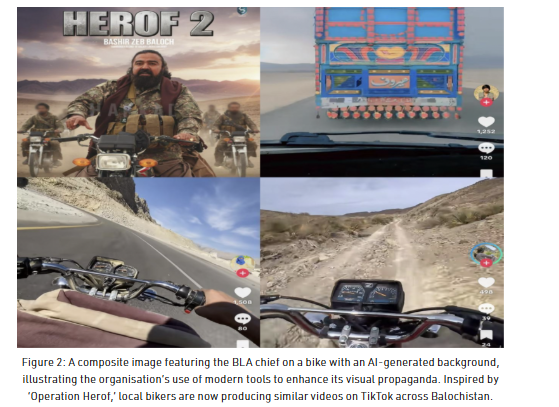
According to the Pakistan Institute for Conflict and Security Studies (PICSS), an Islamabad think tank that tracks militancy, security forces killed at least 215 BLA militants in follow-up operations within about a week of the attacks. The BLA itself acknowledged 96 dead, an extraordinarily high admission for a group that usually hides its losses. Pakistan then launched Operation Radd-ul-Fitna 2 and sustained operations through the year killed several hundred more.
That is where the fracture began. PICSS sources say Captain Rahman Gul, head of the Majeed Brigade, the BLA’s suicide wing, blamed Bashir Zeb for exposing a large share of the group’s terrorists at once, against the basic rule of guerrilla war: stay small, mobile and hidden. By February, those sources say, Zeb had been sidelined from key decisions. His last statement on the BLA’s platform appeared a day before Herof 2.0 began. For nine months, the BLA’s most famous face said nothing at all.
The crisis isn’t confined to one faction. The rival BLA-Azad, led by Hyrbyar Marri has faced its own revolt since April with field commanders forming a Reform Command Council and senior figures in Marri’s political wing resigning in late October.
Put simply, Pakistan sustained counter-terrorism pressure turned the turned the BLA’s showpiece campaign into a liability and the liability turned into infighting. The terrorist group that set out to look unstoppable on camera now has two leadership crises off camera.
Grand Debut Vs Silent Exit
Here the two moments meet. When rumours of Zeb’s death spread in 2025, Hakkal answered with pictures: the leader himself on the ground in the middle of an offensive. When even louder rumours spread this week, the BLA answered with text.
There was no farewell message from Zeb, no footage of a handover, no image of the commander who had been the face of the organisation for eight years. For a media operation that has made visibility its signature, that silence is the most telling output of all. It may be a choice. It may be a constraint. The available evidence can’t say which and that uncertainty is itself significant.
The statement’s language adds a second puzzle. A group that spent years building a cult of leadership around one man now insists that no individual, however prominent, can lead for life and that the change will bring “fresh momentum”. Announced alongside unverified reports of factional disputes and financial allegations, that framing invites an obvious question: is this an orderly transition or a story the organisation needs its audiences to believe?
The contrast couldn’t be sharper. Zeb’s entrance was choreographed: a succession after a founder’s death, years as the face of every campaign and a desert cameo timed to the group’s terror campaign. His exit was a paragraph, released by a spokesman, crediting a committee. The man Hakkal built as a symbol of continuity was removed in the language of procedure and the face that once proved the BLA was in command has been replaced by a council with no face at all.
Why Zeb Trends in India
Within a day of the announcement, the BLA’s statement was running across Indian news sites. The Asian News International (ANI) wire carried it from The Balochistan Post, and syndication spread it to dozens of outlets. Indian reports framed his status as a “mystery”, setting the BLA’s own account against what they called claims from “pro-Pakistan” accounts.
This isn’t new. Indian wire services routinely republish the BLA’s weekly attack claims, often with the group’s own casualty figures in the headline: 43 personnel killed in 13 attacks in September, 13 killed in a Coast Guard attack in October, figures that independent sources rarely confirm. Through syndication, Indian copy has become one of the main English-language channels through which the BLA’s version of events reaches the world.
Why does Zeb draw such attention in Indian media? Two audiences explain it. At home, stories of insecurity in Pakistan find a ready market in India’s intensely competitive media. Abroad, English-language wire copy gives a little-known terrorist group reach it could never buy, landing on aggregators and search results read by analysts, investors and diplomats. A leader’s exit, wrapped in rumour is ideal material for both.
The Pakistani view goes further. Islamabad calls the BLA and its allies Fitna al-Hindustan. After the BLA’s 2020 attack on the Pakistan Stock Exchange, India’s foreign ministry rejected Pakistan’s accusation and condemned the attack. This week, Pakistani outlets reported citing intelligence sources that Zeb had been moved to India for treatment.
What is beyond dispute is the awkwardness by India. The India being world’s largest democracy presents itself as a frontline voice against terrorism, and its closest partners agree: the United States designated the BLA a foreign terrorist organisation in 2025. Yet that same group’s claims travel so widely through Indian media. Whatever the editorial motive, the effect is to give a designated terrorist organisation the one thing its media wing exists to secure: an audience.
Casting Call: The Search for a New Face in India
Every franchise needs a lead and this one has lost its star. The BLA says a new commander-in-chief will be named “soon”, after the “remaining stages” of a selection process it hasn’t explained. Until then, a faceless Senior Command Council holds every power.
The obvious contender is the man PICSS says has already been running things: Captain Rahman Gul, head of the Majeed Brigade. His profile is made for Hakkal’s cameras. In late 2025, Pakistani media, citing security sources, reported that Gul had been killed in Afghanistan’s Helmand province. The BLA never confirmed it and PICSS’s account places him at the centre of this year’s power struggle. Whether the next leading man is alive at all is still an open question.
There is a bigger plot twist on the table too. With Zeb gone and Hyrbyar Marri facing a revolt in the rival BLA-Azad, PICSS suggests the two factions, split since 2016, could move toward reunification under new leadership, or splinter further.
For India, the casting call matters as much as it does for the BLA. Islamabad has long accused New Delhi of backing the group; India denies it. Pakistani reports have claimed that BLA commanders have been treated in Indian hospitals before and this week claimed Zeb was moved to India too. But the pattern of attention isn’t in doubt. The ecosystem that turned Zeb into a headline from Indian wire services to sympathetic accounts online has lost its most recognisable protagonist and it will be looking for the next one.
Behind the Glamour
Bollywood’s fantasy has always had limits. Step off the film set and the picture changes. Mumbai, the home of Bollywood, is also home to Dharavi, often described as Asia’s largest slum, where nearly 70% of residents rely on community toilets that are overcrowded and unhygienic. India declared itself free of open defecation in 2019, yet a WHO-UNICEF report found that 15% of Indians still relieve themselves in the open. When the official claim was made, Reuters put it bluntly: the reality “may be more murky”. And the country that markets itself as the world’s largest democracy now ranks 157th of 180 countries in Reporters Without Borders’ 2026 World Press Freedom Index, below almost all of its neighbours.
No amount of glamour has managed to hide those slums. Hakkal’s production has met the same fate. Its hero, celebrated across Indian headlines, didn’t get a grand finale. He slipped out of the story in a single anonymous paragraph, with no scene, no speech and no face.
Whoever gets the part, Pakistan’s task is the same: let the evidence do the talking and keep the pressure on that turned the BLA’s biggest production into its biggest crisis. Bollywood can recast a role overnight. A terrorist group that has lost its militants, its unity and its star can’t.